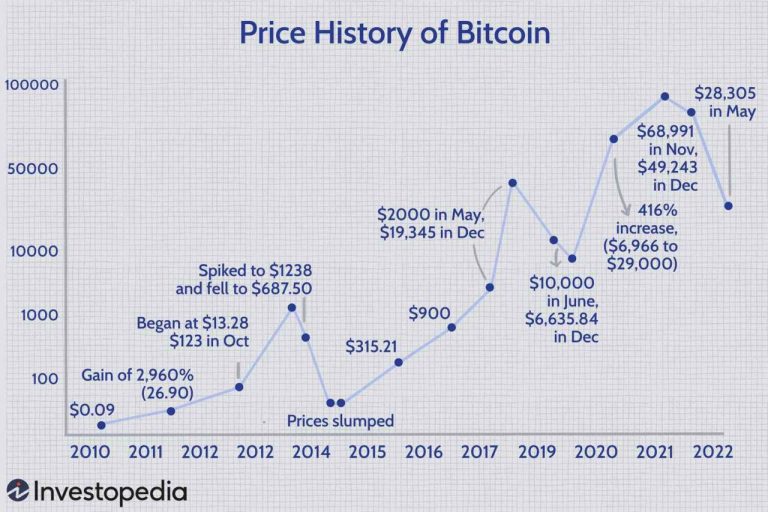
Bitcoin highest price has been a hot topic among investors and enthusiasts alike, capturing the attention of the financial world with its astonishing peaks. As the cryptocurrency landscape continues to evolve, understanding the factors that contribute to Bitcoin’s soaring prices is crucial for anyone looking to navigate this fascinating market.
This exploration delves into the historical milestones, market influences, and investor sentiments that have shaped Bitcoin’s price journey. With each surge and dip, Bitcoin has proven to be not just a digital asset but a phenomenon that reflects broader economic and technological trends.
Historical Overview of Bitcoin Prices
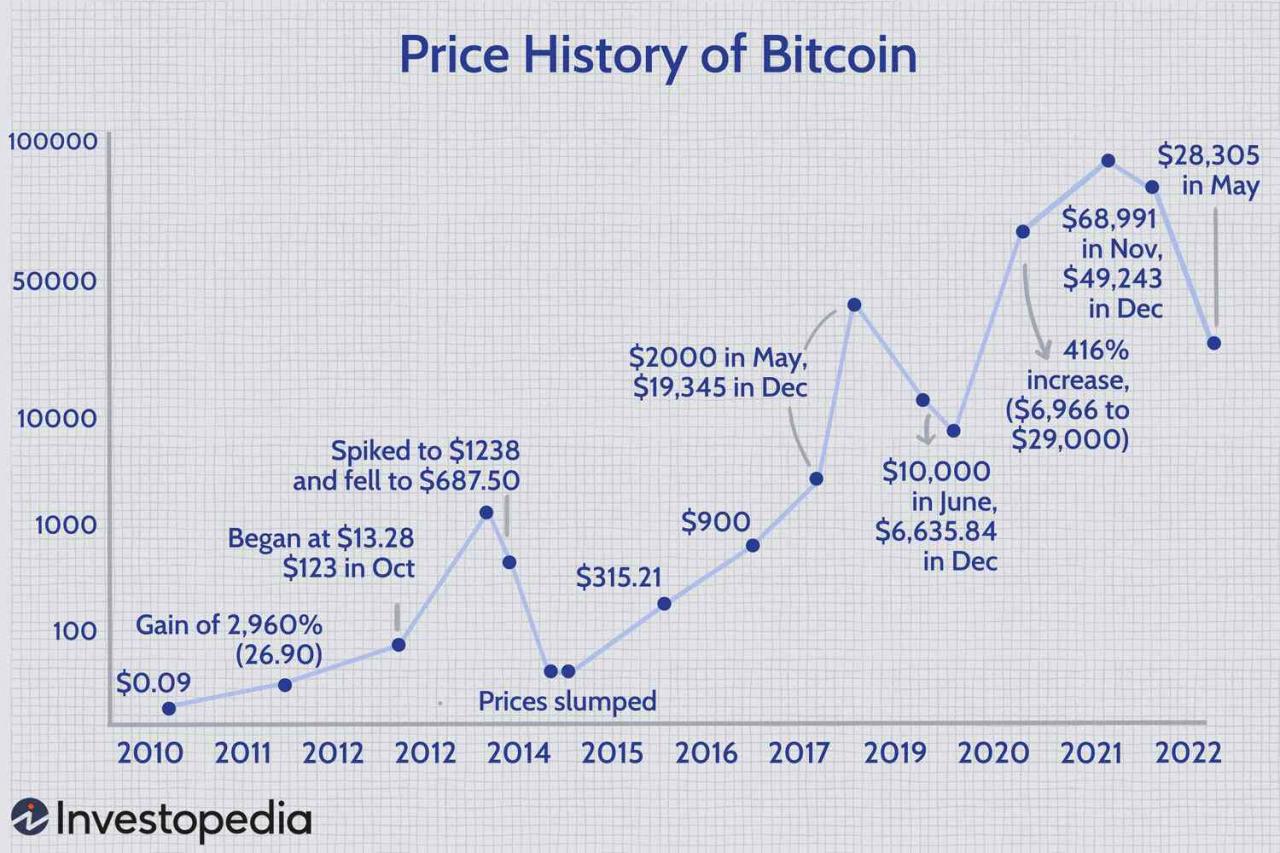
Bitcoin, introduced in 2009 by an anonymous entity known as Satoshi Nakamoto, has evolved from a niche digital currency to a financial phenomenon. The price of Bitcoin has witnessed extraordinary fluctuations over the years, influenced by various factors such as market demand, regulatory developments, and technological advancements. This historical overview will map out significant price milestones and examine the events that propelled Bitcoin to its highest price in history.
Significant Price Milestones
Understanding Bitcoin’s price journey requires a timeline highlighting the key milestones in its history. Each milestone marked a pivotal moment, reflecting broader societal attitudes towards cryptocurrencies as well as market dynamics.
- 2010: Bitcoin first gained value in October 2010, when it was priced at approximately $0.08. This moment represented the beginning of its monetary journey.
- 2013: Bitcoin reached $1,000 for the first time in late 2013, driven by increased media coverage and growing mainstream interest.
- 2017: The price surged past $19,000 in December 2017, capturing the attention of investors worldwide amid a massive speculative bubble.
- 2020: After a gradual recovery, Bitcoin hit $20,000 again in December 2020, fueled by institutional adoption and increased demand.
- 2021: Bitcoin achieved its all-time high of nearly $69,000 in November 2021, a landmark fueled by major institutional investments and increased retail participation.
Factors Contributing to Price Peaks
Several key factors have contributed to Bitcoin reaching its historical high prices. These elements often intertwine, creating a complex tapestry of influences on the cryptocurrency’s market value.
- Institutional Adoption: Companies like Tesla and Square making significant Bitcoin purchases in their treasury reserves have legitimized Bitcoin as an asset.
- Increased Retail Participation: The proliferation of user-friendly exchanges and investment apps has made it easier for the average person to invest in Bitcoin.
- Media Coverage: Extensive media coverage, particularly during price surges, has drawn attention from both investors and the general public.
- Macro-Economic Factors: Economic instability and inflation fears have led to Bitcoin being viewed as a hedge against traditional market risks.
- Regulatory Developments: The establishment of clearer regulations has provided a framework that encourages institutional investment.
Impact of Key Events
Various events have significantly impacted Bitcoin’s price trajectory, shaping its reputation and market behavior. These events include regulatory changes, technological advancements, and major security breaches.
- Regulatory Clarity: Countries that have adopted a clear stance on cryptocurrency regulation, such as the United States and Canada, have seen positive market responses, while uncertainty in other regions has stifled growth.
- Technological Advancements: Upgrades to the Bitcoin protocol, such as the Lightning Network, have improved transaction efficiency and security, boosting investor confidence.
- Market Manipulations: Events like the Bitfinex hack in 2016, where $72 million worth of Bitcoin was stolen, initially shook investor confidence but ultimately led to market corrections and recoveries.
- Public Endorsements: High-profile endorsements from influential figures, such as Elon Musk, can lead to immediate spikes in Bitcoin’s price, illustrating the volatile nature of the cryptocurrency market.
Market Influences on Bitcoin’s Price
The price of Bitcoin is not merely a reflection of its inherent value but is significantly influenced by various market dynamics. Understanding these influences can provide valuable insights into the cryptocurrency’s fluctuations, offering a clearer picture of its price movements. Let’s delve into the factors that impact Bitcoin’s valuation.
Supply and Demand Dynamics
The fundamental economic principle of supply and demand is pivotal in determining Bitcoin’s price. The limited supply of Bitcoin, capped at 21 million coins, creates scarcity. As demand increases, especially during speculative waves or significant adoption phases, prices tend to soar. Conversely, when demand decreases, perhaps due to market corrections or negative news, prices tend to fall. For example, during the 2020-2021 bull run, Bitcoin’s price surged from around $10,000 to over $60,000 due to heightened demand driven by institutional interest and retail investors entering the market.
The surge in demand outpaced the relatively fixed supply, leading to dramatic price increases.
Institutional Investment Impact
Institutional investment has played a crucial role in Bitcoin’s price escalation, especially in the past few years. Major financial institutions and corporations began entering the Bitcoin space, which added legitimacy to the cryptocurrency and attracted more investors. Notable examples include:
- MicroStrategy, which made headlines by purchasing large quantities of Bitcoin as a treasury reserve asset.
- Tesla’s $1.5 billion investment in Bitcoin, which not only boosted prices but also highlighted the increasing acceptance of cryptocurrency among traditional companies.
- Investment funds like Grayscale Bitcoin Trust, which facilitated large institutional purchases and further promoted Bitcoin as a viable investment asset.
Institutional investment has transformed Bitcoin from a speculative asset to a mainstream financial instrument.
Global Economic Conditions
Global economic conditions significantly influence Bitcoin’s valuation. In times of economic uncertainty, such as during the COVID-19 pandemic, Bitcoin has often been viewed as a “digital gold,” a safe haven asset that investors turn to when traditional markets are volatile. This perception can drive up demand and, consequently, prices.Several factors illustrate this relationship:
- The impact of inflation rates, where rising inflation has led investors to seek non-traditional assets, boosting Bitcoin’s appeal.
- Geopolitical tensions that create instability, prompting individuals to invest in Bitcoin as a store of value.
- Monetary policies, such as low-interest rates and quantitative easing, which increase liquidity in the market and often funnel into cryptocurrencies.
The interplay between global economic conditions and Bitcoin’s price highlights its role as a hedge against traditional financial systems.
Investor Sentiment and Bitcoin Valuation
Investor sentiment plays a crucial role in the valuation of Bitcoin, as the emotional and psychological factors influencing investors can significantly impact price movements. Understanding the methods for gauging this sentiment is essential for anyone looking to navigate the often volatile cryptocurrency market. This section delves into various techniques to assess investor sentiment, examines notable case studies during Bitcoin’s price peaks, and discusses the psychological dynamics that drive price fluctuations.
Methods for Gauging Investor Sentiment
There are several effective methods to gauge investor sentiment regarding Bitcoin. These methods enable traders and analysts to capture the overall mood of the market, which can directly influence Bitcoin’s price movements.
- Social Media Analysis: Monitoring platforms like Twitter, Reddit, and Telegram can provide insights into the prevailing sentiment among investors. The volume of discussions, the sentiment of posts, and trending hashtags often serve as indicators of public interest and enthusiasm.
- Sentiment Indexes: Tools such as the Fear & Greed Index specifically tailored for cryptocurrencies condense various data points into a single figure that reflects investor emotion. A high reading typically indicates a greedy market, while a low reading signals fear.
- Trading Volume: Analyzing trading volumes can reveal investor behavior. High trading volumes during price increases often suggest strong bullish sentiment, while declines can indicate fear or uncertainty among investors.
- Surveys and Polls: Periodic surveys conducted among investors can yield valuable insights. These can gauge expectations and feelings toward Bitcoin, helping to track sentiment trends over time.
Case Studies of Investor Behavior During Bitcoin’s Price Peaks
Examining case studies of investor behavior during Bitcoin’s notable price peaks reveals how sentiment can drive price action. These scenarios often highlight the emotional rollercoaster that investors experience.
- December 2017 Surge: During the height of the 2017 bull run, Bitcoin’s price skyrocketed to nearly $20,000. The excitement was palpable on social media platforms, and many retail investors entered the market driven by FOMO (fear of missing out). This surge was followed by rapid price corrections, showcasing how exuberance can lead to volatility.
- April 2021 Rally: Bitcoin reached an all-time high of approximately $63,000 in April 2021. The investor sentiment was fueled by institutional interest, positive regulatory developments, and mainstream adoption discussions. However, the rapid ascent also attracted speculative investors, leading to a quick sell-off.
- November 2021 Peak: Bitcoin hit another peak around $69,000. During this period, the sentiment was overwhelmingly bullish, motivated by news of high-profile endorsements and ETF approvals. The excitement led to increased participation from both retail and institutional investors, yet it was accompanied by heightened risk sentiment.
Psychological Factors Driving Bitcoin Prices Upward
The psychological aspects influencing Bitcoin prices are significant and often intertwined with investor sentiment. Understanding these factors can provide insights into market dynamics.
- Herd Behavior: Investors often mimic the actions of others, especially in rapidly changing markets. When Bitcoin’s price starts to rise, the herd mentality can trigger a rush of buying, further propelling prices upward.
- Anchoring: Investors may anchor their expectations based on the past price points of Bitcoin. When a new high is reached, it can create a psychological threshold that encourages further buying, as investors believe prices will continue to rise.
- Loss Aversion: The fear of losing potential gains can lead to irrational decision-making. When prices rise, investors may hold onto their assets longer, anticipating further increases, fearing they will miss out on profits.
- Confirmation Bias: Investors often seek information that confirms their existing beliefs about Bitcoin. This bias can create echo chambers within social media and affect collective sentiment, influencing market trends.
Comparative Analysis with Other Cryptocurrencies
Bitcoin, often heralded as the first cryptocurrency, has set remarkable benchmarks in the digital currency space. Its peak price has consistently outstripped many of its altcoin counterparts, establishing it as a leader in both market value and investor intrigue. This comparison highlights not only the price disparities between Bitcoin and other leading cryptocurrencies but also the unique features that contribute to Bitcoin’s distinctive valuation.
Price Comparison with Leading Cryptocurrencies
The highest recorded price of Bitcoin is a striking figure that has frequently surpassed the peaks of many altcoins. For instance, Bitcoin reached its all-time high of approximately $69,000 in November 2021, while Ethereum, the second-largest cryptocurrency, peaked around $4,800 during the same period. This stark difference in pricing can be attributed to several factors, including market capitalization, utility, and demand.The following table summarizes the highest prices of several prominent cryptocurrencies alongside Bitcoin:
| Cryptocurrency | Highest Price (USD) | Market Capitalization (USD) |
|---|---|---|
| Bitcoin (BTC) | $69,000 | ~$1.3 trillion |
| Ethereum (ETH) | $4,800 | ~$560 billion |
| Binance Coin (BNB) | $650 | ~$110 billion |
| Cardano (ADA) | $3.10 | ~$100 billion |
| Solana (SOL) | $260 | ~$80 billion |
This table illustrates that while Bitcoin remains the highest-priced cryptocurrency, its market capitalization consistently places it in a league of its own.
Unique Features Contributing to Price Differences
Bitcoin’s unique attributes play a significant role in its price distinction from other cryptocurrencies. Several factors contribute to its valuation:
- First-Mover Advantage: As the first cryptocurrency, Bitcoin established brand recognition and a loyal user base far ahead of its competitors.
- Network Security: Bitcoin’s extensive network of miners and nodes provides unparalleled security, making it the preferred choice for long-term investors.
- Store of Value: Often referred to as ‘digital gold,’ Bitcoin is increasingly viewed as a hedge against inflation, attracting institutional investors.
- Scarcity: With a capped supply of 21 million coins, Bitcoin’s controlled issuance fosters a sense of scarcity, which enhances its value proposition.
These features collectively underscore Bitcoin’s dominance as the leading cryptocurrency, influencing its price dynamics significantly.
Market Capitalization and Relative Impact on Altcoins
Market capitalization plays a crucial role in understanding Bitcoin’s relationship with altcoins during peak periods. A higher market cap generally indicates greater stability and investor confidence, which can influence price movements across the cryptocurrency spectrum. During times of market growth, Bitcoin often leads the charge, with its market cap dictating investor sentiment toward altcoins. The phenomenon known as “altcoin season” typically occurs after Bitcoin achieves significant gains, resulting in a shift of investment into altcoins as traders seek higher returns.
This behavior showcases a correlation between Bitcoin’s price movements and the altcoin market, as illustrated below:
“It is common for altcoins to surge following Bitcoin’s price increases, creating a ripple effect in the cryptocurrency market.”
In periods of volatility, smaller market cap cryptocurrencies can experience exaggerated price swings, often resulting in greater risk but also potential reward for investors. Understanding these dynamics is essential for navigating the cryptocurrency landscape effectively.
Future Projections for Bitcoin Pricing
As the cryptocurrency market continues to evolve, Bitcoin remains at the forefront of discussions regarding future price movements. Current trends and market dynamics can provide insights into potential scenarios for Bitcoin’s value in the coming months and years. Analysts are increasingly focused on a variety of factors that could either propel Bitcoin to new heights or create downward pressure on its price.Expert opinions on Bitcoin’s future pricing often highlight several key catalysts that are likely to influence its trajectory.
Factors such as regulatory changes, technological advancements, and macroeconomic conditions can all play crucial roles in determining Bitcoin’s market performance in the future.
Potential Price Movement Scenarios
Several scenarios can be envisioned for Bitcoin’s price based on current market trends. Understanding these scenarios can help investors make informed decisions.
- Continued Adoption and Institutional Investment: If institutions continue to adopt Bitcoin as a part of their asset portfolios, prices could surge significantly. Institutions like MicroStrategy and Tesla have already set a precedent, demonstrating confidence in Bitcoin’s long-term value.
- Regulatory Clarity and Acceptance: A favorable regulatory environment could boost investor confidence, leading to increased demand and ultimately driving prices higher. Countries like El Salvador have already recognized Bitcoin as legal tender, and more nations may follow suit.
- Market Correction and Volatility: Conversely, if market sentiment shifts negatively due to macroeconomic factors such as inflation or interest rate hikes, Bitcoin may face significant corrections, impacting its price adversely.
Expert Opinions on Catalysts for Price Changes
Several key factors have been identified by experts as potential catalysts for Bitcoin’s next major price movements. These factors can have varying degrees of influence and timing.
“The future pricing of Bitcoin will largely depend on how well it integrates into the financial system and how it evolves with technological advancements.”
- Technological Innovations: Advancements in blockchain technology, such as improvements in scalability and transaction speeds, could enhance Bitcoin’s usability and attractiveness as a currency.
- Global Economic Trends: Economic conditions, including inflation rates and fiscal policies, will likely impact Bitcoin’s appeal as a hedge against traditional financial risks.
- Market Sentiment and Media Influence: Public perception shaped through media coverage can dramatically affect investment trends, with positive coverage potentially driving prices up and negative news leading to sell-offs.
Predicted Factors for Bitcoin’s Next Price Peak
Identifying factors that could lead Bitcoin to its next price peak is essential for understanding future market dynamics. The following table Artikels these predicted factors along with their expected impact on Bitcoin pricing.
| Factor | Description | Expected Impact on Price |
|---|---|---|
| Institutional Adoption | Increased investments from institutional players. | Positive |
| Regulatory Developments | Supportive regulations improving market conditions. | Positive |
| Technological Upgrades | Enhanced transaction efficiency and security. | Positive |
| Global Economic Factors | Macroeconomic shifts affecting investment strategies. | Variable |
| Market Sentiment | Public perception influenced by news and social media. | Variable |
Technical Analysis of Bitcoin Price Trends
The technical analysis of Bitcoin price trends plays a crucial role in understanding market movements and making informed investment decisions. By utilizing various technical indicators and chart patterns, traders and investors aim to predict the future price movements of Bitcoin based on historical data. This approach is essential, particularly in a volatile market like cryptocurrency, where price fluctuations can occur rapidly.Technical indicators are mathematical calculations based on the price, volume, or open interest of a security.
They help traders identify potential trends and reversals in the market. Some of the most commonly used indicators in Bitcoin trading include Moving Averages, Relative Strength Index (RSI), and Bollinger Bands. Each of these indicators provides unique insights into market conditions, enhancing the ability to forecast price movements.
Significance of Technical Indicators
Technical indicators serve as essential tools for traders to analyze Bitcoin price movements. Their significance lies in their ability to provide objective data that can guide trading decisions. Here are a few key indicators and their implications:
- Moving Averages: These indicators smooth out price data to create a trend-following indicator. The most common types are the Simple Moving Average (SMA) and the Exponential Moving Average (EMA). They help traders identify the general direction of the trend.
- Relative Strength Index (RSI): This momentum oscillator measures the speed and change of price movements. An RSI above 70 indicates that Bitcoin may be overbought, while an RSI below 30 suggests it may be oversold.
- Bollinger Bands: This indicator consists of a middle band (SMA) and two outer bands that represent standard deviations from the SMA. When prices touch the upper band, it may signal overbought conditions, while touching the lower band may indicate oversold conditions.
Methods for Analyzing Bitcoin Charts
Analyzing Bitcoin charts effectively involves understanding various patterns and indicators to identify potential price peaks. Traders typically look for specific signals that can indicate future price movements. Key methods for chart analysis include:
- Identifying Support and Resistance Levels: Support levels are price points where Bitcoin tends to stop falling and rebound, while resistance levels indicate where prices may stop rising and reverse. Recognizing these levels helps in predicting potential price corrections.
- Chart Patterns: Various patterns such as Head and Shoulders, Double Tops, and Flags can indicate potential price movements. For instance, a Head and Shoulders pattern often signals a reversal from bullish to bearish trends.
- Candlestick Analysis: Analyzing individual candlesticks and their formations can provide insights into market sentiment. Patterns like Doji, Hammer, and Engulfing can be significant indicators of market reversals or continuations.
Common Patterns in Bitcoin’s Price History
Bitcoin’s price history has revealed several patterns that have implications for future pricing. Recognizing these patterns can aid traders in making strategic decisions.
- Fibonacci Retracement Levels: Many traders use Fibonacci retracement levels to identify potential reversal levels. Significant price movements often retrace to these levels before continuing in the original direction.
- Market Cycles: Bitcoin often experiences cycles of accumulation, parabolic rise, and distribution. Understanding these cycles can help predict when to enter or exit positions as market sentiment shifts.
- Volume Trends: Analyzing changes in trading volume can provide insights into the strength of price movements. Increasing volume during an uptrend suggests strong momentum, while decreasing volume may indicate a potential reversal.
Regulatory Impact on Bitcoin Prices
The regulatory landscape surrounding Bitcoin has evolved significantly since its inception, profoundly influencing its market dynamics and price movements. Changes in regulations can create waves of volatility, prompting immediate reactions from investors and stakeholders in the cryptocurrency market. Understanding these impacts is crucial for anyone engaged in Bitcoin trading or investment.Regulations can either bolster confidence in Bitcoin as a legitimate asset or instill fear and uncertainty, leading to price fluctuations.
Various governments and regulatory bodies have taken differing approaches to Bitcoin, ranging from outright bans to embracing it as a legitimate financial instrument. Each regulatory change has the potential to reshape the market environment, affecting investor behavior and market valuations.
Key Regulatory Milestones Influencing Bitcoin’s Price History
Several pivotal regulatory events have left a lasting impact on Bitcoin’s value. Below are some notable milestones that are crucial in understanding this influence:
- The 2013 SEC Guidance: The U.S. Securities and Exchange Commission (SEC) issued guidance clarifying that Bitcoin could be classified as a security. This announcement caused initial uncertainty, leading to a dip in prices as investors reassessed the asset’s status.
- China’s ICO Ban in 2017: In September 2017, the Chinese government banned Initial Coin Offerings (ICOs) and shut down domestic cryptocurrency exchanges. This move triggered a significant price drop, as China was one of the largest markets for Bitcoin trading at the time.
- Regulatory Frameworks in Japan: In April 2017, Japan recognized Bitcoin as legal tender, leading to increased adoption and a surge in prices. This regulatory acceptance played a crucial role in legitimizing Bitcoin in the eyes of many investors.
- U.S. Treasury Regulations in 2021: The Treasury proposed new rules requiring cryptocurrency exchanges to report transactions over $10,000. While aimed at tax compliance, this announcement led to short-term price volatility as investors reacted to the potential implications for privacy and decentralization.
Case Studies of Bitcoin’s Response to Regulatory Announcements
Real-world instances illustrate how Bitcoin’s price has responded to specific regulatory announcements, reflecting the market’s sensitivity to governance changes. One significant case was the announcement by the U.S. Financial Crimes Enforcement Network (FinCEN) in late 2020 regarding stricter rules on cryptocurrency transactions. The market experienced immediate backlash, with Bitcoin’s price dipping sharply by nearly 20% within days. Investors reacted to the potential for increased scrutiny and compliance costs, highlighting the relationship between regulatory announcements and price volatility.Another case involves the European Union’s MiCA (Markets in Crypto-Assets) proposal in 2020, aimed at creating a regulatory framework for cryptocurrencies.
Following the proposal’s introduction, Bitcoin saw a positive price reaction, climbing approximately 15% over the following weeks. This response indicated investor optimism about potential regulatory clarity and the legitimacy it could bring to the market.In conclusion, Bitcoin’s price is highly susceptible to regulatory developments. Each milestone and announcement creates ripples throughout the market, influencing investor sentiment and behavior. Understanding these dynamics is essential for navigating the often volatile landscape of cryptocurrency investments.
Media Influence on Bitcoin’s Price
Media coverage plays a crucial role in shaping the public perception of Bitcoin, which in turn directly impacts its market price. The way Bitcoin is portrayed in the media can either instill confidence in potential investors or create skepticism, leading to price fluctuations based on public sentiment. As news spreads, it influences the behavior of both current and prospective investors, making the media a significant player in Bitcoin’s price dynamics.Media coverage can sway public opinion and lead to notable price changes.
Positive news can stimulate buying pressure, while negative reports may trigger sell-offs. The impact of media events can be observed through several significant instances where Bitcoin’s price reacted sharply in response to news stories.
Significant Media Events and Price Fluctuations
Major media events have historically correlated with substantial price movements in Bitcoin. Understanding these instances highlights the direct influence media can exert on the cryptocurrency market. Here are a few notable examples:
- China’s Bitcoin Ban (2017): In September 2017, China announced a crackdown on initial coin offerings (ICOs) and exchanges dealing in cryptocurrencies. This news led to a dramatic decline in Bitcoin’s price, dropping from around $4,000 to $3,000 over the following weeks.
- Bitcoin’s Adoption by Major Companies (2020-2021): When major companies like Tesla and Square publicly announced their investments in Bitcoin, it generated positive coverage that contributed to a surge in price, pushing it from around $30,000 in January 2021 to an all-time high of over $64,000 in April 2021.
- Elon Musk’s Tweets (2021): The influential tweets by Elon Musk regarding Bitcoin, including his initial support and later criticism, caused significant volatility in Bitcoin’s price. His tweet about Tesla suspending Bitcoin payments led to a price drop from approximately $58,000 to around $30,000 in a matter of weeks.
Social media also plays a critical role in Bitcoin’s market movements. Platforms like Twitter, Reddit, and TikTok have become hotspots for discussions, news sharing, and market commentary. The influence of social media can lead to rapid dissemination of information, creating a ripple effect on Bitcoin’s price.
The Role of Social Media in Price Movements
The impact of social media is evident in its ability to quickly spread news and opinions, often leading to immediate reactions from investors. Trends on social media can shift investor sentiment, resulting in significant price changes.
- Reddit’s WallStreetBets Influence: The subreddit WallStreetBets gained notoriety for its influence on stock prices, and the same attention has been applied to Bitcoin. Posts discussing Bitcoin can lead to sudden spikes in trading volume and price.
- Influencer Endorsements: Influencers on platforms like Twitter and Instagram can sway their followers’ perceptions of Bitcoin, impacting buying and selling behavior. For example, a positive endorsement from a well-known figure can drive up prices.
- Hashtag Movements: Trends and hashtags related to Bitcoin on social media can create a sense of urgency among investors, prompting buying or selling based solely on viral content.
“Media narratives shape market sentiment, which can either bolster or undermine Bitcoin’s price stability.”
Understanding the media’s influence highlights the importance of staying informed and critically evaluating news sources. The intersection of media and Bitcoin is a critical aspect of the cryptocurrency’s fluctuating market, illustrating the power of perception in the digital age.
Last Point
In conclusion, the discussion around Bitcoin’s highest price serves as a reminder of the cryptocurrency’s volatile nature and the myriad of factors that contribute to its valuation. As we look to the future, staying informed about market dynamics, regulatory changes, and investor behavior will be vital for understanding where Bitcoin is headed next.
FAQ Resource
What was Bitcoin’s highest price ever?
Bitcoin reached its highest price of nearly $69,000 in November 2021.
What factors influence the price of Bitcoin?
Factors include market demand, regulatory news, institutional investments, and overall economic conditions.
How can I track Bitcoin price trends?
You can track Bitcoin price trends using various financial news websites, cryptocurrency exchanges, and market analysis tools available online.
Is Bitcoin expected to rise again?
While many experts have varying opinions, some believe that Bitcoin could rise again depending on market conditions and investor sentiment.
How does media coverage affect Bitcoin’s price?
Media coverage can significantly influence public perception and investor behavior, often leading to price fluctuations based on sentiment-driven news.
