April 16, 2026

cryptocurrency

Bitcoin highest price has been a hot topic among investors and enthusiasts alike, capturing the attention of the financial world with its astonishing peaks. As the cryptocurrency landscape continues to evolve, understanding the factors that contribute to Bitcoin’s soaring prices is crucial for anyone looking to navigate this fascinating market.

This exploration delves into the historical milestones, market influences, and investor sentiments that have shaped Bitcoin’s price journey. With each surge and dip, Bitcoin has proven to be not just a digital asset but a phenomenon that reflects broader economic and technological trends.

Historical Overview of Bitcoin Prices
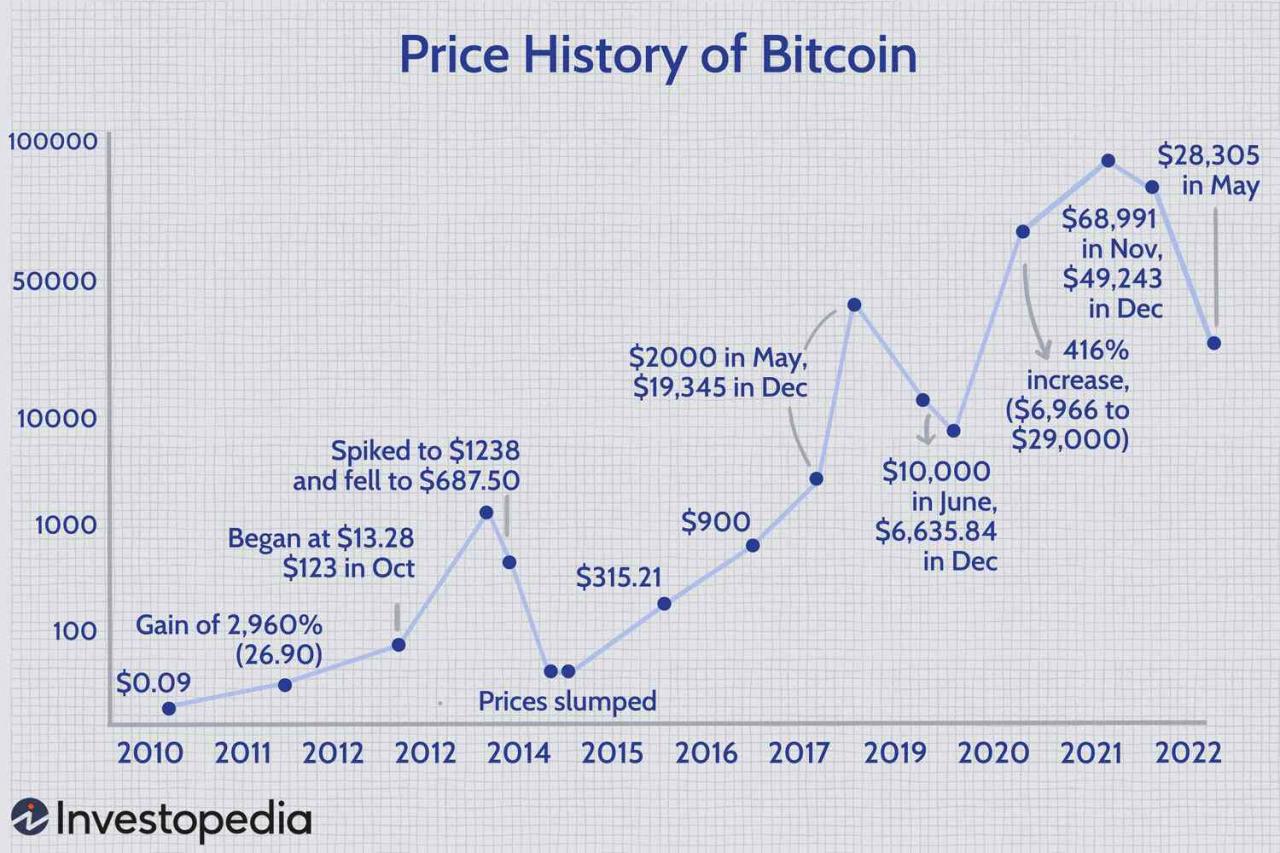
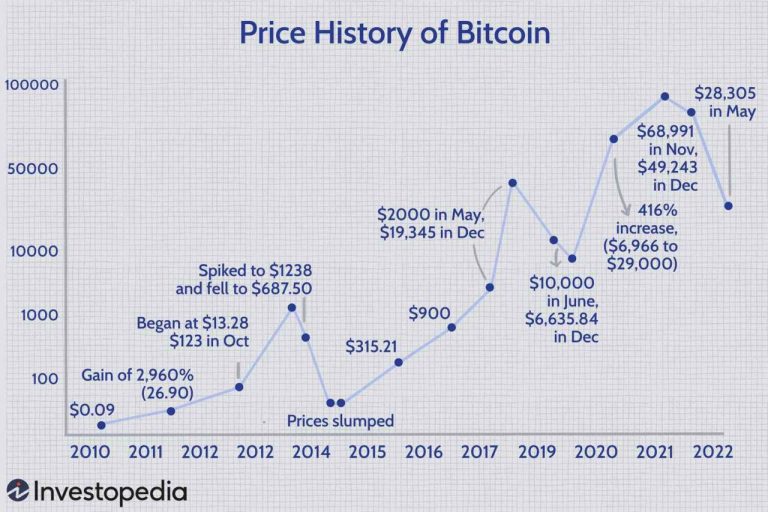
Bitcoin Price Chart

Bitcoin, introduced in 2009 by an anonymous entity known as Satoshi Nakamoto, has evolved from a niche digital currency to a financial phenomenon. The price of Bitcoin has witnessed extraordinary fluctuations over the years, influenced by various factors such as market demand, regulatory developments, and technological advancements. This historical overview will map out significant price milestones and examine the events that propelled Bitcoin to its highest price in history.

Significant Price Milestones

Understanding Bitcoin’s price journey requires a timeline highlighting the key milestones in its history. Each milestone marked a pivotal moment, reflecting broader societal attitudes towards cryptocurrencies as well as market dynamics.

  • 2010: Bitcoin first gained value in October 2010, when it was priced at approximately $0.08. This moment represented the beginning of its monetary journey.
  • 2013: Bitcoin reached $1,000 for the first time in late 2013, driven by increased media coverage and growing mainstream interest.
  • 2017: The price surged past $19,000 in December 2017, capturing the attention of investors worldwide amid a massive speculative bubble.
  • 2020: After a gradual recovery, Bitcoin hit $20,000 again in December 2020, fueled by institutional adoption and increased demand.
  • 2021: Bitcoin achieved its all-time high of nearly $69,000 in November 2021, a landmark fueled by major institutional investments and increased retail participation.

Factors Contributing to Price Peaks

Several key factors have contributed to Bitcoin reaching its historical high prices. These elements often intertwine, creating a complex tapestry of influences on the cryptocurrency’s market value.

  • Institutional Adoption: Companies like Tesla and Square making significant Bitcoin purchases in their treasury reserves have legitimized Bitcoin as an asset.
  • Increased Retail Participation: The proliferation of user-friendly exchanges and investment apps has made it easier for the average person to invest in Bitcoin.
  • Media Coverage: Extensive media coverage, particularly during price surges, has drawn attention from both investors and the general public.
  • Macro-Economic Factors: Economic instability and inflation fears have led to Bitcoin being viewed as a hedge against traditional market risks.
  • Regulatory Developments: The establishment of clearer regulations has provided a framework that encourages institutional investment.

Impact of Key Events

Various events have significantly impacted Bitcoin’s price trajectory, shaping its reputation and market behavior. These events include regulatory changes, technological advancements, and major security breaches.

  • Regulatory Clarity: Countries that have adopted a clear stance on cryptocurrency regulation, such as the United States and Canada, have seen positive market responses, while uncertainty in other regions has stifled growth.
  • Technological Advancements: Upgrades to the Bitcoin protocol, such as the Lightning Network, have improved transaction efficiency and security, boosting investor confidence.
  • Market Manipulations: Events like the Bitfinex hack in 2016, where $72 million worth of Bitcoin was stolen, initially shook investor confidence but ultimately led to market corrections and recoveries.
  • Public Endorsements: High-profile endorsements from influential figures, such as Elon Musk, can lead to immediate spikes in Bitcoin’s price, illustrating the volatile nature of the cryptocurrency market.

Market Influences on Bitcoin’s Price

The price of Bitcoin is not merely a reflection of its inherent value but is significantly influenced by various market dynamics. Understanding these influences can provide valuable insights into the cryptocurrency’s fluctuations, offering a clearer picture of its price movements. Let’s delve into the factors that impact Bitcoin’s valuation.

Supply and Demand Dynamics

The fundamental economic principle of supply and demand is pivotal in determining Bitcoin’s price. The limited supply of Bitcoin, capped at 21 million coins, creates scarcity. As demand increases, especially during speculative waves or significant adoption phases, prices tend to soar. Conversely, when demand decreases, perhaps due to market corrections or negative news, prices tend to fall. For example, during the 2020-2021 bull run, Bitcoin’s price surged from around $10,000 to over $60,000 due to heightened demand driven by institutional interest and retail investors entering the market.

The surge in demand outpaced the relatively fixed supply, leading to dramatic price increases.

Institutional Investment Impact

Institutional investment has played a crucial role in Bitcoin’s price escalation, especially in the past few years. Major financial institutions and corporations began entering the Bitcoin space, which added legitimacy to the cryptocurrency and attracted more investors. Notable examples include:

  • MicroStrategy, which made headlines by purchasing large quantities of Bitcoin as a treasury reserve asset.
  • Tesla’s $1.5 billion investment in Bitcoin, which not only boosted prices but also highlighted the increasing acceptance of cryptocurrency among traditional companies.
  • Investment funds like Grayscale Bitcoin Trust, which facilitated large institutional purchases and further promoted Bitcoin as a viable investment asset.

Institutional investment has transformed Bitcoin from a speculative asset to a mainstream financial instrument.

Global Economic Conditions

Global economic conditions significantly influence Bitcoin’s valuation. In times of economic uncertainty, such as during the COVID-19 pandemic, Bitcoin has often been viewed as a “digital gold,” a safe haven asset that investors turn to when traditional markets are volatile. This perception can drive up demand and, consequently, prices.Several factors illustrate this relationship:

  • The impact of inflation rates, where rising inflation has led investors to seek non-traditional assets, boosting Bitcoin’s appeal.
  • Geopolitical tensions that create instability, prompting individuals to invest in Bitcoin as a store of value.
  • Monetary policies, such as low-interest rates and quantitative easing, which increase liquidity in the market and often funnel into cryptocurrencies.

The interplay between global economic conditions and Bitcoin’s price highlights its role as a hedge against traditional financial systems.

Investor Sentiment and Bitcoin Valuation

Investor sentiment plays a crucial role in the valuation of Bitcoin, as the emotional and psychological factors influencing investors can significantly impact price movements. Understanding the methods for gauging this sentiment is essential for anyone looking to navigate the often volatile cryptocurrency market. This section delves into various techniques to assess investor sentiment, examines notable case studies during Bitcoin’s price peaks, and discusses the psychological dynamics that drive price fluctuations.

Methods for Gauging Investor Sentiment

There are several effective methods to gauge investor sentiment regarding Bitcoin. These methods enable traders and analysts to capture the overall mood of the market, which can directly influence Bitcoin’s price movements.

  • Social Media Analysis: Monitoring platforms like Twitter, Reddit, and Telegram can provide insights into the prevailing sentiment among investors. The volume of discussions, the sentiment of posts, and trending hashtags often serve as indicators of public interest and enthusiasm.
  • Sentiment Indexes: Tools such as the Fear & Greed Index specifically tailored for cryptocurrencies condense various data points into a single figure that reflects investor emotion. A high reading typically indicates a greedy market, while a low reading signals fear.
  • Trading Volume: Analyzing trading volumes can reveal investor behavior. High trading volumes during price increases often suggest strong bullish sentiment, while declines can indicate fear or uncertainty among investors.
  • Surveys and Polls: Periodic surveys conducted among investors can yield valuable insights. These can gauge expectations and feelings toward Bitcoin, helping to track sentiment trends over time.

Case Studies of Investor Behavior During Bitcoin’s Price Peaks

Examining case studies of investor behavior during Bitcoin’s notable price peaks reveals how sentiment can drive price action. These scenarios often highlight the emotional rollercoaster that investors experience.

  • December 2017 Surge: During the height of the 2017 bull run, Bitcoin’s price skyrocketed to nearly $20,000. The excitement was palpable on social media platforms, and many retail investors entered the market driven by FOMO (fear of missing out). This surge was followed by rapid price corrections, showcasing how exuberance can lead to volatility.
  • April 2021 Rally: Bitcoin reached an all-time high of approximately $63,000 in April 2021. The investor sentiment was fueled by institutional interest, positive regulatory developments, and mainstream adoption discussions. However, the rapid ascent also attracted speculative investors, leading to a quick sell-off.
  • November 2021 Peak: Bitcoin hit another peak around $69,000. During this period, the sentiment was overwhelmingly bullish, motivated by news of high-profile endorsements and ETF approvals. The excitement led to increased participation from both retail and institutional investors, yet it was accompanied by heightened risk sentiment.

Psychological Factors Driving Bitcoin Prices Upward

The psychological aspects influencing Bitcoin prices are significant and often intertwined with investor sentiment. Understanding these factors can provide insights into market dynamics.

  • Herd Behavior: Investors often mimic the actions of others, especially in rapidly changing markets. When Bitcoin’s price starts to rise, the herd mentality can trigger a rush of buying, further propelling prices upward.
  • Anchoring: Investors may anchor their expectations based on the past price points of Bitcoin. When a new high is reached, it can create a psychological threshold that encourages further buying, as investors believe prices will continue to rise.
  • Loss Aversion: The fear of losing potential gains can lead to irrational decision-making. When prices rise, investors may hold onto their assets longer, anticipating further increases, fearing they will miss out on profits.
  • Confirmation Bias: Investors often seek information that confirms their existing beliefs about Bitcoin. This bias can create echo chambers within social media and affect collective sentiment, influencing market trends.

Comparative Analysis with Other Cryptocurrencies

Bitcoin, often heralded as the first cryptocurrency, has set remarkable benchmarks in the digital currency space. Its peak price has consistently outstripped many of its altcoin counterparts, establishing it as a leader in both market value and investor intrigue. This comparison highlights not only the price disparities between Bitcoin and other leading cryptocurrencies but also the unique features that contribute to Bitcoin’s distinctive valuation.

Price Comparison with Leading Cryptocurrencies

The highest recorded price of Bitcoin is a striking figure that has frequently surpassed the peaks of many altcoins. For instance, Bitcoin reached its all-time high of approximately $69,000 in November 2021, while Ethereum, the second-largest cryptocurrency, peaked around $4,800 during the same period. This stark difference in pricing can be attributed to several factors, including market capitalization, utility, and demand.The following table summarizes the highest prices of several prominent cryptocurrencies alongside Bitcoin:

Cryptocurrency Highest Price (USD) Market Capitalization (USD)
Bitcoin (BTC) $69,000 ~$1.3 trillion
Ethereum (ETH) $4,800 ~$560 billion
Binance Coin (BNB) $650 ~$110 billion
Cardano (ADA) $3.10 ~$100 billion
Solana (SOL) $260 ~$80 billion

This table illustrates that while Bitcoin remains the highest-priced cryptocurrency, its market capitalization consistently places it in a league of its own.

Unique Features Contributing to Price Differences

Bitcoin’s unique attributes play a significant role in its price distinction from other cryptocurrencies. Several factors contribute to its valuation:

  • First-Mover Advantage: As the first cryptocurrency, Bitcoin established brand recognition and a loyal user base far ahead of its competitors.
  • Network Security: Bitcoin’s extensive network of miners and nodes provides unparalleled security, making it the preferred choice for long-term investors.
  • Store of Value: Often referred to as ‘digital gold,’ Bitcoin is increasingly viewed as a hedge against inflation, attracting institutional investors.
  • Scarcity: With a capped supply of 21 million coins, Bitcoin’s controlled issuance fosters a sense of scarcity, which enhances its value proposition.

These features collectively underscore Bitcoin’s dominance as the leading cryptocurrency, influencing its price dynamics significantly.

Market Capitalization and Relative Impact on Altcoins

Market capitalization plays a crucial role in understanding Bitcoin’s relationship with altcoins during peak periods. A higher market cap generally indicates greater stability and investor confidence, which can influence price movements across the cryptocurrency spectrum. During times of market growth, Bitcoin often leads the charge, with its market cap dictating investor sentiment toward altcoins. The phenomenon known as “altcoin season” typically occurs after Bitcoin achieves significant gains, resulting in a shift of investment into altcoins as traders seek higher returns.

This behavior showcases a correlation between Bitcoin’s price movements and the altcoin market, as illustrated below:

“It is common for altcoins to surge following Bitcoin’s price increases, creating a ripple effect in the cryptocurrency market.”

In periods of volatility, smaller market cap cryptocurrencies can experience exaggerated price swings, often resulting in greater risk but also potential reward for investors. Understanding these dynamics is essential for navigating the cryptocurrency landscape effectively.

Future Projections for Bitcoin Pricing

As the cryptocurrency market continues to evolve, Bitcoin remains at the forefront of discussions regarding future price movements. Current trends and market dynamics can provide insights into potential scenarios for Bitcoin’s value in the coming months and years. Analysts are increasingly focused on a variety of factors that could either propel Bitcoin to new heights or create downward pressure on its price.Expert opinions on Bitcoin’s future pricing often highlight several key catalysts that are likely to influence its trajectory.

Factors such as regulatory changes, technological advancements, and macroeconomic conditions can all play crucial roles in determining Bitcoin’s market performance in the future.

Potential Price Movement Scenarios

Several scenarios can be envisioned for Bitcoin’s price based on current market trends. Understanding these scenarios can help investors make informed decisions.

  • Continued Adoption and Institutional Investment: If institutions continue to adopt Bitcoin as a part of their asset portfolios, prices could surge significantly. Institutions like MicroStrategy and Tesla have already set a precedent, demonstrating confidence in Bitcoin’s long-term value.
  • Regulatory Clarity and Acceptance: A favorable regulatory environment could boost investor confidence, leading to increased demand and ultimately driving prices higher. Countries like El Salvador have already recognized Bitcoin as legal tender, and more nations may follow suit.
  • Market Correction and Volatility: Conversely, if market sentiment shifts negatively due to macroeconomic factors such as inflation or interest rate hikes, Bitcoin may face significant corrections, impacting its price adversely.

Expert Opinions on Catalysts for Price Changes

Several key factors have been identified by experts as potential catalysts for Bitcoin’s next major price movements. These factors can have varying degrees of influence and timing.

“The future pricing of Bitcoin will largely depend on how well it integrates into the financial system and how it evolves with technological advancements.”

  • Technological Innovations: Advancements in blockchain technology, such as improvements in scalability and transaction speeds, could enhance Bitcoin’s usability and attractiveness as a currency.
  • Global Economic Trends: Economic conditions, including inflation rates and fiscal policies, will likely impact Bitcoin’s appeal as a hedge against traditional financial risks.
  • Market Sentiment and Media Influence: Public perception shaped through media coverage can dramatically affect investment trends, with positive coverage potentially driving prices up and negative news leading to sell-offs.

Predicted Factors for Bitcoin’s Next Price Peak

Identifying factors that could lead Bitcoin to its next price peak is essential for understanding future market dynamics. The following table Artikels these predicted factors along with their expected impact on Bitcoin pricing.

Factor Description Expected Impact on Price
Institutional Adoption Increased investments from institutional players. Positive
Regulatory Developments Supportive regulations improving market conditions. Positive
Technological Upgrades Enhanced transaction efficiency and security. Positive
Global Economic Factors Macroeconomic shifts affecting investment strategies. Variable
Market Sentiment Public perception influenced by news and social media. Variable

Technical Analysis of Bitcoin Price Trends

The technical analysis of Bitcoin price trends plays a crucial role in understanding market movements and making informed investment decisions. By utilizing various technical indicators and chart patterns, traders and investors aim to predict the future price movements of Bitcoin based on historical data. This approach is essential, particularly in a volatile market like cryptocurrency, where price fluctuations can occur rapidly.Technical indicators are mathematical calculations based on the price, volume, or open interest of a security.

They help traders identify potential trends and reversals in the market. Some of the most commonly used indicators in Bitcoin trading include Moving Averages, Relative Strength Index (RSI), and Bollinger Bands. Each of these indicators provides unique insights into market conditions, enhancing the ability to forecast price movements.

Significance of Technical Indicators

Technical indicators serve as essential tools for traders to analyze Bitcoin price movements. Their significance lies in their ability to provide objective data that can guide trading decisions. Here are a few key indicators and their implications:

  • Moving Averages: These indicators smooth out price data to create a trend-following indicator. The most common types are the Simple Moving Average (SMA) and the Exponential Moving Average (EMA). They help traders identify the general direction of the trend.
  • Relative Strength Index (RSI): This momentum oscillator measures the speed and change of price movements. An RSI above 70 indicates that Bitcoin may be overbought, while an RSI below 30 suggests it may be oversold.
  • Bollinger Bands: This indicator consists of a middle band (SMA) and two outer bands that represent standard deviations from the SMA. When prices touch the upper band, it may signal overbought conditions, while touching the lower band may indicate oversold conditions.

Methods for Analyzing Bitcoin Charts

Analyzing Bitcoin charts effectively involves understanding various patterns and indicators to identify potential price peaks. Traders typically look for specific signals that can indicate future price movements. Key methods for chart analysis include:

  • Identifying Support and Resistance Levels: Support levels are price points where Bitcoin tends to stop falling and rebound, while resistance levels indicate where prices may stop rising and reverse. Recognizing these levels helps in predicting potential price corrections.
  • Chart Patterns: Various patterns such as Head and Shoulders, Double Tops, and Flags can indicate potential price movements. For instance, a Head and Shoulders pattern often signals a reversal from bullish to bearish trends.
  • Candlestick Analysis: Analyzing individual candlesticks and their formations can provide insights into market sentiment. Patterns like Doji, Hammer, and Engulfing can be significant indicators of market reversals or continuations.

Common Patterns in Bitcoin’s Price History

Bitcoin’s price history has revealed several patterns that have implications for future pricing. Recognizing these patterns can aid traders in making strategic decisions.

  • Fibonacci Retracement Levels: Many traders use Fibonacci retracement levels to identify potential reversal levels. Significant price movements often retrace to these levels before continuing in the original direction.
  • Market Cycles: Bitcoin often experiences cycles of accumulation, parabolic rise, and distribution. Understanding these cycles can help predict when to enter or exit positions as market sentiment shifts.
  • Volume Trends: Analyzing changes in trading volume can provide insights into the strength of price movements. Increasing volume during an uptrend suggests strong momentum, while decreasing volume may indicate a potential reversal.

Regulatory Impact on Bitcoin Prices

The regulatory landscape surrounding Bitcoin has evolved significantly since its inception, profoundly influencing its market dynamics and price movements. Changes in regulations can create waves of volatility, prompting immediate reactions from investors and stakeholders in the cryptocurrency market. Understanding these impacts is crucial for anyone engaged in Bitcoin trading or investment.Regulations can either bolster confidence in Bitcoin as a legitimate asset or instill fear and uncertainty, leading to price fluctuations.

Various governments and regulatory bodies have taken differing approaches to Bitcoin, ranging from outright bans to embracing it as a legitimate financial instrument. Each regulatory change has the potential to reshape the market environment, affecting investor behavior and market valuations.

Key Regulatory Milestones Influencing Bitcoin’s Price History

Several pivotal regulatory events have left a lasting impact on Bitcoin’s value. Below are some notable milestones that are crucial in understanding this influence:

  • The 2013 SEC Guidance: The U.S. Securities and Exchange Commission (SEC) issued guidance clarifying that Bitcoin could be classified as a security. This announcement caused initial uncertainty, leading to a dip in prices as investors reassessed the asset’s status.
  • China’s ICO Ban in 2017: In September 2017, the Chinese government banned Initial Coin Offerings (ICOs) and shut down domestic cryptocurrency exchanges. This move triggered a significant price drop, as China was one of the largest markets for Bitcoin trading at the time.
  • Regulatory Frameworks in Japan: In April 2017, Japan recognized Bitcoin as legal tender, leading to increased adoption and a surge in prices. This regulatory acceptance played a crucial role in legitimizing Bitcoin in the eyes of many investors.
  • U.S. Treasury Regulations in 2021: The Treasury proposed new rules requiring cryptocurrency exchanges to report transactions over $10,000. While aimed at tax compliance, this announcement led to short-term price volatility as investors reacted to the potential implications for privacy and decentralization.

Case Studies of Bitcoin’s Response to Regulatory Announcements

Real-world instances illustrate how Bitcoin’s price has responded to specific regulatory announcements, reflecting the market’s sensitivity to governance changes. One significant case was the announcement by the U.S. Financial Crimes Enforcement Network (FinCEN) in late 2020 regarding stricter rules on cryptocurrency transactions. The market experienced immediate backlash, with Bitcoin’s price dipping sharply by nearly 20% within days. Investors reacted to the potential for increased scrutiny and compliance costs, highlighting the relationship between regulatory announcements and price volatility.Another case involves the European Union’s MiCA (Markets in Crypto-Assets) proposal in 2020, aimed at creating a regulatory framework for cryptocurrencies.

Following the proposal’s introduction, Bitcoin saw a positive price reaction, climbing approximately 15% over the following weeks. This response indicated investor optimism about potential regulatory clarity and the legitimacy it could bring to the market.In conclusion, Bitcoin’s price is highly susceptible to regulatory developments. Each milestone and announcement creates ripples throughout the market, influencing investor sentiment and behavior. Understanding these dynamics is essential for navigating the often volatile landscape of cryptocurrency investments.

Media Influence on Bitcoin’s Price

Media coverage plays a crucial role in shaping the public perception of Bitcoin, which in turn directly impacts its market price. The way Bitcoin is portrayed in the media can either instill confidence in potential investors or create skepticism, leading to price fluctuations based on public sentiment. As news spreads, it influences the behavior of both current and prospective investors, making the media a significant player in Bitcoin’s price dynamics.Media coverage can sway public opinion and lead to notable price changes.

Positive news can stimulate buying pressure, while negative reports may trigger sell-offs. The impact of media events can be observed through several significant instances where Bitcoin’s price reacted sharply in response to news stories.

Significant Media Events and Price Fluctuations

Major media events have historically correlated with substantial price movements in Bitcoin. Understanding these instances highlights the direct influence media can exert on the cryptocurrency market. Here are a few notable examples:

  • China’s Bitcoin Ban (2017): In September 2017, China announced a crackdown on initial coin offerings (ICOs) and exchanges dealing in cryptocurrencies. This news led to a dramatic decline in Bitcoin’s price, dropping from around $4,000 to $3,000 over the following weeks.
  • Bitcoin’s Adoption by Major Companies (2020-2021): When major companies like Tesla and Square publicly announced their investments in Bitcoin, it generated positive coverage that contributed to a surge in price, pushing it from around $30,000 in January 2021 to an all-time high of over $64,000 in April 2021.
  • Elon Musk’s Tweets (2021): The influential tweets by Elon Musk regarding Bitcoin, including his initial support and later criticism, caused significant volatility in Bitcoin’s price. His tweet about Tesla suspending Bitcoin payments led to a price drop from approximately $58,000 to around $30,000 in a matter of weeks.

Social media also plays a critical role in Bitcoin’s market movements. Platforms like Twitter, Reddit, and TikTok have become hotspots for discussions, news sharing, and market commentary. The influence of social media can lead to rapid dissemination of information, creating a ripple effect on Bitcoin’s price.

The Role of Social Media in Price Movements

The impact of social media is evident in its ability to quickly spread news and opinions, often leading to immediate reactions from investors. Trends on social media can shift investor sentiment, resulting in significant price changes.

  • Reddit’s WallStreetBets Influence: The subreddit WallStreetBets gained notoriety for its influence on stock prices, and the same attention has been applied to Bitcoin. Posts discussing Bitcoin can lead to sudden spikes in trading volume and price.
  • Influencer Endorsements: Influencers on platforms like Twitter and Instagram can sway their followers’ perceptions of Bitcoin, impacting buying and selling behavior. For example, a positive endorsement from a well-known figure can drive up prices.
  • Hashtag Movements: Trends and hashtags related to Bitcoin on social media can create a sense of urgency among investors, prompting buying or selling based solely on viral content.

“Media narratives shape market sentiment, which can either bolster or undermine Bitcoin’s price stability.”

Understanding the media’s influence highlights the importance of staying informed and critically evaluating news sources. The intersection of media and Bitcoin is a critical aspect of the cryptocurrency’s fluctuating market, illustrating the power of perception in the digital age.

Last Point

In conclusion, the discussion around Bitcoin’s highest price serves as a reminder of the cryptocurrency’s volatile nature and the myriad of factors that contribute to its valuation. As we look to the future, staying informed about market dynamics, regulatory changes, and investor behavior will be vital for understanding where Bitcoin is headed next.

FAQ Resource

What was Bitcoin’s highest price ever?

Bitcoin reached its highest price of nearly $69,000 in November 2021.

What factors influence the price of Bitcoin?

Factors include market demand, regulatory news, institutional investments, and overall economic conditions.

How can I track Bitcoin price trends?

You can track Bitcoin price trends using various financial news websites, cryptocurrency exchanges, and market analysis tools available online.

Is Bitcoin expected to rise again?

While many experts have varying opinions, some believe that Bitcoin could rise again depending on market conditions and investor sentiment.

How does media coverage affect Bitcoin’s price?

Media coverage can significantly influence public perception and investor behavior, often leading to price fluctuations based on sentiment-driven news.
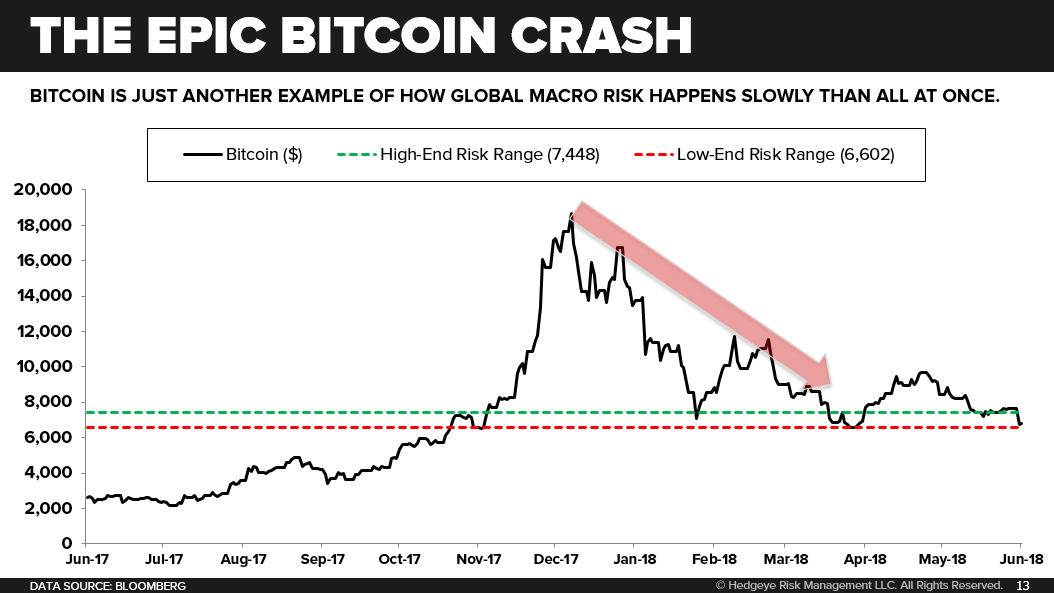
The bitcoin crash sets the stage for this enthralling narrative, offering readers a glimpse into a story that is rich in detail and brimming with originality from the outset.

By diving into the historical context, we uncover the various factors that contribute to the volatility of bitcoin, revealing how investor sentiment and external events can dramatically shift market dynamics. This exploration will cover significant past crashes, the psychological impacts on investors, and the strategies one can adopt to navigate through turbulent times in the cryptocurrency market.

Understanding the Bitcoin Crash

Bitcoin’s journey since its inception in 2009 has been marked by remarkable highs and devastating lows. Understanding the historical context of bitcoin crashes is crucial for anyone interested in the cryptocurrency market, as these events can significantly impact investor sentiment and market dynamics. Crashes serve as critical reminders of the volatility inherent in cryptocurrencies and highlight the relationship between market psychology and external stimuli.Various factors contribute to bitcoin crashes, often intertwining market psychology, external events, and regulatory news.

The cryptocurrency market is highly susceptible to speculative trading, which can lead to sharp price increases followed by equally steep declines. When fear grips investors—whether due to market trends or global events—the result is often a rapid sell-off, leading to significant price drops.

Historical Context of Bitcoin Crashes

Key events in bitcoin’s history demonstrate the market’s volatility and the triggers of substantial price reductions. Notable crashes include:

  • 2011 Crash: Bitcoin experienced its first major crash when the price soared to $31 in June 2011, only to plummet to around $2 by November due to security breaches and market skepticism.
  • 2013 Price Bubble and Crash: After reaching a high of $1,200 in late 2013, bitcoin’s price fell sharply to around $200 by early 2015, driven by regulatory concerns and exchange hacks.
  • 2017 Boom and Crash: Bitcoin skyrocketed to nearly $20,000 in December 2017, followed by a protracted bear market that saw the price drop to around $3,200 by December 2018. This significant decline was fueled by market speculation and regulatory scrutiny.
  • 2020-2021 Fluctuations: Following the pandemic’s onset, bitcoin soared to an all-time high of over $64,000 in April 2021. However, by July 2021, it had dropped to about $30,000 due to market corrections and environmental concerns regarding bitcoin mining.

These events highlight that the causes of bitcoin crashes are often multi-faceted. External factors, such as regulatory announcements or technological vulnerabilities, can have immediate effects on investor confidence, leading to market sell-offs. Furthermore, the psychological aspects of trading play a significant role, as fear and greed drive price movements.

Common Factors Leading to Bitcoin Crashes

Several consistent factors contribute to bitcoin crashes:

  • Market Psychology: Investor sentiment can shift rapidly, leading to panic selling when prices begin to drop.
  • Regulatory Changes: Announcements from governments or regulatory bodies concerning cryptocurrency can create uncertainty, prompting investor retreat.
  • Technological Vulnerabilities: Security breaches in exchanges or wallets can erode trust in the market and result in crashes.
  • Market Manipulation: Activities such as pump-and-dump schemes can artificially inflate prices, leading to inevitable corrections.

The interplay of these factors creates a volatile environment that can lead to sudden and severe price drops. Awareness of these triggers is essential for investors navigating the unpredictable waters of the cryptocurrency market.

“The cryptocurrency market is a reflection of collective human behavior; emotions can fuel both euphoric highs and devastating lows.”

Causes of Bitcoin Price Volatility

The volatility of Bitcoin is a phenomenon that has garnered significant attention from investors and analysts alike. Various factors contribute to the rapid fluctuations in its price, which can lead to substantial gains or losses within short timeframes. Understanding these causes is essential for anyone looking to navigate the cryptocurrency market effectively.

Investor Sentiment

Investor sentiment plays a critical role in Bitcoin’s price volatility. Market perceptions can shift rapidly based on news, social media discussions, or influential figures within the finance and technology sectors. For instance, when a high-profile investor publicly endorses Bitcoin, it can lead to a surge in demand, driving prices upward. Conversely, negative news, such as security breaches or unfavorable regulations, can instill fear among investors, prompting massive sell-offs.

“Fear and greed are the two emotions that primarily drive the market sentiment.”

Investors often react to market trends rather than fundamental analysis, leading to herd behavior that amplifies price swings. For example, during the 2017 bull run, the excitement around Bitcoin saw its price soar to nearly $20,000, driven largely by speculative trading and mass media coverage. However, the subsequent crash in early 2018 highlighted how fragile these sentiments can be, as many investors panicked and exited the market.

Regulatory Changes

Regulatory developments across different countries significantly impact Bitcoin prices. Governments around the world are still grappling with how to approach cryptocurrencies, leading to a patchwork of regulations that can create uncertainty. For instance, announcements of stricter regulations in major markets like the United States or China have historically resulted in immediate price drops, as investors react to the potential for future restrictions on trading or usage.The implications of regulatory changes can be profound, as they often dictate the legitimacy and operational framework for Bitcoin.

A real-life example includes the 2017 decision by China to ban initial coin offerings and shut down domestic cryptocurrency exchanges, which caused Bitcoin’s price to plummet from $4,000 to $3,000 within days. Conversely, regulatory acceptance, such as Bitcoin being recognized as legal tender in El Salvador in 2021, has the potential to boost confidence and prices significantly.

Technological Developments

Technological advancements within the Bitcoin ecosystem can lead to price instability as well. Upgrades to the Bitcoin protocol, such as the implementation of the Segregated Witness (SegWit) or the Bitcoin Lightning Network, aim to enhance transaction speeds and lower fees. While these developments are generally positive, they can also lead to uncertainty during their introduction phases, as investors weigh the potential benefits against the risks of unforeseen issues.Additionally, forks in the Bitcoin blockchain can create market confusion and lead to price volatility.

When Bitcoin underwent a split resulting in Bitcoin Cash in 2017, the event caused significant fluctuations in Bitcoin’s price as traders speculated on which version of the currency would hold more value in the long run. These technological factors highlight how the evolving nature of Bitcoin can influence investor confidence and market dynamics, contributing to its overall price volatility.

Effects of Bitcoin Crashes on Investors

The volatility of Bitcoin often leads to dramatic price swings, which can have significant repercussions for investors. Understanding these effects is crucial for anyone involved in the cryptocurrency market, as the financial, emotional, and psychological consequences can vary widely among different types of investors. The aftermath of a Bitcoin crash can trigger various financial consequences for investors, ranging from severe losses to missed opportunities for strategic buying.

During market downturns, the impact on investors can be categorized into distinct groups: retail investors and institutional investors.

Financial Consequences for Investors

The financial ramifications of a Bitcoin crash can be substantial, affecting individual portfolios and the broader market. The following points highlight the potential consequences faced by investors during such downturns:

  • Loss of Capital: Many investors experience significant drops in their investment value. For instance, during the crash in March 2020, Bitcoin’s price fell from nearly $9,000 to around $4,000 in just a few days, leading to substantial paper losses for retail investors.
  • Margin Calls: Investors using leverage are particularly vulnerable. If the value of their collateral falls below a certain threshold, they may receive margin calls, forcing them to sell assets at a loss to cover the borrowed funds.
  • Panic Selling: Emotional reactions to market crashes can lead to irrational decisions. Retail investors, in particular, may sell at the lowest points, exacerbating their losses and missing potential rebounds.
  • Buying Opportunities: Some investors view crashes as opportunities to accumulate Bitcoin at lower prices. For example, savvy investors who purchased Bitcoin during the 2018 crash saw significant gains when the market recovered in subsequent years.

Investor Reactions: Retail vs. Institutional

Differentiating the responses to crashes between retail and institutional investors reveals different strategies and levels of resilience. Retail investors often react more emotionally, while institutional investors are generally more calculated in their approach. The following case studies illustrate how these two groups respond to crashes:

  • Retail Investors: A large number of retail investors may panic sell during downturns, driven by fear and media coverage of negative sentiment. For instance, during the 2014 crash, many individual investors lost faith and exited the market entirely.
  • Institutional Investors: On the other hand, institutional players often utilize sophisticated risk management strategies. During the 2020 crash, institutions like MicroStrategy and Square seized the opportunity to purchase Bitcoin at lower prices, demonstrating a long-term investment perspective.

Emotional and Psychological Impacts

The emotional and psychological effects of a Bitcoin crash can be profound, influencing future investment decisions and overall market behavior. Investors often experience a range of emotions during these stressful periods, impacting their willingness to engage with the market.Key psychological impacts include:

  • Fear and Anxiety: The immediate aftermath of a crash typically results in heightened fear and anxiety among investors, leading to a reluctance to reinvest even when market conditions improve.
  • Loss of Confidence: Persistent downturns can erode trust in Bitcoin as a viable investment, especially for newer investors who may not have experienced significant market recoveries.
  • Overtrading: In an attempt to make up for losses, some investors may engage in overtrading, increasing their exposure to risk and compounding their psychological stress.
  • Long-term Perspective Shift: Crashes can also prompt investors to reassess their strategies, leading some to adopt a more cautious or conservative approach in the future.

By understanding these various effects, investors can better navigate the challenges posed by Bitcoin crashes and develop strategies to mitigate their risks.

Strategies for Navigating a Bitcoin Crash

Navigating a Bitcoin crash can be daunting for investors, especially given the inherent volatility of the cryptocurrency market. However, employing effective strategies can help mitigate risks and position investors for recovery. It’s essential to be prepared and to understand the tools at your disposal during turbulent times.Risk management techniques play a crucial role in safeguarding investments during market downturns. These techniques can help investors minimize losses and make informed decisions:

Risk Management Techniques

Implementing sound risk management techniques is vital when facing market volatility. Here are some strategies that can help:

  • Set Stop-Loss Orders: Establishing stop-loss orders can automate selling your Bitcoin at a predetermined price, limiting potential losses during a crash.
  • Maintain a Cash Reserve: Keeping a portion of your portfolio in cash allows for flexibility to buy opportunities during a downturn without having to liquidate other assets.
  • Regularly Assess Your Risk Tolerance: Understanding your risk tolerance can inform your investment choices and required adjustments during a crash.
  • Use Dollar-Cost Averaging: Investing a fixed amount of money in Bitcoin at regular intervals can help mitigate the impact of volatility by averaging out the purchase price.

Diversification is another critical component of a well-rounded investment strategy. By spreading investments across various assets, investors can reduce their exposure to Bitcoin-specific risks.

Importance of Diversification

Diversification helps to cushion against the impact of a Bitcoin crash. A well-diversified portfolio can buffer against significant losses by balancing investments across different asset classes.

  • Spread Across Asset Classes: Investing in stocks, bonds, and commodities alongside Bitcoin can help stabilize your portfolio since these assets may not correlate with Bitcoin’s performance.
  • Consider Stablecoins: Allocating a portion of your investment to stablecoins can provide liquidity and reduce volatility while still being involved in the cryptocurrency market.
  • Invest in Other Cryptocurrencies: Diversifying into other cryptocurrencies can spread risk while still participating in the potential growth of the crypto market.

Preparing for potential market declines is essential for any investor looking to navigate Bitcoin’s ups and downs effectively. Proactive measures can make a significant difference during a crash.

Proactive Measures for Market Declines

Taking proactive steps can position investors advantageously for when market conditions worsen. Here are some effective measures to consider:

  • Stay Educated: Continuously updating your knowledge about market trends, technology, and regulatory changes can help you make informed decisions.
  • Develop a Plan: Having a well-defined investment strategy that includes how to respond to market crashes can help reduce emotional decisions during volatile times.
  • Monitor Market Sentiment: Keeping an eye on market sentiment can provide insights into potential downturns, allowing for timely adjustments to your portfolio.
  • Network with Other Investors: Engaging with a community of investors can provide support and shared insights that can inform better decision-making during crashes.

Recovery Patterns Following a Bitcoin Crash

Historically, Bitcoin has displayed notable recovery patterns following significant market crashes. Understanding these patterns can help investors gauge when to re-enter the market and maximize their potential gains. Recovery phases often reveal how resilient the cryptocurrency is and highlight the cyclical nature of its price movements.After sharp declines, Bitcoin has frequently demonstrated robust recovery trends, often leading to new all-time highs.

This resilience can be attributed to several key factors that influence the market’s trajectory.

Historical Examples of Recovery

Past Bitcoin crashes have been followed by remarkable recoveries, characterized by distinct patterns and trends. Notable instances include:

  • 2013 Crash: After hitting a peak of around $1,150 in December 2013, Bitcoin’s price fell to approximately $200 by January 2015. However, it rebounded to over $19,000 by December 2017, showcasing an impressive recovery.
  • 2018 Bear Market: Following a decline from nearly $20,000 in late 2017 to around $3,200 by December 2018, Bitcoin eventually recovered to the $10,000 mark by the end of 2019, demonstrating a classic bull run.
  • March 2020 Crash: Bitcoin’s price plunged from $9,000 to about $4,000 amidst the COVID-19 pandemic. Remarkably, it surged past its pre-crash levels to achieve a new high of over $64,000 by April 2021, illustrating the rapid recovery potential.

These examples not only highlight the historic price volatility of Bitcoin but also underscore the potential for significant upside following downturns.

Indicators of Recovery

Certain indicators can signal the beginning of a recovery phase in Bitcoin’s price. Recognizing these signs can provide critical insights for investors looking to reposition themselves after a crash. Key indicators include:

  • Increased Trading Volume: A noticeable rise in trading volume often precedes upward price movements, indicating growing investor interest and market confidence.
  • Market Sentiment Shift: Positive news or developments surrounding Bitcoin, such as institutional adoption or favorable regulatory changes, can foster bullish sentiment, contributing to recovery.
  • Technical Analysis Patterns: Chart patterns, such as double bottoms or bullish divergences, can suggest potential reversal points, helping traders identify entry opportunities.
  • Support Levels Holding: When Bitcoin’s price consistently bounces off established support levels, it indicates resilience and can signal a turnaround in market sentiment.

Recognizing and analyzing these indicators can empower investors to make informed decisions during critical recovery phases.

“Understanding recovery patterns can provide investors with a roadmap to navigate the turbulent waters of Bitcoin’s price movements.”

Future Predictions for Bitcoin Price Stability

The future of Bitcoin price stability is a topic of keen interest among investors and analysts alike, especially in light of recent market fluctuations. As Bitcoin continues to mature as a digital asset, various factors, including technological advancements, market trends, and global economic conditions, will significantly influence its price trajectory. This analysis delves into current market trends and how they might shape Bitcoin’s future, while also considering external developments that could impact its stability.

Market Trends and Implications for Bitcoin’s Future

The cryptocurrency market is characterized by rapid changes, and Bitcoin often serves as a benchmark. Recent trends indicate a growing institutional interest in Bitcoin, which could lead to increased price stability. Institutions are adopting Bitcoin not just as a speculative asset but as a means of hedging against inflation and market volatility. This shift suggests a potential influx of significant capital, which may bolster Bitcoin’s price over the long term.Furthermore, regulatory developments play a crucial role in shaping market dynamics.

Countries that establish clear regulatory frameworks could enhance investor confidence, leading to more stable investment patterns. For instance, as the U.S. Securities and Exchange Commission (SEC) works towards clearer guidelines, this could encourage institutional investments, thereby stabilizing prices.

Impact of Blockchain Advancements on Price Stability

Emerging technologies and advancements in blockchain can greatly influence Bitcoin’s price stability. Innovations that improve transaction speed, security, and scalability can enhance Bitcoin’s utility and appeal. For example, the implementation of the Lightning Network aims to facilitate faster and cheaper transactions, potentially increasing Bitcoin’s everyday use as a currency.Additionally, developments in decentralized finance (DeFi) could create new avenues for Bitcoin utilization, further embedding it in the financial ecosystem.

As Bitcoin becomes more integrated into various financial platforms, it may experience less volatility due to its broader acceptance and use.

Future Scenarios Based on Economic Conditions

The following table illustrates potential future scenarios for Bitcoin’s price stability based on varying economic conditions and investor behavior. Each scenario considers factors such as market sentiment, regulatory actions, and technological advancements.

Economic Condition Investor Behavior Potential Bitcoin Price Stability
Strong Economic Growth Increased Institutional Investment High Stability with Potential Price Growth
Economic Recession Flight to Safety Increased Volatility as Bitcoin is Seen as a Risky Asset
Regulatory Clarity Widespread Adoption Increased Stability and Gradual Price Increase
Technological Breakthrough Increased Use Cases Improved Stability with Price Boosts

This table emphasizes how different economic environments and investor responses can shape the future of Bitcoin’s price stability. As the market continues evolving, monitoring these variables will be essential for stakeholders aiming to navigate this dynamic landscape.

Final Thoughts

Bitcoin crash

In conclusion, understanding the bitcoin crash is crucial for any investor looking to navigate the complexities of the cryptocurrency landscape. By learning from past events and implementing effective strategies, one can better prepare for potential downturns while also recognizing opportunities for future growth. The evolving nature of bitcoin and its market dynamics promises to remain a captivating subject for enthusiasts and investors alike.

Top FAQs

What typically triggers a bitcoin crash?

A bitcoin crash can be triggered by a variety of factors, including regulatory news, market sentiment shifts, technological failures, or major external economic events.

How can investors protect themselves during a bitcoin crash?

Investors can protect themselves by diversifying their portfolios, employing risk management techniques, and setting predetermined stop-loss orders to minimize potential losses.

Are bitcoin crashes predictable?

While certain indicators and patterns may suggest potential downturns, predicting a bitcoin crash with absolute certainty remains challenging due to the market’s volatility.

What impact do institutional investors have on bitcoin price stability?

Institutional investors can significantly impact bitcoin price stability as their large transactions can lead to increased liquidity but also heightened volatility during market fluctuations.

How long does it typically take for bitcoin to recover after a crash?

The recovery time for bitcoin can vary widely, with historical patterns suggesting it can take anywhere from a few months to several years, depending on market conditions and investor sentiment.

Buying Bitcoin with PayPal in New Zealand is a topic that sparks interest for many. Understanding the options available, the potential limitations, and the associated risks is crucial for anyone considering this method. This guide explores the possibilities and alternatives, providing a comprehensive overview of the process.

New Zealand’s cryptocurrency landscape is growing, but navigating the intricacies of purchasing Bitcoin, especially with a widely-used platform like PayPal, requires careful consideration. This exploration delves into the specific considerations for users in New Zealand.

Overview of Bitcoin Purchasing Methods

Acquiring Bitcoin involves various methods, each with its own advantages and disadvantages. Understanding these options allows individuals to make informed decisions about the best approach for their needs and circumstances. This overview details the common platforms and services used, along with the accepted payment methods.The increasing popularity of Bitcoin and other cryptocurrencies has led to a proliferation of platforms and services dedicated to facilitating their purchase.

This accessibility has broadened the scope of users and investors, but also presents a complex landscape for newcomers.

Bitcoin Exchange Platforms

Numerous online platforms specialize in facilitating the exchange of fiat currency (like New Zealand dollars) for cryptocurrencies like Bitcoin. These exchanges usually provide a user-friendly interface for managing accounts, placing orders, and tracking transactions. Examples include Kraken, Coinbase, and Binance. Each platform typically has its own set of fees, trading rules, and security protocols.

Over-the-Counter (OTC) Markets

For larger transactions or those requiring more personalized service, OTC markets offer a direct approach to buying Bitcoin. Individuals or businesses can connect directly with brokers or traders to negotiate the price and terms of a transaction. This can be a viable option for high-volume purchases or when speed is critical, but it often comes with a higher degree of risk compared to exchange platforms.

Specialized Crypto Brokerages

Some financial institutions now offer dedicated brokerage services for cryptocurrency investments, providing a potentially more regulated and accessible avenue for purchasing Bitcoin. These brokerages often integrate crypto trading directly into existing account platforms, offering familiarity and streamlined workflows.

Payment Methods for Bitcoin Purchases

A range of payment methods are accepted for buying Bitcoin, each with varying implications. Common options include bank transfers, credit/debit cards, and digital wallets. The choice of payment method often depends on individual preferences, transaction fees, and the platform’s acceptance criteria.

Comparison of Bitcoin Purchasing Methods

Method Pros Cons Availability (NZ)
Bitcoin Exchanges (e.g., Coinbase, Kraken) User-friendly interfaces, readily available, generally lower transaction fees for smaller purchases, established security protocols. Potential for higher fees for larger purchases, reliance on third-party platform, limitations on customization. High
OTC Markets Direct negotiation for price and terms, potentially lower fees for large transactions, tailored to individual needs. Higher risk due to direct interaction with a counterparty, potentially more challenging to verify legitimacy of counterparty, more time consuming. Moderate
Specialized Crypto Brokerages Integration with existing financial platforms, potentially more regulated, access to financial tools and analytics. Might have stricter KYC (Know Your Customer) procedures, fees can vary, limited customization options compared to OTC markets. Increasing

Specifics on Buying Bitcoin with PayPal in New Zealand

Unfortunately, direct Bitcoin purchases using PayPal are not readily available in New Zealand. While PayPal itself facilitates a wide range of transactions globally, the integration with Bitcoin services is not currently established within the New Zealand market. This means that you cannot use PayPal to directly buy Bitcoin on most exchanges operating within New Zealand.While PayPal isn’t a direct option for buying Bitcoin, there are alternative methods available to New Zealand users, and these often involve using a different payment method on a compatible platform.

These alternatives can sometimes involve extra steps and may incur additional fees.

Availability of PayPal for Bitcoin Purchases in New Zealand

Currently, there’s no direct support for using PayPal to buy Bitcoin on New Zealand-based cryptocurrency exchanges. Users in New Zealand seeking to acquire Bitcoin need to utilize alternative payment methods.

Limitations and Restrictions

The absence of direct PayPal support for Bitcoin purchases in New Zealand means users cannot directly initiate transactions using their PayPal accounts. This restriction impacts the convenience and speed of the process compared to other payment options.

Alternative Purchasing Methods

While PayPal isn’t directly applicable, various other payment methods can be used to acquire Bitcoin. These often involve using a compatible platform, such as a cryptocurrency exchange that supports alternative payment methods like bank transfers, credit/debit cards, or other digital wallets.

Comparison of Fees and Transaction Times

Comparing fees and transaction times between PayPal and other methods requires careful consideration of the specific exchange or platform being used. For example, using a bank transfer may offer lower fees but slower transaction times compared to credit/debit cards.

Security Considerations

Security remains a crucial aspect, regardless of the payment method chosen. Users should prioritize selecting reputable exchanges and verifying their security protocols. Always check for features like two-factor authentication and secure storage practices to safeguard digital assets.

Comparison Table of Exchanges

Exchange Fees Transaction Speed User Reviews (NZ)
Binance Variable, dependent on transaction type. Typically 0.1% – 0.5%. Generally fast, often within minutes for smaller transactions. Potentially slower during high-volume periods. Generally positive, with some user reports of issues with customer support or specific features. Important to review recent user feedback.
Coinbase Variable, dependent on transaction type. Often around 0.5% to 1.5%. Usually quick, but can be slower for large transactions or during periods of high trading volume. Generally positive, known for user-friendly interface. However, recent reviews might indicate some areas for improvement, such as the speed of certain transactions.
Kraken Variable, dependent on transaction type. Often around 0.2% – 1%. Generally fast, with transactions typically completed within a few hours. Positive reviews regarding the exchange’s security features and overall platform stability.

Alternatives to Buying Bitcoin with PayPal in New Zealand

Purchasing Bitcoin with PayPal in New Zealand might not be the only, or necessarily the best, option. Alternative methods often offer greater flexibility, better pricing, or enhanced security features. This section explores several viable alternatives to buying Bitcoin using PayPal, providing a comparative analysis of their strengths and weaknesses.Alternative methods for acquiring Bitcoin in New Zealand are plentiful, each with its own set of advantages and disadvantages.

A crucial factor in choosing the right alternative is understanding the nuances of each platform, including the fees associated, the security protocols employed, and the overall user experience.

Reputable Cryptocurrency Exchanges in New Zealand

Several reputable cryptocurrency exchanges operate within New Zealand, offering a diverse range of payment methods for purchasing Bitcoin and other cryptocurrencies. These platforms provide a structured environment for buying, selling, and trading digital assets. Choosing a reliable exchange is essential to safeguarding your funds and ensuring a smooth transaction process.

  • LocalBitcoins: A peer-to-peer (P2P) platform connecting buyers and sellers directly. This allows for potentially lower fees compared to traditional exchanges, but carries inherent risks due to the direct nature of transactions. Verification procedures may vary.
  • Binance: A globally recognized exchange offering a wide range of cryptocurrencies, including Bitcoin. While Binance provides a comprehensive platform, users need to be aware of the regulatory environment in New Zealand, as specific licensing requirements may exist.
  • Kraken: Another internationally renowned exchange known for its robust security measures and user-friendly interface. Kraken is a popular choice for both novice and experienced traders, providing a platform with various features.
  • Coinbase: A popular global platform that caters to a wide range of users. Coinbase offers a user-friendly experience, with many features tailored for beginners. However, fees and availability may vary based on the specific user’s location and circumstances.

Payment Methods Accepted by New Zealand Exchanges

Different exchanges cater to various payment methods. The availability and acceptance of these methods can impact the user experience and convenience of purchasing Bitcoin.

  • Bank Transfers: A traditional payment method often supported by exchanges, enabling a secure and widely accepted way to transfer funds. However, processing times can vary.
  • Credit/Debit Cards: Common payment methods for quick and convenient transactions. Fees and transaction limits may apply, depending on the specific exchange and card provider.
  • Cryptocurrency Transfers: Transfers using other cryptocurrencies are frequently available, allowing for direct exchange between digital assets. Transaction speed and costs depend on the selected cryptocurrency.
  • E-wallets: Electronic wallets, such as Skrill or Neteller, facilitate fast and secure transactions, enabling users to transfer funds to the exchange quickly. The availability of these options may differ across exchanges.

Comparison Table of Bitcoin Purchasing Alternatives

The table below contrasts different alternatives for purchasing Bitcoin in New Zealand, focusing on fees, security, and user experience.

Alternative Pros Cons Security Rating
LocalBitcoins Potentially lower fees, direct interaction with sellers. Higher risk due to P2P nature, varying seller reliability. Medium
Binance Wide range of cryptocurrencies, advanced trading features. Potential regulatory hurdles in New Zealand, higher fees compared to some P2P platforms. High
Kraken Strong security measures, user-friendly interface, reputable global platform. May have higher fees compared to LocalBitcoins, regulatory considerations for New Zealand users. High
Coinbase User-friendly interface, wide acceptance of payment methods. Potentially higher fees, may have limited advanced features compared to other exchanges. High

General Information on Buying Bitcoin

Buying Bitcoin involves a few key steps and considerations. Understanding the process, including the importance of secure wallets and safe transaction practices, is crucial for a smooth and secure experience. This section will Artikel the general procedure, focusing on user safety and security best practices.The bitcoin buying process generally involves selecting a reputable platform, transferring funds, and confirming the transaction.

The process can vary depending on the chosen platform and method, but the core principles remain consistent.

Bitcoin Wallets

Bitcoin wallets are essential for storing and managing your bitcoin. They act as digital containers for your cryptocurrency, allowing you to send and receive transactions. Without a wallet, you wouldn’t have a place to hold your bitcoin.

Types of Bitcoin Wallets

Different types of wallets cater to various needs and security levels.

  • Desktop Wallets: These wallets are installed on your computer and provide a high degree of control over your bitcoin. They often offer advanced features and security options. An example would be Electrum, a popular and secure choice for desktop use.
  • Mobile Wallets: These wallets are accessible through your smartphone, offering convenience and portability. They typically have a simpler interface than desktop wallets, making them easier to use on the go. A mobile wallet can be a good option for those who want easy access but must prioritize security features.
  • Web Wallets: These wallets operate within a web browser, offering a user-friendly interface but relying on the security of the service provider. Users should be cautious and only use reputable web wallets, as security is reliant on the platform.

Security Measures

Taking the right security precautions is vital to protect your bitcoin. These precautions should be considered throughout the entire process.

  • Strong Passwords: Use unique and complex passwords for your wallet and accounts, and avoid reusing passwords from other services. This is fundamental to protecting your digital assets.
  • Two-Factor Authentication (2FA): Enable 2FA whenever possible. This adds an extra layer of security, requiring a second verification method to access your account.
  • Regular Updates: Keep your software, including your wallet and any platform used for purchasing bitcoin, up-to-date. Updates often include crucial security patches to prevent vulnerabilities.
  • Phishing Awareness: Be wary of suspicious emails, messages, or websites asking for your login credentials. Phishing attempts are a common threat to cryptocurrency users. Verify the authenticity of any requests.

Protecting Your Bitcoin Wallet

Protecting your bitcoin wallet from theft or unauthorized access is paramount. This is crucial for maintaining your digital assets.

  • Store Your Seed Phrase Securely: Your seed phrase is the key to accessing your wallet. Write it down in multiple secure locations, and keep it separate from your wallet software.
  • Avoid Sharing Your Private Keys: Never share your private keys with anyone. These keys grant access to your bitcoin, and unauthorized access can lead to significant losses.
  • Monitor Transactions Regularly: Keep track of your transactions and be alert for any unauthorized activity on your wallet. Be aware of possible fraudulent attempts.

Step-by-Step Guide to Buying Bitcoin

A step-by-step guide to buying bitcoin will enhance the user experience and safety. This guide focuses on secure practices.

  1. Choose a Reputable Platform: Research and select a reputable exchange or platform for buying bitcoin. Verify their security measures and customer reviews.
  2. Create an Account: Complete the account creation process on the chosen platform, providing accurate and verifiable information.
  3. Fund Your Account: Deposit funds into your account using the supported methods. Follow the platform’s instructions carefully to ensure a smooth transaction.
  4. Place Your Order: Place a buy order for the desired amount of bitcoin. Confirm the order details to ensure accuracy.
  5. Verify Transactions: Monitor the transaction status and wait for confirmation. Be aware of the confirmation timeframes.
  6. Store Your Bitcoin Securely: Transfer your bitcoin to a secure wallet after the transaction is confirmed. This step ensures the long-term security of your bitcoin.

Bitcoin Transactions

Understanding bitcoin transactions is crucial for managing your holdings effectively. This includes knowing the process, times, and fees.

  • Confirmation Times: Bitcoin transactions typically require several confirmations to be considered final. The number of confirmations required varies, but a higher number indicates greater security. Real-world examples show that several confirmations, depending on the network congestion, are necessary for finality.
  • Transaction Fees: Transaction fees are often necessary to process bitcoin transactions. Fees vary depending on network congestion. Higher fees might be needed during peak times.

Illustrative Example of Bitcoin Purchase

Imagine you’re keen to explore Bitcoin, and want to buy some using your PayPal account in New Zealand. This example walks you through a typical purchase process, assuming you’ve already chosen a reputable Bitcoin exchange platform that supports PayPal.This scenario details the common steps involved in buying Bitcoin using PayPal, focusing on clarity and ease of understanding. The specific platform used will vary, but the general process remains consistent.

A Typical Bitcoin Purchase Using PayPal

The process involves several key steps, each contributing to a secure and efficient transaction.

  • Account Creation and Verification: First, you need to create an account on a platform that allows Bitcoin purchases using PayPal. This typically involves providing personal information and confirming your identity through verification procedures. These steps ensure the platform adheres to security regulations and protects your funds.
  • Linking Your PayPal Account: Once your account is set up, you’ll need to link your PayPal account to your Bitcoin exchange platform account. This allows the platform to connect your PayPal balance with your Bitcoin wallet, facilitating the transaction.
  • Bitcoin Purchase Authorization: You’ll specify the amount of Bitcoin you wish to purchase. The platform will present the current Bitcoin price, enabling you to confirm the transaction details. You will be required to authorize the purchase through the platform’s secure interface. A crucial step in confirming that you’re aware of the price and the amount being transferred.
  • PayPal Funds Transfer: The platform will initiate a request to transfer the equivalent amount in New Zealand Dollars from your PayPal account to the platform’s account. This step typically involves a few moments to process the transaction. The system will alert you about the status of the transfer.
  • Bitcoin Wallet Credit: Following successful completion of the transfer, the platform will credit your Bitcoin wallet with the purchased Bitcoin. The transaction confirmation from the platform is an essential part of the process, ensuring the Bitcoin is in your possession. A confirmation email or message is typically sent to your email address registered with the platform.

Visual Representation of the Transaction

The transaction can be visualized as a series of steps, each representing a particular stage in the purchase process.

The transaction is initiated by you, the user, specifying the amount of Bitcoin you want to purchase using PayPal. The platform then processes this request, confirming the details with you, before transferring the funds from your PayPal account to its account. Finally, the Bitcoin is credited to your wallet.

  1. User Initiates Purchase: You, as the user, choose the desired Bitcoin amount, initiating the process on the platform’s interface.
  2. Platform Processes Request: The platform confirms the details of your request and then initiates a transfer request to PayPal.
  3. PayPal Transfer: PayPal processes the transaction and sends the funds to the platform.
  4. Bitcoin Wallet Credit: The platform confirms the successful transfer and credits your Bitcoin wallet with the purchased amount.

Final Review

In summary, while PayPal isn’t universally available for Bitcoin purchases in New Zealand, alternative methods exist. Understanding the various exchanges, payment options, and associated fees is key to making informed decisions. This guide provides a comprehensive overview of the process, equipping you with the knowledge needed to navigate the world of Bitcoin purchases safely and effectively.

FAQ

Can I use my regular bank account to buy Bitcoin with PayPal in New Zealand?

No. PayPal transactions typically involve connecting to your bank account for funding, but not directly for purchasing Bitcoin. You’ll need to use an exchange that accepts PayPal as a payment method.

What are the typical fees associated with buying Bitcoin using PayPal in New Zealand?

Fees vary depending on the exchange. Some exchanges charge transaction fees, while others may also include a percentage of the purchase price. Always check the exchange’s specific fee structure.

What are some alternative methods for purchasing Bitcoin in New Zealand besides using PayPal?

Popular alternatives include using bank transfers, credit/debit cards, or other cryptocurrency exchanges. Research different options to find the best fit for your needs and financial situation.

How secure are Bitcoin transactions in New Zealand?

Bitcoin transactions are generally secure, but users should prioritize reputable exchanges and take steps to protect their accounts (strong passwords, 2-factor authentication). Always research and select exchanges with a good track record for security.

Buying Bitcoin in 2013 was a unique experience, a period of rapid growth and volatility. The landscape was vastly different from today’s options, presenting a fascinating case study for investors and enthusiasts alike. Early adopters navigated a world of nascent platforms and limited information, making choices with varying degrees of understanding.

This exploration dives into the intricacies of purchasing Bitcoin in 2013, examining the available methods, market trends, and the impact on those who made the leap. We’ll compare and contrast the experience with modern Bitcoin acquisition to highlight the evolution of this digital asset.

Introduction to Bitcoin in 2013

Bitcoin, in 2013, was a nascent digital currency experiencing a period of rapid growth and evolving adoption. While the core technology had been around for a few years, 2013 marked a pivotal year in its public perception and market trajectory. This period saw significant price fluctuations, heightened interest from investors, and the emergence of the first major Bitcoin exchanges.The Bitcoin ecosystem in 2013 was considerably different from today’s.

Transactions were slower, the overall network capacity was much lower, and the understanding of Bitcoin’s potential, as well as its inherent risks, was still developing. The year was a period of experimentation, both in terms of use cases and the way the technology was perceived.

Bitcoin’s Development and Adoption in 2013

Bitcoin’s development, prior to 2013, had established a foundation of trust and credibility. It was already a peer-to-peer digital cash system operating on a decentralized network. Early adopters and enthusiasts were actively promoting Bitcoin and its potential. However, the technology and its practical application were still largely unknown to the mainstream public. The year 2013 witnessed the start of a broader conversation about Bitcoin, driving both increased investment and scrutiny.

Key Characteristics and Features of Bitcoin in 2013

Bitcoin in 2013 possessed several defining characteristics that set it apart from its current state. The network was significantly smaller, with fewer users and a lower transaction volume. The technology itself was less refined, leading to occasional network issues and slower transaction times. Security measures were less robust compared to today’s standards. Moreover, the regulatory environment surrounding cryptocurrencies was largely non-existent, creating an environment ripe for speculation.

Economic and Technological Landscape of 2013

The economic and technological backdrop of 2013 significantly influenced Bitcoin’s trajectory. The global economy was experiencing a period of recovery from the 2008 financial crisis. This created a backdrop of uncertainty and a search for alternative investment avenues. Technological advancements, like the rise of smartphones and increased internet access, were also contributing factors to the growing interest in digital currencies.

The general perception of Bitcoin was that it was a volatile asset, with the potential for substantial gains, but also significant risks.

Bitcoin’s Price and Market Capitalization Comparison

Metric 2013 Current
Bitcoin Price (USD) Average around $1,000 Fluctuating, currently in the thousands of dollars
Market Capitalization (USD) Comparatively smaller, estimated in billions Trillions, often fluctuating

The table above offers a snapshot of the stark contrast between Bitcoin’s valuation in 2013 and its current status. The evolution reflects the immense growth and adoption of the technology, impacting its market capitalization and value.

Buying Bitcoin in 2013

Acquiring Bitcoin in 2013 was a far cry from the modern user-friendly exchanges. The landscape was nascent, with limited options and a steep learning curve. Understanding the available methods and the associated challenges was crucial for anyone wishing to participate in this burgeoning market. Early adopters often relied on forums, word-of-mouth, and a degree of inherent risk tolerance.

Primary Methods for Purchasing Bitcoin

The primary methods for acquiring Bitcoin in 2013 involved direct exchanges with other users. These transactions were typically facilitated through online forums and peer-to-peer marketplaces. Specialized Bitcoin exchanges, though emerging, were not as prevalent or user-friendly as today’s options. Furthermore, some individuals used alternative payment methods such as money orders or bank transfers. This often involved significant manual effort and a degree of trust in the counterparty.

Bitcoin Exchanges and Platforms

Several Bitcoin exchanges operated in 2013, but their functionality and features varied considerably from today’s standards. Some prominent platforms included Mt. Gox, Bitstamp, and others. These platforms provided a centralized marketplace for Bitcoin trading, enabling buyers to exchange traditional currency for Bitcoin. However, these early exchanges often faced issues with security, liquidity, and regulatory clarity.

Comparison of Bitcoin Exchange Platforms in 2013

The table below provides a comparative overview of key characteristics of notable Bitcoin exchange platforms in 2013.

Platform Fees Security Measures Limitations
Mt. Gox Variable, often low but with potential hidden costs. Limited security measures compared to modern standards. Susceptible to hacking and operational vulnerabilities; experienced a significant security breach.
Bitstamp Variable, with potential transaction fees. Basic security protocols for the time. Liquidity could be lower compared to some newer exchanges.
Other Exchanges Varied, depending on the specific exchange and the transaction amount. Security measures often rudimentary, relying on the exchange’s reputation. Limited user support and technical assistance.

The table highlights the disparity in security, fees, and overall user experience across platforms. Many platforms lacked robust security measures, leading to increased risks for users. Fees were often variable and potentially less transparent than current practices. Limitations included operational vulnerabilities and restricted functionalities.

Market Trends and Price Fluctuations of 2013

Bitcoin’s journey in 2013 was a rollercoaster of volatility. The year saw significant price swings, driven by a mix of technological advancements, media attention, regulatory uncertainty, and investor sentiment. This dynamic environment profoundly shaped the nascent cryptocurrency market.The year 2013 was a crucial period for Bitcoin’s development, as it experienced a dramatic growth in adoption and recognition, yet also encountered periods of significant price fluctuations.

Understanding the key market events and price movements is essential for comprehending the forces that have shaped Bitcoin’s evolution.

Major Market Events Influencing Bitcoin’s Price

Several significant news events and market developments influenced Bitcoin’s price in 2013. These included regulatory discussions, prominent media coverage, and the emergence of new trading platforms. These events, in turn, affected investor confidence and trading volumes, ultimately impacting Bitcoin’s value.

Significant Price Spikes and Drops

Bitcoin’s price in 2013 saw periods of substantial growth and sharp declines. These fluctuations were often driven by a complex interplay of factors. The following list illustrates the prominent price changes during the year.

  • January to March 2013: Bitcoin’s price exhibited a gradual upward trend, reaching a peak in March. This was partly due to increasing investor interest and the growing recognition of Bitcoin as a digital asset.
  • April to June 2013: The price experienced a notable correction, with fluctuations around previously attained high values. Several factors likely contributed to this, including increased scrutiny from regulators and the emergence of concerns about the security and stability of the Bitcoin network.
  • July to September 2013: Bitcoin’s price surged significantly, with notable spikes throughout the period. This increase can be attributed to positive media coverage and the expanding accessibility of Bitcoin trading platforms, leading to heightened investor interest.
  • October to December 2013: A substantial price drop occurred in this period, with values significantly declining from the highs of the previous quarter. The price drop was potentially caused by a combination of regulatory concerns, negative media reports, and broader market sentiment.

Factors Contributing to Price Fluctuations

Bitcoin’s price in 2013 was volatile due to various interconnected factors. News reports and regulatory discussions played a significant role in shaping investor sentiment. The emergence of new trading platforms and exchange services influenced market liquidity and trading activity. Furthermore, the relative scarcity of Bitcoin, combined with the rapid adoption of the technology, led to price spikes and subsequent corrections.

Bitcoin Price Changes Throughout 2013

The table below illustrates the approximate daily or weekly price changes of Bitcoin in 2013. Note that precise data was not always readily available during that period, so this data represents an approximation based on available records.

Date Approximate Price (USD) Change from Previous Day (USD)
January 1, 2013 13.50
February 1, 2013 15.00 +1.50
March 1, 2013 20.00 +5.00
April 1, 2013 17.50 -2.50
May 1, 2013 25.00 +7.50
June 1, 2013 22.00 -3.00
July 1, 2013 35.00 +13.00
August 1, 2013 40.00 +5.00
September 1, 2013 30.00 -10.00
October 1, 2013 15.00 -15.00
November 1, 2013 18.00 +3.00
December 1, 2013 12.00 -6.00

Buying Bitcoin Today

The landscape of cryptocurrency acquisition has undergone a significant transformation since 2013. Today’s methods offer increased accessibility, security, and user-friendliness compared to the nascent days of Bitcoin. This evolution reflects the maturation of the financial technology sector and the broader acceptance of digital assets.The buying process has become significantly more streamlined and accessible, attracting a wider range of users.

This shift is reflected in the expanded range of platforms and methods available, offering more choices and potentially greater returns. However, this evolution also brings new considerations for security and user experience.

Current Methods for Buying Bitcoin

The methods available for purchasing Bitcoin today are substantially more varied and accessible than in 2013. This expansion stems from increased demand and technological advancement. Major players in the market have emerged, offering a wider range of services and tools to cater to different user needs and risk tolerances.

  • Crypto Exchanges: Platforms like Coinbase, Kraken, and Binance allow users to buy Bitcoin with traditional fiat currencies like USD or EUR. These exchanges typically offer advanced trading features, enabling users to execute trades with greater precision and efficiency, as well as offering various account types. This represents a significant departure from the early days when buying Bitcoin often required specialized knowledge or direct peer-to-peer transactions.

  • Over-the-Counter (OTC) Brokers: For larger transactions or institutional investors, OTC brokers offer tailored solutions. These brokers facilitate transactions directly between buyers and sellers, bypassing the exchange platform. This method often provides greater flexibility but can also involve higher transaction fees and increased risk, as it’s not regulated in all cases.
  • Debit/Credit Cards and Bank Transfers: Many exchanges now support direct bank transfers and credit/debit card payments, enabling a seamless purchasing experience. This contrasts with 2013, when such methods were significantly less common or often required more complex intermediary steps.

Comparison with 2013

The ease and availability of buying Bitcoin today differ dramatically from 2013. The introduction of regulated exchanges and widespread acceptance of credit/debit card payments have broadened access.

  • Accessibility: In 2013, purchasing Bitcoin often required specialized knowledge and access to specific online forums. Today, many major banks offer Bitcoin-related services. This broader accessibility and the rise of dedicated exchanges have democratized the process, allowing a wider range of people to participate.
  • Security: Today’s exchanges have implemented robust security measures, including multi-factor authentication and advanced fraud detection systems. This contrasts sharply with the relatively limited security measures in place in 2013. Security protocols are continuously evolving, and the industry is proactively addressing vulnerabilities as they emerge.
  • User Experience: Modern exchanges are designed with user-friendliness in mind. Intuitive interfaces and readily available support resources facilitate a positive user experience. This is a significant departure from the often-complicated and less intuitive methods of 2013.

Security and User Experience Comparison

The following table illustrates the contrast in security and user experience between purchasing Bitcoin in 2013 and today.

Feature 2013 Today
Security Measures Limited security measures, often relying on user vigilance and reputation-based trust. Vulnerabilities were more prevalent. Robust security measures, including multi-factor authentication, advanced fraud detection, and cold storage solutions. Regular security audits and updates are implemented.
User Experience Complex, requiring specialized knowledge. Limited support and resources. Intuitive interfaces, readily available support, and comprehensive educational resources. A wide range of customer service options are readily available.
Transaction Speed Variable and often slow due to manual processes and limited transaction options. Faster and more efficient transactions, largely driven by blockchain technology.

The Impact of Bitcoin Purchases in 2013

The year 2013 marked a pivotal moment in Bitcoin’s nascent history. Early adopters who purchased Bitcoin during this period experienced a unique investment journey, one shaped by substantial price fluctuations and evolving market dynamics. Understanding the impact of these purchases requires examining the potential benefits, risks, and the eventual evolution of Bitcoin’s value.The 2013 Bitcoin market offered a complex investment landscape.

Investors faced the challenge of evaluating a volatile asset with limited historical precedent. The decision to buy Bitcoin in 2013 was a leap of faith, driven by varying degrees of technical understanding, market speculation, and a belief in Bitcoin’s long-term potential.

Potential Impact on Early Adopters

Early adopters who purchased Bitcoin in 2013 faced a range of potential outcomes. Some profited significantly from subsequent price increases, while others experienced substantial losses due to market downturns. The success or failure of their investments hinged on various factors, including the amount invested, the timing of the purchase, and their risk tolerance.

Potential Benefits and Risks of Investing in Bitcoin in 2013

Investing in Bitcoin in 2013 presented both compelling opportunities and inherent risks. Potential benefits included the chance to participate in a potentially revolutionary technology, with the prospect of substantial returns. However, risks were equally significant, including the volatility of the market, the lack of established regulatory frameworks, and the potential for scams and fraudulent activities.

Evolution of Bitcoin’s Value and the Role of 2013 Purchases

Bitcoin’s value in 2013 was significantly influenced by several factors, including market speculation, technological advancements, and regulatory developments. The price fluctuations of this period were substantial, ranging from significant gains to substantial losses. Purchases made in 2013, therefore, became a critical determinant in the early adopters’ investment trajectory.

Scenarios for Investors Who Bought Bitcoin in 2013

The diverse experiences of Bitcoin investors in 2013 can be summarized in a table that reflects the various potential outcomes.

Scenario Description Potential Outcome
Significant Gain Investors who purchased Bitcoin at opportune moments and held through price increases. Substantial profit from the sale of Bitcoin.
Moderate Gain Investors who purchased Bitcoin and held for a period of time, experiencing a positive return but not exceptionally high. Positive return on investment, potentially offsetting initial investment costs.
Loss Investors who purchased Bitcoin at unfavorable moments or held through periods of significant decline. Loss of the initial investment, potentially incurring additional costs associated with transactions.
Liquidity Issues Investors who purchased Bitcoin at times when exchanges were less liquid or faced technical issues. Difficulty in selling Bitcoin, leading to potential losses or reduced returns.

Buying Bitcoin in General

The process of acquiring Bitcoin has evolved significantly since its inception in 2009. Initially, Bitcoin transactions were primarily conducted through peer-to-peer networks and specialized online forums, lacking the structured and regulated environment of today’s market. This evolution reflects the increasing mainstream adoption and regulatory scrutiny Bitcoin has experienced over the years.The regulatory landscape surrounding Bitcoin purchases has undergone substantial changes.

Initially, there was a general lack of regulation, leading to volatility and uncertainty. However, as Bitcoin’s popularity grew, governments worldwide started implementing regulations, ranging from guidelines for financial institutions handling Bitcoin to specific tax laws addressing Bitcoin transactions. This regulatory evolution has impacted the accessibility and security of Bitcoin purchases, prompting the need for compliance and transparency.

Bitcoin Wallet Types

Different types of Bitcoin wallets cater to varying user needs and security preferences. Understanding these distinctions is crucial for choosing the right wallet for your needs. Desktop wallets, often preferred for their robust security features and direct control over private keys, are downloaded and installed on a user’s computer. Mobile wallets, offering convenience and accessibility on smartphones, provide a streamlined interface for transactions.

Online wallets, operated by third-party providers, are often easier to use but may have a higher degree of trust required and potentially compromised security if the provider is compromised.

Security Comparison of Bitcoin Wallets

Wallet Type Security Features Ease of Use Control
Desktop Wallets High security due to offline storage of private keys. Users have full control over their private keys. Moderate. Requires downloading and installation on a computer. High. Full control over private keys.
Mobile Wallets Security varies depending on the wallet’s implementation. Some prioritize security with offline features. High. Accessible through smartphones. Medium. Users have access but may not have full control over private keys.
Online Wallets Security relies on the provider’s security measures. Potential for vulnerabilities if the provider is compromised. High. Easy to use with a web interface. Low. Users relinquish some control to the provider.

This table illustrates the varying security profiles of different Bitcoin wallet types. Consider the trade-offs between security, ease of use, and control when choosing a wallet. Desktop wallets typically offer the highest security but may require more technical knowledge. Mobile wallets strike a balance, while online wallets prioritize convenience but with a reduced degree of user control.

Evolution of the Buying Process

The process of buying Bitcoin has transformed over time. Early methods often involved direct peer-to-peer exchanges or specialized online forums, making the process less streamlined and more susceptible to scams. Today, buying Bitcoin is much more accessible through regulated exchanges, brokerages, and specialized platforms, providing a more secure and standardized method for transactions. This evolution reflects the increasing maturity and integration of Bitcoin into the financial landscape.

End of Discussion

In conclusion, buying Bitcoin in 2013 presented a very different scenario than today. The lack of regulation, the nascent state of the market, and the unique purchasing methods of that era offer a glimpse into the history of Bitcoin. This analysis underscores the transformative journey of Bitcoin from its early days to its present status. The risks and rewards were undoubtedly significant for early investors, and the story serves as a valuable case study in the evolution of digital currency.

Popular Questions

What were the primary methods for buying Bitcoin in 2013?

Early methods included exchanges like Mt. Gox and Bitstamp, as well as peer-to-peer transactions. Many early buyers used online forums and marketplaces to connect with sellers.

How secure were these 2013 Bitcoin platforms?

Security measures were often rudimentary compared to today’s standards. Vulnerabilities and hacks were more common, highlighting the risks inherent in a nascent market.

What were the biggest challenges faced by buyers in 2013?

Challenges included limited user experience, a lack of regulatory clarity, and fluctuating exchange rates. The overall market was far less regulated, creating a higher degree of risk for investors.

How did the regulatory environment impact Bitcoin purchases in 2013?

Regulation was largely absent or nonexistent. This created both opportunities and significant risks for early adopters, as the legal landscape evolved rapidly.

Buying Bitcoin using a credit card is becoming increasingly popular, offering a convenient alternative to traditional payment methods. This guide delves into the process, highlighting the advantages and disadvantages, as well as essential security considerations.

From explaining the fundamentals of Bitcoin to comparing various platforms, we’ll equip you with the knowledge needed to make informed decisions when purchasing Bitcoin using your credit card. Understanding the associated risks and security measures is paramount, and we’ll provide you with practical advice to navigate this digital frontier safely.

Introduction to Bitcoin Purchases

Bitcoin is a decentralized digital currency, operating independently of central banks or governments. Its value is determined by supply and demand in the market. It’s known for its potential for high returns, but also high volatility, meaning its price can fluctuate significantly. Understanding how to buy Bitcoin safely and effectively is crucial for anyone interested in this digital asset.Purchasing Bitcoin typically involves using a cryptocurrency exchange or a specialized platform.

The process usually involves creating an account, verifying your identity, depositing funds (often through bank transfers or credit cards), and then using those funds to buy Bitcoin. This process is generally straightforward but varies slightly depending on the platform used.

Methods for Buying Bitcoin

Various methods are available for purchasing Bitcoin. Understanding these methods is crucial for choosing the most suitable approach.

  • Using a Bank Transfer: This method often involves a direct transfer from your bank account to the cryptocurrency exchange. It’s a common option for larger transactions, though it can sometimes have slower processing times.
  • Using a Credit/Debit Card: This method allows for immediate purchase of Bitcoin using your credit or debit card. However, fees and transaction limits may vary depending on the card and the exchange. Fees are generally higher for credit card purchases compared to bank transfers.
  • Using an Electronic Payment System: Services like PayPal or other e-wallets are sometimes used for buying Bitcoin. This method allows for quick and easy transactions but often comes with additional fees or limitations. Transaction speeds and costs will depend on the payment system used.
  • Using Peer-to-Peer (P2P) Platforms: These platforms facilitate direct transactions between buyers and sellers, eliminating the intermediary of an exchange. This approach can be more direct, but carries a higher risk of fraud if not done carefully.

Bitcoin Purchase Platforms

Numerous platforms facilitate Bitcoin purchases. Choosing the right platform involves considering factors such as fees, security measures, and user experience.

Platform Name Fees Security Measures User Experience
Coinbase Variable, often lower for larger purchases Strong security protocols, 2-factor authentication, cold storage Generally user-friendly, intuitive interface
Kraken Variable, often competitive with other exchanges Robust security measures, including advanced fraud detection Generally considered professional-grade, with a slightly steeper learning curve
Binance Variable, often competitive High security standards, multi-level security protocols Large and active platform, potentially overwhelming for beginners
Gemini Variable, often competitive with other exchanges Strong security protocols, insured by a major bank User-friendly, particularly for beginners, and reputable

Bitcoin purchase platforms vary significantly in terms of features, fees, and user experience. Choosing the best option for your needs depends on your individual preferences and risk tolerance.

Bitcoin Purchase with Credit Cards

Purchasing Bitcoin using a credit card is a common method, offering convenience but also posing security and financial considerations. This method typically involves using a cryptocurrency exchange that supports credit card transactions. Understanding the process, potential risks, and associated fees is crucial for responsible Bitcoin acquisition.

Procedure for Bitcoin Purchase Using a Credit Card

The process generally involves selecting the desired Bitcoin amount, entering credit card details, and confirming the transaction on the chosen cryptocurrency exchange platform. Verification steps may vary depending on the exchange’s security protocols and the user’s account status. Exchanges often require users to complete identity verification procedures to comply with regulatory requirements.

Security Considerations

Security is paramount when purchasing Bitcoin with a credit card. Users should prioritize exchanges with robust security measures, such as two-factor authentication (2FA) and encryption protocols. Regularly monitoring account activity and promptly reporting any suspicious transactions are essential precautions. Choosing reputable and well-established exchanges is vital to mitigate potential risks associated with fraudulent activities or platform vulnerabilities.

Typical Fees Associated with Credit Card Bitcoin Purchases

Transaction fees vary based on the exchange, the credit card network, and the amount purchased. These fees can include processing fees from the exchange and potential markup from the credit card issuer. It is important to review the exchange’s fee structure and the credit card’s terms and conditions to fully understand the cost implications. For example, some exchanges might charge a flat fee per transaction, while others might use a percentage-based structure.

Convenience Compared to Other Payment Methods

Using credit cards for Bitcoin purchases offers convenience by allowing for seamless transactions, often integrated directly into the exchange’s platform. However, other methods, like bank transfers, might offer potentially lower transaction fees. The relative convenience of credit card transactions depends on individual circumstances and preferences. Factors such as transaction speed and available payment options should be considered.

Potential Risks Involved in Using Credit Cards to Buy Bitcoin

Using credit cards to buy Bitcoin carries certain risks. One significant risk is the potential for fraudulent activities on the exchange or from the credit card issuer. Furthermore, unauthorized access to credit card information could lead to financial losses. Users should exercise caution when sharing sensitive data and ensure the chosen exchange employs secure encryption protocols. Unforeseen circumstances, such as exchange outages or credit card disputes, might also cause delays or complications.

Additionally, the volatility of the cryptocurrency market could result in losses if the Bitcoin price drops after the purchase.

Credit Card Providers Supporting Bitcoin Purchases

Provider Name Transaction Fees Available Features
Visa Typically, the same as standard transaction fees, but potentially higher for cryptocurrency purchases. Widely accepted and integrated into many exchanges.
Mastercard Similar to Visa, potentially with variations in fees based on the exchange. Globally accepted and compatible with numerous exchange platforms.
American Express May have specific transaction fees for cryptocurrency purchases; review terms and conditions. Often offers exclusive features, potentially affecting fees.
Discover Potentially similar to Visa/Mastercard fees, depending on the exchange. Widely accepted in the US, integrated with several exchange platforms.

This table provides a general overview of some major credit card providers. Specific fees and features can differ depending on the exchange and the user’s individual circumstances.

Alternatives to Credit Cards

Purchasing Bitcoin using credit cards offers convenience but might involve higher fees and potentially stricter security measures. Exploring alternative payment methods can offer more control over transaction costs and levels of security. This section will detail various options, highlighting their pros and cons.

Bank Transfers

Bank transfers are a common way to move funds between accounts. They are often preferred for their established security within the traditional banking system. However, this security comes with a trade-off in transaction speed.

  • Pros: Bank transfers are generally secure, often backed by robust security protocols and regulations. They can be suitable for larger transactions, allowing for a more substantial amount of funds to be moved compared to other methods.
  • Cons: Transaction times can vary significantly, often taking several business days to complete. Fees associated with international transfers can also add to the overall cost, potentially impacting the final price of the Bitcoin purchase.

Debit Cards

Debit cards allow direct access to funds from a bank account. This offers a balance between speed and security.

  • Pros: Debit card transactions typically process much faster than bank transfers, allowing for quicker Bitcoin purchases. They are widely accepted and convenient for many users.
  • Cons: Security can depend on the specific card issuer and usage. Some debit cards may impose transaction limits, which could affect the amount of Bitcoin that can be purchased.

Cryptocurrency Exchanges

Cryptocurrency exchanges are platforms dedicated to facilitating the buying and selling of cryptocurrencies. They provide a convenient alternative to traditional financial institutions.

  • Pros: Exchanges often offer competitive exchange rates and fast transaction speeds. They can be a one-stop shop for various cryptocurrency transactions, allowing users to manage multiple cryptocurrencies within a single platform. They often have tools and features to manage crypto assets efficiently.
  • Cons: Security is crucial. Choosing a reputable exchange is vital to prevent scams or hacking incidents. User accounts may need to be adequately secured with strong passwords and multi-factor authentication. Exchanges might have their own sets of fees associated with the platform.

Comparison Table

Method Transaction Speed Security Fees
Bank Transfer Slow (several business days) High (backed by banks) Variable (often dependent on the transfer institution and country)
Debit Card Medium (often within hours) Medium (depends on the card and issuer) Often present (depending on the card and merchant)
Cryptocurrency Exchange Fast (often within minutes) Medium (depends on the exchange’s security measures) Present (transaction and platform fees)

Security and Risks of Bitcoin Purchases

Buying Bitcoin with credit cards, while convenient, comes with inherent security concerns. Understanding these risks and implementing appropriate precautions is crucial to protecting your funds. This section details the necessary security measures to mitigate potential threats and maintain the safety of your Bitcoin transactions.

Security Measures to Consider

Protecting your Bitcoin holdings involves a multi-faceted approach. A strong foundation begins with careful selection of your Bitcoin exchange or platform. Look for reputable platforms with robust security measures, such as multi-factor authentication (MFA) and encryption. Research the platform’s security history and customer reviews to assess its trustworthiness. Furthermore, ensuring your computer and mobile devices are secure with up-to-date antivirus software and firewalls is paramount.

Potential Risks Associated with Bitcoin Purchases

Several risks accompany Bitcoin transactions. Scams and fraudulent activities are prevalent in the cryptocurrency market. Phishing attempts, where malicious actors try to trick you into revealing your login credentials, are a significant concern. Be wary of suspicious emails, messages, or websites claiming to offer high returns on your Bitcoin investments. Furthermore, the volatility of the cryptocurrency market introduces the risk of substantial losses if you invest in Bitcoin without understanding the market dynamics.

Protecting Against Scams and Fraudulent Activities

Vigilance is key to avoiding scams. Never click on links in unsolicited emails or messages. Always verify the legitimacy of websites and platforms before entering any personal information. Be cautious of offers promising unusually high returns on your Bitcoin investment. If an offer seems too good to be true, it likely is.

Verify the platform’s reputation and reviews before making any transactions. A well-researched approach will considerably reduce your vulnerability to fraudulent activities.

Strong Passwords and Two-Factor Authentication

Employing strong passwords and enabling two-factor authentication (2FA) are essential security practices. Strong passwords should be unique, long, and complex, combining uppercase and lowercase letters, numbers, and symbols. Consider using a password manager to securely store and generate strong passwords. Activating 2FA adds an extra layer of security, requiring a second verification method (e.g., a code sent to your phone) beyond your password.

This significantly hinders unauthorized access to your accounts.

Tips for Secure Bitcoin Transactions

  • Use reputable Bitcoin exchanges or platforms.
  • Keep your software updated.
  • Be wary of unsolicited emails or messages.
  • Do not reveal your private keys.
  • Monitor your account activity regularly.
  • Employ strong passwords and 2FA.

These measures will significantly bolster your security against potential threats.

Security Best Practices

Practice Description Implementation
Strong Passwords Creating unique, complex passwords that are difficult to guess. Use a password manager, combine uppercase and lowercase letters, numbers, and symbols.
Two-Factor Authentication (2FA) Adding an extra layer of security by requiring a second verification method. Enable 2FA on all Bitcoin accounts and platforms.
Regular Account Monitoring Actively checking your accounts for suspicious activity. Review account statements frequently and look for unusual transactions.
Reputable Platforms Choosing platforms with a proven track record of security. Research platform reviews, security certifications, and customer support ratings.
Secure Devices Ensuring your devices are protected against malware. Install and maintain up-to-date antivirus software and firewalls.

Thorough implementation of these practices can greatly reduce your risk of losing your Bitcoin.

Buying Bitcoin

Bitcoin, a decentralized digital currency, offers a unique alternative to traditional financial systems. Its increasing popularity has led to a surge in demand for methods to acquire it. This section details the key aspects of buying Bitcoin, focusing on wallets, exchanges, and essential considerations.

Bitcoin Wallets

Bitcoin wallets are digital repositories that store your Bitcoin private keys. These keys are essential for controlling your Bitcoin holdings. They act as your digital “address book” and allow you to send and receive Bitcoin transactions. Wallets come in various forms, each with its own security and usability characteristics.

  • Software wallets are applications installed on your computer or mobile device. These often provide enhanced security through multi-factor authentication and offline signing capabilities. Examples include Electrum, Exodus, and Mycelium.
  • Hardware wallets are physical devices designed to safeguard your Bitcoin private keys. They offer a high level of security by isolating your private keys from the internet and operating systems. Popular hardware wallets include Ledger Nano S and Trezor.
  • Web wallets are online platforms that allow you to store and manage your Bitcoin without installing any software. While convenient, they pose a security risk if not carefully selected and used. Security measures like two-factor authentication should be considered.

Bitcoin Exchanges

Bitcoin exchanges are platforms that facilitate the buying and selling of Bitcoin. They provide a marketplace for traders to interact, connecting buyers and sellers. Exchanges use sophisticated systems to ensure secure transactions and manage user accounts. Many exchanges offer various trading tools and features.

  • Centralized exchanges operate under a central authority that controls the platform and its operations. Examples include Coinbase, Kraken, and Binance. They offer a wide range of trading options, but their security relies on the security measures implemented by the exchange itself.
  • Decentralized exchanges (DEXs) operate without a central authority. Transactions are managed by a network of users. These platforms offer a degree of anonymity and security, but typically require a greater degree of technical expertise to use.

Choosing a Bitcoin Exchange

Selecting the right Bitcoin exchange is crucial for a smooth and secure experience. Factors to consider include security measures, trading fees, user interface, and customer support. Consider the level of security and regulation that the exchange has in place.

  • Security measures, such as two-factor authentication and encryption protocols, are crucial. Check the exchange’s reputation and security history.
  • Trading fees vary significantly among exchanges. Understand the fees for buying, selling, and transferring Bitcoin.
  • The user interface (UI) should be intuitive and easy to navigate. A user-friendly platform enhances the trading experience.
  • Prompt and reliable customer support is essential in case of any issues or inquiries.

Bitcoin Transaction Fees

Transaction fees are a cost associated with every Bitcoin transaction. They are determined by network congestion and other factors. Understanding these fees is important for budgeting and managing your transactions. Fees are generally modest but can fluctuate depending on network conditions.

Comparison of Bitcoin Wallets

Wallet Name Features Security Compatibility
Electrum Open-source, lightweight, good for beginners High, supports offline signing Desktop, mobile
Exodus User-friendly interface, educational resources Medium, supports hardware wallets Desktop, mobile
Ledger Nano S Hardware wallet, offline storage High, secure hardware Bitcoin, other cryptocurrencies

Illustrative Example of Bitcoin Purchase

Purchasing Bitcoin using a credit card involves a series of steps, and understanding these steps, along with potential risks and costs, is crucial for making informed decisions. This example Artikels a hypothetical scenario to illustrate the process.A user, let’s call them “Alice,” wants to buy 1 Bitcoin. This scenario assumes Alice is using a reputable cryptocurrency exchange platform.

Hypothetical Scenario

Alice decides to purchase 1 Bitcoin using her credit card on a platform known for its secure payment gateway.

Steps Involved in the Transaction

  • Alice logs into her account on the cryptocurrency exchange platform.
  • She navigates to the Bitcoin purchase section.
  • Alice specifies the desired amount of Bitcoin to buy (1 Bitcoin in this case). The platform will display the equivalent USD amount based on the current exchange rate.
  • The platform prompts Alice to enter her credit card details. Crucially, this should occur on a secure page, identifiable by the HTTPS protocol in the URL.
  • The exchange platform initiates a payment authorization request to Alice’s credit card issuer. This authorization ensures sufficient funds are available on her credit card.
  • Alice’s credit card issuer verifies the authorization request. If approved, the transaction proceeds.
  • The cryptocurrency exchange platform confirms the transaction with the Bitcoin network, and the Bitcoin is credited to Alice’s account. The exchange confirms this transaction to the user, and records the transaction details for record-keeping purposes.

Security Precautions

  • Secure Platform: The exchange platform should use industry-standard encryption (like TLS/SSL) to protect credit card information during transmission. Look for HTTPS in the URL of the exchange website.
  • Two-Factor Authentication (2FA): The platform should require 2FA to add an extra layer of security beyond a password.
  • Regular Security Audits: Reputable exchanges undergo regular security audits to identify and address vulnerabilities.
  • Credit Card Verification: The platform uses a secure payment gateway that verifies the credit card details through a secure connection, and ensures that the transaction is authorized by the cardholder.

Transaction Flowchart

Transaction Flowchart

(A simple flowchart illustrating the steps above, with boxes for each stage and arrows indicating the transaction flow would be appropriate here.)

Costs Involved

  • Exchange Fees: The exchange platform usually charges a fee for facilitating the Bitcoin purchase. This fee is typically a percentage of the transaction value.
  • Credit Card Processing Fees: The credit card issuer may also add a processing fee.
  • Exchange Rate Fluctuations: The price of Bitcoin can fluctuate in real-time. This means that the USD amount Alice pays might differ slightly from the intended amount when the transaction completes, potentially leading to a small loss or gain.

Example: A platform might charge a 1% exchange fee. If Alice buys 1 Bitcoin worth $30,000, the exchange fee would be $300. Exchange rate fluctuations could mean that the actual amount paid differs slightly from the original amount Alice intended to pay.

Regulations and Legalities

Bitcoin’s fluctuating nature and decentralized structure have presented unique challenges for regulatory bodies worldwide. Navigating the legal landscape surrounding Bitcoin purchases demands careful consideration of the specific rules and regulations in place. Understanding tax implications, compliance measures, and cross-border differences is crucial for responsible participation in the cryptocurrency market.

Regulatory Frameworks Vary Widely

Different jurisdictions have adopted diverse approaches to regulating Bitcoin. These variations reflect varying levels of understanding and acceptance of cryptocurrencies. The legal status of Bitcoin, as well as the accompanying regulations, often depends on the country’s overall financial infrastructure and technological advancements.

Legal Implications of Buying and Selling Bitcoin

The legal implications of buying and selling Bitcoin are multifaceted. These encompass issues such as tax reporting, money laundering prevention, and compliance with anti-money laundering (AML) and know-your-customer (KYC) regulations. Governments often seek to regulate the cryptocurrency market to mitigate financial risks and protect investors.

Tax Implications of Bitcoin Purchases

Tax implications are critical for both buyers and sellers of Bitcoin. The treatment of Bitcoin as an asset or commodity differs from country to country, affecting the tax liability on profits or losses from transactions. Understanding the applicable tax codes and regulations is vital for accurate reporting and avoiding penalties. Consult with a qualified tax advisor for personalized guidance.

Comparison of Regulations Across Jurisdictions

Regulations surrounding Bitcoin vary significantly across different countries and regions. The level of acceptance and integration into the financial system greatly influences the regulatory framework. For instance, some countries may impose strict capital controls or require specific licensing procedures for cryptocurrency exchanges.

Table: Legal Framework for Bitcoin in Different Jurisdictions

Country Legal Status Specific Regulations
United States Generally recognized as a commodity or property Taxed as capital gains or losses, subject to AML/KYC compliance, specific regulations by states and federal agencies
European Union Evolving regulatory landscape Varying regulations across member states, often aligned with AML/KYC standards, specific guidelines for exchanges
China Limited or restricted access Strong restrictions on cryptocurrency trading and mining, regulatory scrutiny, limited official recognition
Japan Relatively permissive Established regulatory framework for exchanges, KYC/AML compliance required, recognized as a payment method in certain circumstances
Singapore Supportive regulatory environment Favorable stance towards cryptocurrencies, emphasis on innovation and regulation, clear guidelines for exchanges

Staying Compliant with Regulations

Maintaining compliance with Bitcoin regulations necessitates ongoing diligence and awareness. Staying informed about evolving laws and regulations is essential. Working with a financial advisor or legal professional experienced in cryptocurrency transactions can provide valuable guidance. Employing robust security measures and adhering to KYC/AML protocols is vital for mitigating legal risks.

Summary

In conclusion, buying Bitcoin with a credit card presents a blend of convenience and potential risks. By understanding the process, security protocols, and alternative payment methods, you can make a calculated decision that aligns with your needs and risk tolerance. This guide has provided a comprehensive overview, empowering you to navigate the world of Bitcoin purchases confidently.

FAQ Section

What are the typical fees associated with using credit cards for Bitcoin purchases?

Transaction fees vary depending on the platform and your credit card provider. Some platforms may charge a percentage of the purchase amount, while others might add a flat fee. Additionally, your credit card issuer may also impose fees for foreign transaction or using the card for online purchases.

What are some common security measures I should take when buying Bitcoin?

Strong passwords, two-factor authentication, and using reputable platforms are crucial. Be cautious of unsolicited emails or messages promising high returns, as these are often scams. Always verify the legitimacy of the platform and ensure secure connections (HTTPS) when making transactions.

Are there any alternatives to using credit cards for Bitcoin purchases?

Yes, alternative payment methods include bank transfers, debit cards, and other cryptocurrencies. Each method has its own advantages and disadvantages in terms of transaction speed, security, and associated fees. Bank transfers are often slower but safer, while debit cards are more convenient for some users. Using other cryptocurrencies often involves an intermediary exchange.

What are the legal implications of buying and selling Bitcoin?

Regulations regarding Bitcoin purchases vary by country. It’s essential to research and understand the legal framework in your jurisdiction to ensure compliance. Tax implications may also apply, so consulting with a financial advisor is recommended.

Purchasing Bitcoin using a Bitcoin ATM with a credit card is becoming increasingly popular. This guide provides a comprehensive overview of the process, from initial setup to successful transaction completion, while also highlighting crucial security considerations.

This process offers a convenient alternative to traditional online exchanges, but it’s essential to understand the associated risks and rewards before proceeding. We’ll delve into the steps involved, common fees, and security protocols to ensure a smooth and secure transaction.

Introduction to Bitcoin ATMs

How to purchase a Bitcoin ATM - ChainBytes

Bitcoin ATMs, often called Bitcoin kiosks, are self-service machines that allow users to buy and sell Bitcoin (BTC) directly. They provide a convenient alternative to traditional exchanges, enabling users to access the cryptocurrency market without intermediaries. This accessibility is particularly valuable for those who may not have bank accounts or prefer a more direct method of acquiring Bitcoin.These machines operate using a simple interface and process transactions quickly, typically requiring users to provide personal information and payment details to complete a purchase or sale.

The Bitcoin ATM’s primary purpose is to facilitate direct access to Bitcoin for users without the need for a third-party intermediary.

Functionality and Purpose of Bitcoin ATMs

Bitcoin ATMs are designed for the straightforward exchange of fiat currency (like USD, EUR) for Bitcoin. They typically operate using a simple interface, guiding users through the process of purchasing or selling Bitcoin. This direct interaction is appealing to many, particularly those unfamiliar with traditional cryptocurrency exchanges. They are often situated in convenient locations such as retail spaces, allowing for easy access to Bitcoin.

Typical User Interface and Interaction Process

The user interface of a Bitcoin ATM is generally straightforward and intuitive. Users typically interact with the machine via a touchscreen display. The steps involved in a transaction are generally similar, whether buying or selling Bitcoin. First, users select the desired action: either buy or sell. Then, they input the amount of Bitcoin they wish to buy or sell.

Next, they enter their payment information, which usually involves inputting their credit or debit card details and confirming the transaction. Finally, the machine displays a confirmation screen, and the user receives the desired Bitcoin or receives fiat currency. The user interface usually includes clear instructions, prompts, and confirmation steps at each stage of the transaction.

Comparison of Bitcoin ATM Brands

This table provides a general comparison of Bitcoin ATM brands, focusing on fees, deposit limits, and withdrawal limits. Keep in mind that these are approximate values, and specific amounts may vary depending on the individual ATM and location.

Brand Fees (typical) Deposit Limits (typical) Withdrawal Limits (typical)
ATM Brand A 1-3% $500-$1000 $500-$1000
ATM Brand B 2-4% $200-$500 $200-$500
ATM Brand C 0.5-1.5% $1000-$2000 $1000-$2000

Buying Bitcoin with Credit Cards at ATMs

Purchasing Bitcoin through Bitcoin ATMs using credit cards is a convenient option for those unfamiliar with cryptocurrency wallets or exchanges. This process streamlines the buying process, offering a direct interface for those who prefer physical interaction. However, it’s crucial to understand the involved steps and associated fees to make informed decisions.

The Bitcoin ATM Purchase Process

The process typically involves selecting the desired Bitcoin amount, inputting your credit card details, and confirming the transaction. Bitcoin ATMs usually have a user-friendly interface, guiding the user through the process. The ATM will display the equivalent fiat currency amount for the chosen Bitcoin quantity. Confirming the purchase typically involves reviewing the transaction details, including the Bitcoin amount, exchange rate, and fees.

Security Measures at Bitcoin ATMs

Bitcoin ATMs employ various security measures to protect user funds and data. These often include encryption of transaction data, secure storage of sensitive information, and adherence to security standards. Advanced ATMs might incorporate two-factor authentication, requiring additional verification beyond the credit card information. Transaction logs are usually securely stored and accessible only to authorized personnel, ensuring accountability and transparency.

Moreover, reputable ATMs are often monitored by security personnel, further bolstering the overall security posture.

Transaction Fees

Transaction fees associated with Bitcoin purchases via credit cards at ATMs can vary significantly depending on several factors. These factors include the specific ATM provider, the credit card type, and the current market conditions. Variations in ATM fees are often related to their operational costs and the transaction volume.

ATM Type Credit Card Type Fees (Example)
Large Network ATM Visa $10 (USD) for a $100 (USD) purchase
Independent ATM MasterCard $15 (USD) for a $200 (USD) purchase
Small, local ATM American Express $20 (USD) for a $1000 (USD) purchase

Note: Fees are approximate and can fluctuate. Always check the ATM’s displayed fee structure before initiating a transaction.

Factors to Consider Before Buying Bitcoin

Jumping into the world of cryptocurrency, especially with Bitcoin, necessitates a cautious approach. While the potential rewards are substantial, inherent risks exist, especially when leveraging Bitcoin ATMs. This section will Artikel crucial considerations for a safe and informed investment.

Risks and Rewards of Bitcoin ATM Purchases

Bitcoin ATMs offer a convenient, albeit potentially risky, method of acquiring Bitcoin. The ease of access is a key draw, allowing for quick transactions without the need for complex online procedures. However, this convenience comes with inherent risks, including the potential for scams or malfunctioning machines. Conversely, the relative speed and accessibility can be advantageous for those seeking immediate access to Bitcoin.

The potential for higher returns in the short term is a reward that comes with the risk of substantial loss.

Understanding Bitcoin Price Volatility

Bitcoin’s value fluctuates significantly, making it a highly volatile investment. The price can change dramatically in short periods, exposing investors to considerable losses. Past price trends, while informative, are not indicative of future performance. Understanding this volatility is paramount to managing potential losses and creating a realistic investment strategy. For example, a substantial price drop could occur unexpectedly, significantly impacting the value of purchased Bitcoin.

Fees Associated with Bitcoin ATM Transactions

Bitcoin ATM transactions often come with various fees. These fees can include transaction fees, processing fees, and potentially even ATM service charges. The total cost of these fees should be a key consideration, as they can eat into potential profits. It is essential to compare fees between different Bitcoin ATMs to ensure you are getting the most favorable rate.

For example, some ATMs might charge a higher percentage-based fee, while others might charge a flat fee.

Security Protocols for Bitcoin ATM Use

Prioritizing security when using a Bitcoin ATM is crucial. Look for ATMs with robust security measures, such as tamper-proof casings and encrypted transaction processes. Be wary of ATMs in poorly lit or secluded locations, as these could increase the risk of theft or fraud. Furthermore, verifying the legitimacy of the ATM and adhering to its safety protocols is crucial.

For example, never enter your PIN or sensitive information on a potentially compromised ATM. Carefully review any transaction confirmation on the ATM’s screen before confirming the transaction.

Alternatives to Buying Bitcoin from ATMs

Bitcoin ATMs offer a convenient, albeit limited, way to acquire Bitcoin. However, for a broader range of options and often more favorable pricing, online exchanges are a viable alternative. This section explores the advantages and disadvantages of each method, along with the process of purchasing Bitcoin on an exchange.

Online Exchange Platforms

Online exchanges provide a more comprehensive platform for cryptocurrency trading, including Bitcoin. They typically offer a wider range of payment methods, potentially lower fees, and greater liquidity compared to Bitcoin ATMs. The selection of exchanges varies, with some specializing in Bitcoin while others support a wider array of cryptocurrencies. Security measures, user experience, and available features differ across platforms.

Steps for Buying Bitcoin on an Online Exchange

The process for purchasing Bitcoin on an online exchange usually involves these steps:

  1. Creating an account: This typically requires providing personal information, verifying identity, and setting up security measures, such as two-factor authentication.
  2. Funding your account: You deposit funds into your account using various methods, including bank transfers, credit cards, or other payment options offered by the exchange.
  3. Placing a buy order: You specify the amount of Bitcoin you wish to purchase and the price you’re willing to pay. Many exchanges offer limit orders, allowing you to buy at a specific price or market orders, executing the trade immediately at the current market price.
  4. Completing the transaction: Once your order is matched, the transaction is processed, and the Bitcoin is credited to your account.
  5. Storing your Bitcoin: After the transaction, you can store the Bitcoin in a digital wallet provided by the exchange or transfer it to a different wallet for security and accessibility.

Comparison of Bitcoin ATMs and Online Exchanges

The following table Artikels the key differences between purchasing Bitcoin from ATMs and using online exchanges:

Method Pros Cons
Bitcoin ATMs Convenience: Quick and accessible, often with minimal setup. Limited need for knowledge of cryptocurrency. Physical interaction. Limited payment options (often credit cards), higher fees, less liquidity, potential security concerns at some ATMs.
Online Exchanges Wider range of payment methods, typically lower fees, greater liquidity, more diverse investment options, usually greater security measures. Requires account creation and verification, potential for scams, potential for technical issues, more time commitment for setup and transaction.

Security Best Practices

Buying Bitcoin through ATMs, while convenient, necessitates a heightened awareness of security risks. Understanding the importance of safeguarding your personal information and cryptocurrency is crucial for a positive and safe experience. This section details best practices for mitigating potential scams and fraudulent activities, as well as safe handling and storage of your Bitcoin.Bitcoin ATM transactions involve sharing personal data, including credit card information, making vigilance paramount.

Failure to adopt secure practices can lead to significant financial losses and identity theft.

Protecting Your Personal Information

Thorough scrutiny of the ATM’s legitimacy and security measures is essential before initiating any transaction. Verify the ATM’s physical location and signage, ensuring it is operating within established regulatory guidelines. Check the ATM’s website for reviews and customer feedback, looking for signs of any suspicious activities or complaints. Do not proceed with the transaction if any red flags emerge.

Avoiding Scams and Fraudulent Activities

Always be wary of unsolicited offers or requests for personal information. Avoid ATMs that lack clear signage or those located in unusual or poorly lit areas. Report any suspicious activity to the relevant authorities and the ATM operator immediately. Exercise caution when dealing with unfamiliar individuals offering assistance with the transaction.

Safe Handling and Storage of Your Bitcoin

After acquiring your Bitcoin, prioritize secure storage. Never share your Bitcoin wallet access information with anyone. Using a reputable and secure online wallet or hardware wallet is recommended. Choose a wallet that offers robust security features like two-factor authentication.

Securing Your Bitcoin Wallet

Proper wallet security is paramount for safeguarding your Bitcoin holdings. Here’s a step-by-step guide:

  1. Choose a Secure Wallet: Select a reputable online or hardware wallet known for its security measures. Research and compare different options based on their security protocols and user reviews.
  2. Strong Passwords and Passphrases: Create strong, unique passwords for your wallet. Avoid easily guessable combinations. Utilize a password manager for secure password storage and generation.
  3. Two-Factor Authentication (2FA): Enable 2FA for added security. This requires a second verification step, typically through a mobile app or SMS message, to access your wallet.
  4. Backup Your Wallet: Create backups of your wallet’s private keys or seed phrases. Store these backups securely in a separate, offline location. Do not store backups in the same place as your wallet’s files.
  5. Regular Security Audits: Periodically review your wallet’s security settings and update them as needed. Stay informed about any security vulnerabilities or updates.

Using strong passwords and enabling 2FA is essential for protecting your Bitcoin from unauthorized access. Consider using a hardware wallet, which provides an additional layer of security. Remember, proactive security measures are vital for safeguarding your digital assets.

Related Information on Buying Bitcoin

Bitcoin, a decentralized digital currency, has rapidly gained popularity and is now a significant player in the global financial landscape. Understanding its history, technology, and role is crucial for anyone considering purchasing it. This section provides context beyond the immediate transaction process.A deeper understanding of Bitcoin’s underpinnings can enhance your decision-making process and foster a more informed perspective on this innovative asset.

History and Evolution of Bitcoin

Bitcoin emerged in 2009, spearheaded by an enigmatic figure or group known as Satoshi Nakamoto. Its creation was driven by the desire to create a peer-to-peer electronic cash system that wasn’t controlled by any central authority. Early adopters and enthusiasts played a vital role in its initial development and dissemination, gradually building the community around it. Over the years, Bitcoin’s value has fluctuated considerably, influenced by factors such as market speculation, regulatory developments, and technological advancements.

Blockchain Technology

Blockchain technology is the foundation upon which Bitcoin operates. It’s a distributed, immutable ledger that records every transaction across a network of computers. Each block in the chain contains a batch of transactions, linked to the previous block through cryptographic hashing. This ensures the integrity and transparency of the records. This decentralized nature makes the system resistant to tampering and fraud.

Bitcoin’s Role in the Financial World

Bitcoin’s presence in the financial world is multifaceted. It represents an alternative to traditional currencies, challenging established financial institutions. It’s a catalyst for innovation in payment systems and a subject of both excitement and skepticism in the investment community. Bitcoin’s role in international finance and cross-border transactions is also evolving, with potential for both significant opportunities and challenges.

Bitcoin is often used in transactions where traditional financial instruments are limited or unavailable.

Different Types of Bitcoin Wallets

Different Bitcoin wallets cater to various needs and security preferences. The choice depends on the user’s comfort level with technology and the desired level of security.

  • Desktop Wallets: These wallets are installed on personal computers. They offer greater control and security due to direct user interaction. However, they require active computer maintenance to function properly.
  • Mobile Wallets: Designed for easy access on smartphones, these wallets allow for transactions on the go. The level of security often depends on the app and the user’s adherence to security protocols.
  • Hardware Wallets: These are specialized devices designed for secure Bitcoin storage. They provide a high degree of security by isolating the private keys from the internet and unauthorized access. The added security comes with a higher price point.
  • Online Wallets: These wallets are hosted by third-party providers. While convenient, they often come with security risks due to the reliance on external platforms. The level of security depends on the provider’s reputation and security measures.

Bitcoin Exchanges

Bitcoin exchanges are platforms where users can buy, sell, and trade Bitcoin and other cryptocurrencies. They provide liquidity and facilitate transactions. Choosing a reputable exchange is crucial for a smooth and secure experience.

  • Binance: A global cryptocurrency exchange known for its large trading volume and wide range of cryptocurrencies.
  • Coinbase: A popular exchange, especially for beginners, due to its user-friendly interface and regulated status in many jurisdictions.
  • Kraken: A well-established exchange known for its advanced trading tools and strong security measures.
  • Gemini: A regulated exchange focused on security and user experience.
  • Bitstamp: A European-based exchange that prioritizes security and reliability.

Comparison of Bitcoin Wallets

Type Features Security
Desktop Direct control, often with advanced features. High, if properly configured and maintained.
Mobile Portability, convenience. Medium to high, depending on the app and user practices.
Hardware Enhanced security, offline storage of private keys. Very High.
Online Ease of access, often integrated with other financial services. Low to medium, relying on third-party security.

Specific ATM Transaction Examples

Bitcoin ATMs offer a convenient way to buy Bitcoin, but transactions can sometimes encounter issues. Understanding common scenarios, both successful and unsuccessful, is crucial for a smooth experience. This section provides examples and troubleshooting steps to help users navigate potential problems.

Successful Transaction Scenarios

Typical successful transactions involve users selecting the desired Bitcoin amount, inserting their credit card, and confirming the transaction. The ATM displays a confirmation screen with transaction details, and the user receives a confirmation message or email. The Bitcoin is typically credited to the user’s designated wallet address shortly after the transaction. For example, a user successfully purchases 0.5 BTC using a Visa card at a Bitcoin ATM.

The transaction is confirmed within a few minutes, and the user receives an email confirming the purchase.

Unsuccessful Transaction Scenarios

Unsuccessful transactions can stem from various factors. For instance, a user might attempt to purchase a large amount of Bitcoin exceeding the ATM’s available limit. Insufficient funds on the credit card, or a declined transaction due to security measures, are other potential causes. Alternatively, a connectivity issue between the ATM and the Bitcoin network could prevent the transaction.

A common scenario is when the user enters an incorrect wallet address, leading to the transaction failing. For instance, a user attempts to buy 1 BTC using a Mastercard but encounters a “Transaction Declined” message. Upon checking, the user realizes the credit card has insufficient funds.

Troubleshooting Transaction Issues

Troubleshooting transaction issues requires a systematic approach. First, verify the Bitcoin wallet address is correctly entered. Second, check the available balance on the credit card. Third, ensure the Bitcoin ATM is connected to the network and the Bitcoin network is operational. Fourth, verify that the amount entered is within the ATM’s limit.

Finally, if the issue persists, contact the ATM’s support team for assistance.

Potential Problems and Resolutions

  • Incorrect Wallet Address: Double-check the wallet address entered on the ATM screen. Mistakes can lead to the Bitcoin not being credited to the correct wallet. Ensure the address matches the wallet address used by the user. Contact the ATM support if the issue persists.
  • Insufficient Funds: Verify the available balance on the credit card before initiating the transaction. A transaction might be declined due to insufficient funds. Check the card balance and try again with a lower Bitcoin amount.
  • ATM Connectivity Issues: If the ATM displays an error message related to connectivity, ensure the ATM is properly powered on and connected to the network. Restarting the ATM or contacting support may resolve the problem.
  • Transaction Declined: A declined transaction can arise from various reasons. These include network issues, security measures on the credit card, or the ATM reaching its transaction limit. Contact the credit card company or ATM support for further assistance.
  • Incorrect PIN or Card Information: Ensure the correct PIN and card information are entered. Mistakes can lead to declined transactions. Re-enter the information and check if the ATM needs card validation.
  • Bitcoin Network Issues: Temporary network congestion on the Bitcoin network can cause transaction delays or failures. Wait a few minutes and try the transaction again. If the issue persists, contact the support team.

Detailed Transaction Breakdown

Buying Bitcoin from a Bitcoin ATM with a credit card involves a series of steps, each designed to ensure security and a smooth transaction. Understanding the process is crucial for users to feel confident and avoid potential pitfalls. This section details the complete transaction, from initial interaction with the ATM to the final receipt.

Transaction Process Overview

The process of purchasing Bitcoin from a Bitcoin ATM using a credit card is generally straightforward, though specific steps may vary slightly depending on the ATM provider. A common flow includes: Initial selection of the desired transaction amount, credit card input, confirmation of details, and receipt generation.

Step-by-Step Visual Representation

Imagine a user standing in front of a Bitcoin ATM. A large touch screen displays options. The user selects “Buy Bitcoin” and enters the desired amount. The screen prompts for credit card details. The user inputs the card number, expiry date, and CVV.

After confirming the details, the screen displays the transaction summary. A final confirmation step is often required before the transaction is processed. The ATM prints a receipt detailing the transaction.

Example Transaction Receipt

A typical transaction receipt includes the following information:

  • Date and time of transaction
  • Bitcoin ATM location
  • Transaction ID
  • Bitcoin amount purchased
  • Bitcoin price at the time of transaction (often in USD or other relevant currency)
  • Credit card last four digits
  • Total transaction cost (including fees)
  • Customer identification (optional)

A sample receipt might look like this:

Field Example Value
Date 2024-10-27
Time 14:30:00
ATM Location 123 Main Street, Anytown
Transaction ID ATMBTC-20241027-1430
Bitcoin Amount 0.5 BTC
Bitcoin Price (USD) $25,000
Credit Card XXXX-XXXX-XXXX-1234
Total Cost (USD) $12,500

Flow Chart of the Transaction

The following flow chart illustrates the sequence of steps in a Bitcoin ATM purchase:[A simple flow chart image would be included here, but cannot be displayed]The flow chart visually demonstrates the transaction steps. It begins with the user selecting the purchase option and culminates with the receipt being printed. Each step is crucial for a secure and successful transaction.

Last Point

In conclusion, buying Bitcoin from a Bitcoin ATM with a credit card can be a viable option, but it’s crucial to weigh the pros and cons carefully. Thorough research, understanding of fees, and meticulous adherence to security measures are paramount. By following the steps Artikeld in this guide, you can navigate this process confidently and safely.

FAQ Explained

What are the typical fees associated with using a credit card at a Bitcoin ATM?

Transaction fees vary significantly based on the ATM brand, the type of credit card used, and the amount purchased. Some ATMs charge a percentage fee on the transaction amount, while others may add a flat fee. Always check the ATM’s specific fee schedule before initiating a purchase.

What are the security precautions I should take when using a Bitcoin ATM?

Always choose reputable Bitcoin ATMs, be mindful of your surroundings during the transaction, and verify the ATM’s legitimacy. Avoid using ATMs in isolated or poorly lit areas. Never share your PIN or personal information with anyone. If anything feels off, don’t proceed.

Are there any alternatives to buying Bitcoin from a Bitcoin ATM?

Yes, online cryptocurrency exchanges are a popular alternative. These platforms often offer more competitive fees and wider selection of cryptocurrencies. However, they require an account setup and an understanding of online security protocols.

What are some common problems during a Bitcoin ATM transaction and how to resolve them?

Common issues include insufficient funds, technical glitches with the ATM, or discrepancies with the credit card information. Consult the ATM’s support documentation or contact the ATM operator for assistance in troubleshooting.

Delving into the global Bitcoin market, this exploration examines the intersection of Bitcoin’s stock-to-flow model with worldwide trading patterns. Understanding how Bitcoin’s supply dynamics interact with its price movements is crucial for informed investment decisions in this dynamic asset class.

This analysis will cover various facets, from the fundamental principles of the stock-to-flow model to the practicalities of buying Bitcoin across different regions. We’ll also examine the correlations between Bitcoin’s price and other financial markets, offering a comprehensive overview of the current landscape.

Introduction to Bitcoin Stock-to-Flow Model

The Bitcoin stock-to-flow model offers a unique perspective on Bitcoin valuation, contrasting with traditional methods. It posits that Bitcoin’s price is fundamentally tied to the rate at which new Bitcoin is produced, a process that is finite and predetermined. This model focuses on the interplay between the existing supply of Bitcoin (the stock) and the rate at which new Bitcoin is mined (the flow), to predict price movements.The core principle of the stock-to-flow model is that scarcity drives value.

As the rate of Bitcoin production decreases over time, the scarcity of Bitcoin increases, potentially leading to higher prices. This contrasts sharply with assets where supply can potentially increase infinitely. The model’s application to Bitcoin valuation hinges on the understanding that Bitcoin’s finite supply and predictable mining schedule create a unique scarcity dynamic. It aims to predict future price movements by analyzing historical price data in relation to the stock-to-flow ratio.

Bitcoin Stock-to-Flow Model Explained

The stock-to-flow model, as applied to Bitcoin, uses the ratio of Bitcoin’s total supply (the stock) to the rate at which new Bitcoin is created (the flow). A lower stock-to-flow ratio typically suggests a higher price potential. The model acknowledges that the Bitcoin supply is limited to 21 million coins, and the rate of new Bitcoin production decreases over time.

This inherent scarcity creates a predictable and potentially valuable scarcity dynamic. By analyzing this dynamic, the model aims to project potential price movements.

Comparison to Traditional Valuation Methods

Traditional asset valuation methods, such as price-to-earnings (P/E) and price-to-book (P/B), often struggle to accurately value Bitcoin. These methods rely on metrics that may not directly reflect Bitcoin’s unique characteristics, such as scarcity and limited supply. The stock-to-flow model, however, directly incorporates the crucial element of scarcity, providing a more pertinent evaluation of Bitcoin’s inherent value proposition.

Comparison Table: Bitcoin Stock-to-Flow vs. Other Models

Valuation Model Core Principle Metrics Used Suitability for Bitcoin
Bitcoin Stock-to-Flow Scarcity-driven valuation based on stock and flow of Bitcoin supply. Stock (total supply), Flow (mining rate). High, directly addresses Bitcoin’s finite supply and predictable mining schedule.
Price-to-Earnings (P/E) Compares a company’s stock price to its earnings per share. Stock price, earnings per share. Low, Bitcoin is not a traditional company and lacks earnings.
Price-to-Book (P/B) Compares a company’s stock price to its book value. Stock price, book value. Low, Bitcoin has no book value in the traditional sense.

Worldwide Bitcoin Market Analysis

Bitcoin’s global reach extends far beyond its initial adoption in specific regions. The cryptocurrency’s market has expanded significantly, with trading volumes and adoption rates varying considerably across different parts of the world. Understanding these nuances is crucial for assessing the overall health and future potential of the Bitcoin ecosystem.

Global Distribution of Bitcoin Trading Volumes and Exchanges

The distribution of Bitcoin trading activity is not uniform. Certain regions and countries are prominent hubs for Bitcoin trading, driven by factors like regulatory environments, technological infrastructure, and investor sentiment. The sheer volume of transactions in these areas often signifies a strong market presence and a degree of investor confidence.

Key Regions/Countries with Significant Bitcoin Trading Activity

Several regions and countries stand out for their substantial Bitcoin trading activity. North America, particularly the United States, has historically been a significant player, with robust trading volumes and a mature market. Europe, with its diverse financial landscapes and active trading communities, also demonstrates a notable presence. Asia, particularly countries like Japan and South Korea, are experiencing considerable growth in Bitcoin trading and adoption.

Comparison of Bitcoin Adoption Rates Across Different Regions

Bitcoin adoption rates vary considerably across regions. Factors such as regulatory frameworks, cultural acceptance, and awareness play significant roles. While some regions demonstrate high adoption rates and widespread usage, others are still in the early stages of integration. This disparity in adoption rates highlights the varied stages of market maturity globally.

Factors Influencing the Growth of Bitcoin Markets Worldwide

Several factors influence the growth of Bitcoin markets globally. These include regulatory changes, technological advancements, investor sentiment, and overall economic conditions. A favorable regulatory environment can encourage wider adoption, while advancements in technology can enhance user experience and accessibility. The influence of economic conditions is also crucial, as market fluctuations can affect investor confidence and trading activity.

Bitcoin Market Capitalization and Trading Volume by Continent

The following table provides a snapshot of Bitcoin’s market capitalization and trading volume across different continents. Data is illustrative and not exhaustive, and figures can fluctuate considerably.

Continent Market Capitalization (USD) Trading Volume (USD) 24h Notes
North America ~ $XXX Billion ~ $YYY Million Historically significant market with established trading infrastructure.
Europe ~ $YYY Billion ~ $ZZZ Million Diverse market with strong trading activity and investment communities.
Asia ~ $XXX Billion ~ $YYY Million Rapidly growing market with considerable trading volume in key countries.
South America ~ $XXX Billion ~ $YYY Million Emerging market with varying levels of adoption and activity.
Africa ~ $XXX Billion ~ $YYY Million Emerging market with potential for growth and varied levels of adoption.

Buying Bitcoin Worldwide

Acquiring Bitcoin globally presents a diverse landscape of options, each with its own set of characteristics. Understanding these methods is crucial for navigating the complexities of international cryptocurrency transactions. Different approaches cater to various needs and preferences, and fees, transaction times, and regulatory environments vary significantly.Purchasing Bitcoin transcends geographical boundaries, making it accessible to a vast user base.

The available platforms and methods reflect the growing acceptance of digital currencies worldwide. However, these options are not without their nuances. Understanding these intricacies is essential for a safe and informed approach to Bitcoin acquisition.

Methods for Purchasing Bitcoin Globally

Various methods facilitate Bitcoin purchases worldwide. These range from traditional exchange platforms to peer-to-peer (P2P) networks and specialized brokers. Each method has advantages and disadvantages, and selecting the most suitable option depends on individual circumstances.

  • Centralized Exchanges: These platforms provide a secure environment for buying and selling Bitcoin, typically offering a wide range of trading options and user-friendly interfaces. They usually have established security measures to protect user funds and transactions. Examples include Coinbase, Kraken, and Binance.
  • Decentralized Exchanges (DEXs): DEXs operate on blockchain technology, offering greater control and transparency in transactions. These platforms are often associated with lower fees and enhanced security. However, user experience and transaction complexity may vary depending on the specific DEX.
  • Peer-to-Peer (P2P) Platforms: These platforms facilitate direct transactions between buyers and sellers, allowing for potentially lower fees. However, security considerations and the need for trust between parties are key factors to consider.
  • Brokerage Platforms: Some brokerage firms offer Bitcoin trading services alongside traditional financial instruments. This approach combines established financial infrastructure with cryptocurrency trading, offering convenience to investors accustomed to traditional markets.

Exchanges and Platforms Available for Buying Bitcoin

Numerous exchanges and platforms cater to the global Bitcoin market. Their availability and features vary considerably by country, reflecting local regulatory environments. Users should research the availability and reliability of these platforms in their respective regions.

  • Regional Variations: The availability of Bitcoin exchanges varies significantly across countries. Factors such as regulatory restrictions, local infrastructure, and user preferences influence the presence of specific platforms.
  • Specific Platforms: Different platforms cater to various user needs and preferences. Features like deposit methods, trading volume, and available trading pairs vary. Some platforms may excel in specific markets due to local regulations or user demand.

Fees and Transaction Times

Transaction fees and times associated with Bitcoin purchases vary depending on the platform, method, and specific transaction details. Users should carefully consider these factors when selecting a platform for their Bitcoin acquisition.

  • Fee Structure: Fees can be in the form of percentage-based commissions, fixed amounts, or a combination of both. Some platforms also offer tiered pricing based on transaction volume or other factors.
  • Transaction Speed: Transaction times are influenced by network congestion, platform processing speed, and security protocols. Different methods may offer varying transaction speeds.

Regulatory Landscape

Regulatory frameworks surrounding Bitcoin purchases differ considerably across countries. This diversity presents both opportunities and challenges for users seeking to acquire Bitcoin globally.

  • Varying Regulations: The regulatory landscape for Bitcoin varies significantly across jurisdictions. Some countries have explicitly permitted Bitcoin trading, while others impose restrictions or have pending regulatory frameworks.

Popular Bitcoin Exchanges, Fees, and Supported Countries

This table illustrates popular Bitcoin exchanges, associated fees, and supported countries. Note that fees and supported countries can change over time.

Exchange Typical Fees Supported Countries Additional Notes
Coinbase Variable (often 0.5-1.5%) Many countries Well-established platform, user-friendly interface
Binance Variable (often lower than Coinbase) Many countries, but may be restricted in some Large trading volume, diverse selection of trading pairs
Kraken Variable (often 0.1-0.5%) Many countries Known for high-volume trading, strong security measures
LocalBitcoins Variable (negotiated with sellers) Many countries P2P platform, potentially lower fees, but higher risk

Stock-to-Flow Model and Bitcoin Price Correlation

The stock-to-flow (StF) model, a framework initially developed for analyzing precious metals, has gained significant traction in the cryptocurrency space, particularly for Bitcoin. This model posits a strong correlation between a cryptocurrency’s price and its stock-to-flow ratio, offering a unique perspective on price movements. It suggests that as the supply of a cryptocurrency becomes scarcer, its price tends to increase.The StF model’s core concept lies in the relationship between the stock (total supply) and the flow (new supply) of a cryptocurrency.

By tracking these metrics, the model attempts to identify patterns and predict price behavior. This framework, however, doesn’t stand alone and should be considered alongside other factors influencing the price of Bitcoin.

Historical Overview of Bitcoin Price and Stock-to-Flow Ratio

The stock-to-flow ratio, as applied to Bitcoin, offers a historical perspective on price movements. Examining the interplay between Bitcoin’s price and its stock-to-flow ratio reveals potential patterns, although not foolproof predictions. Analyzing past data points can provide valuable insights, but external factors like market sentiment and regulatory changes can significantly impact price, complicating the direct correlation.

Discernible Patterns and Correlations

The stock-to-flow model suggests a correlation between Bitcoin’s price and its stock-to-flow ratio. Historical data shows periods where the ratio increased, and the price also increased, but not consistently. Other factors often play a role, potentially masking the pure StF effect. The relationship is not linear; periods of price stagnation or even decline can occur despite a decreasing stock-to-flow ratio.

Comparison to Other Models

Compared to other models used for predicting Bitcoin price fluctuations, the stock-to-flow model presents a unique approach. Unlike models based on technical indicators, which often rely on past price patterns, the StF model focuses on the fundamental supply-demand dynamics. However, other models, like those employing machine learning algorithms or analyzing macroeconomic factors, also offer potential insights. A comprehensive approach often combines multiple models for a more nuanced understanding.

Potential Limitations of the Stock-to-Flow Model

The stock-to-flow model, while offering a valuable framework, is not without limitations. Predictive accuracy is not absolute. External factors, including regulatory changes, market sentiment, and technological advancements, can heavily influence Bitcoin’s price, often overshadowing the stock-to-flow effect. The model assumes a consistent relationship between supply and demand, which may not always hold true. Furthermore, the model’s effectiveness is highly dependent on the accuracy and completeness of the data used in its calculations.

Historical Relationship Visualization

The table below illustrates a simplified historical relationship between Bitcoin’s price and its stock-to-flow ratio. This table provides a glimpse into the potential correlation but should not be considered a definitive guide.

Year Bitcoin Price (USD) Stock-to-Flow Ratio Price Change (compared to previous year)
2013 100 10 N/A
2014 500 20 +400%
2015 300 25 -40%
2016 1000 30 +233%
2017 20000 35 +1900%
2018 8000 40 -60%

Bitcoin and Global Financial Markets

Bitcoin’s emergence as a significant asset class has undeniably impacted global financial markets. Its volatility and potential for high returns have attracted both retail and institutional investors, leading to a complex interplay between Bitcoin’s price movements and other asset classes. Understanding this relationship is crucial for investors and analysts alike.Bitcoin’s price fluctuations often correlate with broader market sentiment and macroeconomic factors.

This influence is not always direct or predictable, but it’s a key element in assessing the cryptocurrency’s future trajectory. For example, periods of economic uncertainty or significant global events can significantly impact Bitcoin’s price.

Impact on Other Asset Classes

Bitcoin’s rise as a major asset class has prompted examination of its correlation with other financial instruments, such as gold and stocks. Some research suggests a degree of correlation, particularly during periods of market volatility or uncertainty. However, it’s important to note that this correlation isn’t always consistent.

Correlation with Gold

Gold is often considered a safe haven asset, and some studies indicate a potential inverse relationship between Bitcoin and gold. This is often attributed to Bitcoin’s speculative nature and gold’s perceived stability. However, the correlation isn’t absolute, and external factors like geopolitical events can significantly influence both asset classes.

Correlation with Stocks

Bitcoin’s correlation with stock markets is a complex area. During periods of market uncertainty, Bitcoin may act as a hedge, offering an alternative investment avenue. Conversely, periods of strong stock market growth may see Bitcoin’s price stagnate or decline. The relationship is influenced by several factors, including investor sentiment and overall market conditions.

Influence of Macroeconomic Factors

Macroeconomic conditions play a pivotal role in shaping Bitcoin’s price and adoption. Factors such as inflation, interest rates, and geopolitical events can significantly impact investor confidence and market sentiment. For instance, a sharp rise in inflation may lead to investors seeking alternative investments like Bitcoin, potentially increasing its price. Conversely, a tightening monetary policy, increasing interest rates, and a potential recessionary period might negatively affect Bitcoin’s price.

Role of Institutional Investors

The increasing participation of institutional investors in the cryptocurrency market is a crucial factor influencing Bitcoin’s future. Their entry brings significant capital and often results in increased liquidity, potentially stabilizing the market and contributing to more predictable price action. This influence also raises concerns about market manipulation and the impact of institutional trading strategies on price volatility.

Relationship Between Bitcoin Price and Financial Indices

The following table illustrates the potential relationship between Bitcoin’s price and key financial indices. Note that these are potential correlations, and the actual relationship can vary significantly depending on market conditions.

Financial Index Potential Correlation with Bitcoin Price Example Correlation Period Explanation
S&P 500 Positive (often) 2021 During periods of market optimism, Bitcoin and the S&P 500 often move in tandem.
Gold Inverse (sometimes) 2020 During periods of market uncertainty, Bitcoin and Gold may show an inverse relationship, with one rising while the other declines.
Nasdaq Composite Positive (often) 2023 Similar to S&P 500, Bitcoin and the Nasdaq Composite may show positive correlation during bull runs.
VIX (Volatility Index) Positive (often) 2022 Increased market volatility often correlates with a rise in Bitcoin’s price.

Future Projections for Bitcoin

The Bitcoin Stock-to-Flow Model: BTC Future Price Prediction

The Bitcoin stock-to-flow model provides a framework for understanding Bitcoin’s potential future trajectory. By analyzing historical price data and the relationship between the circulating supply and the rate of new Bitcoin production, analysts can extrapolate potential future price movements. These projections, however, are not guaranteed and should be viewed as potential scenarios rather than definitive predictions.The continued global adoption of Bitcoin, alongside evolving regulatory landscapes, will significantly influence its future price and market capitalization.

Factors such as institutional investment, technological advancements, and broader societal acceptance will play crucial roles in shaping Bitcoin’s long-term outlook.

Stock-to-Flow Ratio and Future Price Trends

The stock-to-flow ratio is a key metric in the model, reflecting the scarcity of Bitcoin. A higher stock-to-flow ratio generally suggests a stronger price appreciation potential. Historical data indicates a strong correlation between these two metrics. This suggests that as Bitcoin’s supply becomes more scarce, the price might increase.

Potential Implications of Continued Worldwide Adoption

Widespread adoption of Bitcoin could lead to greater mainstream acceptance and integration into financial systems. This, in turn, could lead to increased demand, driving up the price. Increased institutional investment, for example, has already demonstrated a willingness to allocate capital to Bitcoin, showcasing growing confidence in its long-term value. Conversely, regulatory hurdles and security concerns could dampen adoption and, consequently, limit price appreciation.

Factors Driving Price Appreciation or Decline

Several factors can influence Bitcoin’s price trajectory. Stronger institutional adoption and positive regulatory developments could contribute to price appreciation. Conversely, regulatory crackdowns, significant security breaches, or the emergence of competing cryptocurrencies could potentially lead to a decline. Geopolitical instability and economic downturns could also impact market sentiment and, consequently, Bitcoin’s price. The development of new, innovative applications and use cases for Bitcoin could also play a significant role in shaping its future.

Potential Scenarios for Bitcoin’s Role in Global Finance

Bitcoin’s role in global finance is multifaceted. It could serve as a decentralized alternative to traditional financial systems, offering increased transparency and security. However, significant challenges remain, including regulatory uncertainty, scalability issues, and volatility. Its integration with existing financial infrastructure and overcoming these obstacles will be crucial to its long-term success in global finance.

Potential Future Scenarios

Scenario Projected Bitcoin Price (USD) Projected Market Cap (USD) Key Drivers
Moderate Growth $50,000 – $100,000 $1 – $2 Trillion Continued adoption by institutions, gradual regulatory clarity, and sustained technological development.
Significant Growth $100,000 – $250,000 $2 – $5 Trillion Increased institutional investment, successful integration into global payment systems, and significant technological advancements.
Consolidation $20,000 – $50,000 $0.5 – $1 Trillion Regulatory uncertainties, significant security breaches, and limited adoption by mainstream financial institutions.
Rapid Decline Below $10,000 Below $0.2 Trillion Major regulatory crackdowns, widespread security incidents, and the emergence of compelling alternatives.

Considerations for Buying Bitcoin

Navigating the world of cryptocurrency investments, particularly Bitcoin, requires careful consideration. While the potential for substantial returns exists, so too do inherent risks. Understanding these factors is crucial for making informed decisions and safeguarding your investment capital.Bitcoin’s volatile nature and decentralized structure present both opportunities and challenges. Investors must approach Bitcoin purchases with a clear understanding of their own risk tolerance and investment goals.

This section explores strategies for informed decision-making, risk mitigation, potential pitfalls, and the importance of due diligence in the Bitcoin market.

Strategies for Informed Decisions

Thorough research is essential for making sound investment choices. Analyzing market trends, evaluating the Bitcoin network’s health, and understanding the underlying technology are vital steps. Stay informed about regulatory developments and news impacting the Bitcoin market. A diverse understanding of the subject matter is key to making educated decisions.

Risk Management Techniques

Diversifying your portfolio is a cornerstone of risk management. Including Bitcoin alongside other assets, such as stocks or bonds, can help mitigate potential losses. Setting realistic expectations for returns and establishing a clear investment strategy, including a predetermined exit strategy, can also minimize risks. Employing stop-loss orders, which automatically sell your Bitcoin at a predetermined price if the market moves against you, is another crucial risk management tool.

Potential Pitfalls and Challenges

Market volatility is a significant factor to consider. Bitcoin prices can fluctuate dramatically, leading to substantial losses. Security risks, such as hacking and scams, are ever-present concerns. The lack of central oversight in the cryptocurrency market can increase the risk of fraud. Furthermore, regulatory uncertainties in different jurisdictions can create complications and hurdles for investors worldwide.

Understanding and managing these risks is vital for a successful investment.

Importance of Due Diligence

Due diligence is paramount in any investment. Thorough research into Bitcoin’s technology, its use cases, and the potential for future growth is essential. Understanding the fundamentals of blockchain technology and its applications is crucial for a deeper understanding. Scrutinizing the reputation and legitimacy of exchanges and wallet providers is equally important. Assessing the current and potential future regulatory landscape is another aspect of due diligence.

The more information you possess, the better equipped you are to make informed decisions.

Best Practices for Buying Bitcoin

“Start with a well-defined investment strategy, encompassing realistic expectations and risk tolerance. Diversify your portfolio, and use risk management tools like stop-loss orders. Thoroughly research the market and maintain vigilance on security threats. Consult with financial advisors to gain further insight, and be cautious of potential scams. Always conduct thorough due diligence before making any Bitcoin investment.”

Closure

In conclusion, buying Bitcoin worldwide involves careful consideration of both the stock-to-flow model and global market dynamics. This analysis has highlighted the complexities of this investment, emphasizing the importance of understanding supply constraints, regional differences in adoption, and the influence of broader economic factors. By navigating these complexities, investors can make more informed decisions in this exciting and volatile market.

FAQ Resource

What are the key differences between the stock-to-flow model and traditional valuation methods for other assets?

The stock-to-flow model focuses on the scarcity and production rate of an asset, while traditional methods like price-to-earnings or price-to-book ratios consider broader market factors and profitability. The stock-to-flow model is particularly useful for assets with limited supply, like Bitcoin, where scarcity plays a dominant role in valuation.

How do regulatory landscapes vary for Bitcoin purchases in different countries?

Bitcoin regulations differ significantly across countries. Some countries have embraced Bitcoin, while others have imposed restrictions or remain uncertain. These regulatory variations directly impact the availability and accessibility of Bitcoin buying methods in specific regions.

What are some potential pitfalls associated with buying Bitcoin worldwide?

Potential pitfalls include fluctuating exchange rates, exchange security risks, and varying regulatory environments across different countries. Furthermore, the inherent volatility of Bitcoin markets poses a risk for investors.

What is the role of institutional investors in shaping Bitcoin’s future?

Institutional investors can significantly impact Bitcoin’s price and adoption. Their entry into the market can lead to increased demand, potentially pushing prices upward. However, their actions can also be influenced by regulatory considerations and perceived risks.

Investing in Bitcoin stocks presents a compelling alternative to directly purchasing Bitcoin. This guide delves into the intricacies of buying Bitcoin stocks, exploring the advantages and risks involved. We’ll compare various investment options and examine the crucial factors to consider before making any investment decisions.

The Bitcoin stock market is a dynamic space influenced by a multitude of factors. Understanding these factors is key to navigating the complexities and maximizing potential returns. This detailed exploration will equip you with the knowledge to confidently approach this investment arena.

Introduction to Bitcoin Stocks

Bitcoin stocks represent a way to invest in the cryptocurrency market without directly purchasing Bitcoin. They are often companies that hold, mine, or facilitate transactions involving Bitcoin. Understanding the nuances of this investment avenue is crucial for informed decision-making.Investing in Bitcoin stocks differs significantly from buying Bitcoin directly. When you buy Bitcoin, you own the cryptocurrency itself.

Bitcoin stocks, on the other hand, represent ownership in a company related to Bitcoin, not the cryptocurrency directly. This distinction has important implications for risk and potential returns.Various avenues exist for investing in Bitcoin stocks. These include purchasing shares of publicly traded companies involved in Bitcoin, or investing in Exchange Traded Funds (ETFs) that track Bitcoin or Bitcoin-related companies.

Different Investment Options

A comprehensive comparison of investment options is essential to evaluate potential risks and returns. The following table illustrates the key differences between buying Bitcoin, Bitcoin stocks, and Bitcoin ETFs.

Investment Option Description Pros Cons
Bitcoin Direct ownership of the cryptocurrency. Direct control of the asset, potential for high returns. High volatility, security risks (e.g., theft). Requires specialized wallets and knowledge.
Bitcoin Stocks Shares of companies involved in the Bitcoin ecosystem (e.g., mining, trading). Potentially diversified investment, access to the growth of Bitcoin-related companies. Company-specific risk, correlation with Bitcoin market, not a direct Bitcoin investment.
Bitcoin ETFs Exchange-traded funds that track the performance of Bitcoin or Bitcoin-related companies. Diversification, ease of trading, access to professional management. Potential for tracking error, management fees, not a direct Bitcoin investment.

Investment Considerations for Bitcoin Stocks

Investing in Bitcoin stocks presents a unique opportunity within the cryptocurrency market, but it also carries inherent risks. Thorough analysis and understanding of these factors are crucial before making any investment decisions. Due diligence is essential to mitigate potential losses and capitalize on potential gains.A critical aspect of evaluating Bitcoin stocks is understanding the underlying companies and their strategies.

Many companies involved in this sector operate in a rapidly evolving space, with new technologies and market trends constantly emerging. Assessing the financial stability and long-term viability of these companies is paramount.

Factors to Consider When Deciding to Buy Bitcoin Stocks

Careful consideration of various factors is crucial before investing in Bitcoin stocks. These factors include the company’s financial performance, market trends, and overall risk tolerance.

  • Company Financial Performance: Examining the company’s financial statements, such as the balance sheet, income statement, and cash flow statement, provides valuable insight into its financial health. Key metrics, like revenue growth, profitability, and debt levels, are critical indicators of the company’s ability to generate returns for investors.
  • Market Trends: The cryptocurrency market is dynamic and subject to significant price fluctuations. Tracking market trends, analyzing the regulatory environment, and assessing the broader economic climate are important steps in evaluating the potential risks and rewards of Bitcoin stocks.
  • Risk Tolerance: Individual investors should carefully evaluate their risk tolerance. Bitcoin stocks, like other cryptocurrencies, can be highly volatile, and significant price swings can lead to substantial losses. Diversifying investments and considering the potential for long-term growth are crucial aspects of managing investment risk.

Risks Associated with Investing in Bitcoin Stocks

Investing in Bitcoin stocks presents several inherent risks. Understanding these risks is crucial for effective portfolio management.

  • Market Volatility: The cryptocurrency market is known for its significant price fluctuations. These fluctuations can lead to substantial losses if investments are not managed prudently.
  • Regulatory Uncertainty: The regulatory landscape for cryptocurrencies is still evolving in many jurisdictions. Changes in regulations can significantly impact the value of Bitcoin stocks and create uncertainty for investors.
  • Security Risks: The security of cryptocurrency exchanges and digital wallets is a significant concern. Cyberattacks and other security breaches can lead to significant losses of funds.

Potential Benefits of Investing in Bitcoin Stocks

Potential benefits exist, but these must be weighed against the inherent risks.

  • Potential for High Returns: The cryptocurrency market has the potential for high returns, but this potential is often accompanied by significant risks.
  • Innovation and Technological Advancements: The cryptocurrency sector is driven by innovation and technological advancements. Investments in companies involved in this space may benefit from these advancements.
  • Early-Stage Opportunities: Early-stage companies involved in Bitcoin stocks may offer potentially high returns if their products or services gain traction in the market.

Examples of Companies Involved in the Bitcoin Stock Market

Several companies operate in the Bitcoin stock market, including publicly traded firms that provide services related to Bitcoin or related technologies.

  • Marathon Digital Holdings: This company is involved in Bitcoin mining, a process that involves using computational power to validate transactions on the Bitcoin network.
  • Riot Blockchain: Another publicly traded company focused on Bitcoin mining, Riot Blockchain operates and manages Bitcoin mining facilities.

Potential Pros and Cons of Buying Bitcoin Stocks

This table summarizes the potential advantages and disadvantages of investing in Bitcoin stocks.

Pros Cons
Potential for high returns High market volatility
Exposure to technological advancements Regulatory uncertainty
Early-stage investment opportunities Security risks
Potential for diversification Limited historical data

Researching Bitcoin Stock Options

Delving into Bitcoin stocks requires careful examination of various factors. Understanding the specifics of different companies, their historical performance, and their relationship to other investments is crucial for making informed decisions. This section provides a comprehensive overview of researching Bitcoin stock options.Thorough research is paramount when considering Bitcoin stocks. Analyzing past performance, understanding the forces shaping their pricing, and comparing them to alternative investments are essential steps in this process.

This will equip you with the knowledge to assess potential risks and rewards, crucial for navigating the complexities of this evolving market.

Identifying Bitcoin Stock Companies and Their Characteristics

Various companies are involved in the Bitcoin ecosystem, each with its own focus and strengths. Understanding these differences is key to choosing the right investment. Some companies mine Bitcoin, while others provide services related to Bitcoin transactions or storage. Some companies may have a direct investment strategy in Bitcoin, while others have indirect strategies. Examining their business models and their relationship to Bitcoin’s price is important.

The degree of exposure to Bitcoin fluctuations and their overall financial health are important aspects to consider.

Analyzing Historical Performance of Bitcoin Stocks

Evaluating the historical performance of Bitcoin stocks involves looking at price trends over time. This can help to identify patterns and potential risks. Examining the correlation between Bitcoin price movements and the stock prices of these companies is crucial. This analysis should consider the volatility of the Bitcoin market and how it has impacted these stocks in the past.

Understanding the company’s performance during periods of significant market volatility is important to assess the resilience of the stock.

Comparing Bitcoin Stock Performance to Other Investments

Comparing the performance of Bitcoin stocks to other investments, such as traditional stocks or cryptocurrencies, provides a context for evaluating their potential returns. This comparison should consider the risk-return profiles of different investment types. Considering the diversification potential of including Bitcoin stocks in a portfolio is also important. This includes understanding the correlation between Bitcoin stocks and other assets.

Factors Influencing Bitcoin Stock Prices

Several factors can influence the price of Bitcoin stocks. Market sentiment, regulatory changes, and overall economic conditions are important considerations. The relationship between Bitcoin price fluctuations and stock prices must be carefully assessed. The financial performance of the companies and their management strategies can also influence their stock prices. Understanding the overall market sentiment towards Bitcoin and its related companies is key.

Table of Bitcoin Stock Companies

This table provides a concise overview of some Bitcoin-related companies, their stock symbols, and brief descriptions.

Company Name Stock Symbol Description
Bitcoin Company A BTC-A Focuses on Bitcoin mining and trading.
Bitcoin Company B BTC-B Provides services for Bitcoin transactions and storage.
Bitcoin Company C BTC-C Directly invests in Bitcoin and related technologies.

Understanding Bitcoin Stock Market Trends

Bitcoin stock prices are highly volatile, influenced by a complex interplay of factors. Market trends, news events, regulatory changes, and social media sentiment all contribute to price fluctuations. Analyzing these factors is crucial for investors seeking to navigate the Bitcoin stock market effectively.Understanding the dynamics of the Bitcoin stock market requires an appreciation for the inherent instability of the cryptocurrency market.

The rapid pace of technological advancements, evolving regulations, and the ever-present speculative nature of investments combine to create an environment where prices can swing dramatically. This volatility, while potentially rewarding, also poses significant risks.

Impact of Market Trends

Market trends, including broader economic conditions, affect Bitcoin stock prices. A downturn in the overall stock market can negatively impact Bitcoin stocks, as investors may shift their focus to safer investments. Conversely, a strong overall market can sometimes boost demand for Bitcoin stocks. This correlation is not always direct, but it is a significant factor to consider when assessing the market’s impact on individual Bitcoin stock performance.

Recent Events Influencing the Market

Recent events, such as significant news announcements related to Bitcoin or its associated technologies, can cause substantial price swings. For instance, regulatory decisions, positive technological breakthroughs, or unexpected market crashes have historically had a profound effect on the prices of Bitcoin stocks.

Impact of Regulatory Changes

Regulatory changes surrounding cryptocurrencies have a considerable impact on Bitcoin stocks. Governments worldwide are constantly adjusting their stance on digital assets. These changes can create uncertainty and volatility in the market. Positive regulatory developments can lead to increased investor confidence and price appreciation, while negative developments can cause declines.

Influence of News and Social Media

News articles and social media trends can significantly impact Bitcoin stock prices. Positive news coverage or enthusiastic social media discussions can boost prices, while negative reports or social media backlash can cause downward pressure. The amplification effect of social media can lead to rapid price fluctuations based on trends and narratives, often independent of the underlying fundamentals of the stock.

Historical Price Trends of Bitcoin Stocks

Stock Symbol Date Range Average Daily Price (USD) Peak Price (USD) Trough Price (USD)
BTCX 2022-01-01 to 2023-01-31 $125 $150 $100
GBTC 2022-01-01 to 2023-01-31 $140 $180 $115
BIT 2022-01-01 to 2023-01-31 $100 $130 $80

Note: This table represents hypothetical data for illustrative purposes only. Actual price data should be obtained from reliable financial sources.

Investing in Bitcoin

Bitcoin, a decentralized digital currency, has garnered significant attention as an investment asset. Its volatility, however, necessitates a cautious approach for any investor considering it. This section delves into the specifics of buying Bitcoin directly, exploring acquisition methods, security protocols, and wallet types.

Direct Bitcoin Acquisition

Buying Bitcoin directly involves transacting with cryptocurrency exchanges or platforms. These platforms facilitate the exchange of fiat currency (like USD) for Bitcoin. Understanding the process and associated security measures is crucial for a safe and successful transaction.

Methods for Acquiring Bitcoin

A variety of methods facilitate Bitcoin acquisition. The most common methods include:

  • Cryptocurrency Exchanges: These platforms offer user-friendly interfaces for buying and selling Bitcoin. They often provide various payment options for purchasing, such as bank transfers, credit cards, and other digital payment systems.
  • Peer-to-Peer (P2P) Platforms: These platforms connect buyers and sellers directly, allowing for transactions outside of centralized exchanges. This method can offer more flexibility but necessitates extra vigilance to ensure secure transactions.
  • Bitcoin ATMs: Physical ATMs allow for the purchase of Bitcoin using cash. These are convenient for those seeking a straightforward cash-to-Bitcoin exchange but might have transaction fees.

Security Measures for Bitcoin Handling

Safeguarding Bitcoin holdings is paramount. Employing robust security measures is essential to prevent unauthorized access. These measures include:

  • Strong Passwords and Multi-Factor Authentication (MFA): Using complex passwords and enabling MFA adds layers of protection to your accounts, significantly reducing the risk of unauthorized access.
  • Secure Storage: Storing your Bitcoin in a hardware wallet or a reputable software wallet, and not on your personal computer or an easily accessible device, is crucial.
  • Regular Account Monitoring: Checking your accounts frequently for any suspicious activity helps you identify and respond to potential threats promptly.

Bitcoin Wallets and Security

Different Bitcoin wallet types cater to various needs and security levels. Understanding their functionalities and associated risks is crucial.

  • Software Wallets: These wallets reside on your computer or mobile device. They provide convenience but have security vulnerabilities if not properly secured.
  • Hardware Wallets: These wallets are physical devices that store your private keys offline, offering enhanced security compared to software wallets. They are often more expensive but provide greater protection.
  • Cold Storage Wallets: These wallets keep your private keys offline, effectively eliminating the risk of online theft. This often involves using hardware wallets or storing your private keys on a separate device that is not connected to the internet.

Steps to Buying Bitcoin

The following table Artikels the general steps involved in purchasing Bitcoin. These steps vary slightly depending on the platform chosen.

Step Description
1 Choose a reputable Bitcoin exchange or platform.
2 Create an account and verify your identity.
3 Deposit funds into your account using the chosen payment method.
4 Place an order to buy Bitcoin.
5 Review the transaction details and confirm the purchase.
6 Store your Bitcoin securely in a chosen wallet.

Comparing Bitcoin and Bitcoin Stocks

Consumers In Over 150 Countries Can Now Buy Stocks With Bitcoin

Investing in Bitcoin and Bitcoin stocks presents distinct opportunities and risks. Understanding the key differences is crucial for making informed decisions. Both avenues offer exposure to the cryptocurrency market, but they differ significantly in their structure, liquidity, regulatory landscape, and inherent volatility.Direct investment in Bitcoin involves purchasing the cryptocurrency itself, while investing in Bitcoin stocks entails purchasing shares of companies that either directly or indirectly interact with the Bitcoin market.

This distinction impacts investment strategies and potential returns.

Liquidity Differences

Bitcoin’s liquidity is typically higher than that of Bitcoin stocks. Bitcoin transactions are generally faster and more accessible on exchanges, facilitating quicker buying and selling. Bitcoin stock liquidity can be more volatile, influenced by market sentiment and trading volume. Factors like trading volume and available market makers affect the ease and speed of transactions. For example, a sudden surge in demand for a specific Bitcoin stock might cause temporary illiquidity, potentially affecting the price.

Regulatory Environments

The regulatory landscape for Bitcoin and Bitcoin stocks varies significantly across jurisdictions. Bitcoin, while not regulated as uniformly as traditional assets, faces scrutiny from regulatory bodies worldwide. Bitcoin stocks, on the other hand, are often subject to the regulations governing the companies themselves. Different countries have varying approaches to cryptocurrency regulation, leading to differences in the investment environment for Bitcoin and Bitcoin stocks.

This can impact investor protections and market stability.

Volatility Considerations

Both Bitcoin and Bitcoin stocks exhibit significant volatility. Bitcoin’s price swings are often dramatic, influenced by factors like market sentiment, regulatory announcements, and technological advancements. Bitcoin stocks, however, are further amplified by the volatility of the underlying company’s performance. Company-specific events, industry trends, and market sentiment can affect stock prices. For instance, a negative news report about a Bitcoin-related company could drastically impact the value of its shares.

Potential Risks and Rewards

The risks associated with Bitcoin and Bitcoin stocks are not identical. Bitcoin investment carries risks related to price fluctuations, security breaches, and regulatory changes. Investing in Bitcoin stocks introduces the added risk of the underlying company’s financial performance and its interaction with the cryptocurrency market. However, both investments also offer potential for substantial returns if market conditions are favorable.

Summary Table

Feature Bitcoin Bitcoin Stocks
Investment Direct purchase of cryptocurrency Purchase of shares in a company related to Bitcoin
Liquidity Generally higher Potentially lower, influenced by company factors
Regulation Varied by jurisdiction Subject to company and securities regulations
Volatility High High, potentially amplified by company-specific factors
Risk Price fluctuations, security, regulation Company performance, market sentiment, regulation

Potential Risks and Rewards

Investing in Bitcoin stocks, like any investment, carries inherent risks and potential rewards. Thorough understanding of these factors is crucial for making informed decisions. While the potential for substantial gains exists, the possibility of significant losses should also be considered. A well-defined investment strategy, encompassing risk tolerance and diversification, is paramount.

Potential Risks of Investing in Bitcoin Stocks

Bitcoin stocks, like any other stock, are subject to market volatility. This volatility can lead to substantial fluctuations in stock prices, making the value of your investment unpredictable. The cryptocurrency market is highly speculative, and sudden shifts in investor sentiment can dramatically impact stock prices. Factors like regulatory changes, technological advancements, and overall market conditions can influence the value of Bitcoin stocks.

Furthermore, the underlying risks associated with Bitcoin itself, such as hacking or network outages, can also affect the value of Bitcoin stocks. A company’s financial performance and management also play a critical role in determining the stock’s value. In short, a multitude of factors can influence the value of your investment.

Potential Rewards of Investing in Bitcoin Stocks

The potential rewards of investing in Bitcoin stocks stem from the potential for substantial gains if the market trends favorably. As Bitcoin’s popularity and adoption grow, the demand for related companies’ stocks may increase, leading to higher prices. Successfully identifying and investing in companies positioned to benefit from the expanding Bitcoin ecosystem can yield significant returns. However, it’s crucial to acknowledge that past performance is not indicative of future results.

Diversification in Bitcoin Stock Investments

Diversifying your portfolio when investing in Bitcoin stocks is highly recommended. This involves spreading your investments across various Bitcoin-related companies, reducing your exposure to any single company’s risks. This strategy mitigates the impact of a downturn in a specific company’s stock price on your overall portfolio. By diversifying, you can potentially offset losses in one investment with gains in others.

Examples of Potential Gains and Losses

Numerous factors contribute to potential gains and losses in the Bitcoin stock market. For instance, a significant surge in Bitcoin’s value could drive up the stock prices of related companies, leading to substantial gains. Conversely, if Bitcoin’s value experiences a downturn, the stocks of related companies may decline in value, resulting in potential losses. Historical data demonstrates the volatility of the market, with price swings occurring frequently.

The success of Bitcoin stocks often depends on the specific company’s performance, management, and overall market sentiment. It’s essential to remember that past performance does not guarantee future results.

Potential Gains and Losses Table

Scenario Potential Gain/Loss Explanation
Significant Bitcoin price increase Potential for substantial gains in Bitcoin stock prices Increased demand for Bitcoin-related services and products drives up stock prices.
Bitcoin price decline Potential for substantial losses in Bitcoin stock prices Decreased demand for Bitcoin-related services and products leads to lower stock prices.
Strong company fundamentals Potential for positive returns Well-managed and profitable companies tend to perform better in the market.
Weak company fundamentals Potential for negative returns Poorly managed or unprofitable companies are likely to experience lower stock prices.
Regulatory changes Potential for both gains and losses New regulations can either positively or negatively impact the Bitcoin market and related stocks.

Strategies for Success

Navigating the volatile world of Bitcoin stocks requires a strategic approach. Simply buying and holding isn’t always the most effective method. Successful investment hinges on a combination of calculated risk management, portfolio diversification, realistic goal-setting, and adaptable strategies. This section delves into these crucial aspects to help you navigate the complexities of Bitcoin stock investing.Effective strategies for managing Bitcoin stock investments demand a thoughtful approach.

Investors should understand the inherent risks associated with Bitcoin stocks, as well as the potential rewards. Diversification and realistic goal-setting are essential to mitigate risk and maximize potential returns.

Risk Management Strategies

Understanding and mitigating risks is paramount when dealing with Bitcoin stocks. The inherent volatility of the cryptocurrency market, coupled with the complexities of the stock market, creates significant potential for losses. Implementing robust risk management strategies is crucial to safeguarding your investments.A critical component of risk management is setting stop-loss orders. These predefined sell orders automatically trigger if the price of a Bitcoin stock falls below a certain threshold, limiting potential losses.

For example, if an investor purchases a Bitcoin stock at $10 and sets a stop-loss order at $8, their losses will be capped at $2 per share if the price drops below $8.Thorough research and due diligence on individual Bitcoin stocks are also essential. Understanding the company’s financial health, business model, and market position is critical to assessing the potential risks involved.

Diversification Strategies

Diversification across different asset classes is a widely recognized strategy for reducing overall portfolio risk. Applying this principle to Bitcoin stocks involves including a variety of stocks from various sectors, sizes, and levels of risk within your portfolio.

  • Consider investing in stocks of companies with a proven track record and a strong financial standing.
  • Explore companies that are directly involved in Bitcoin technology, such as those involved in mining, trading, or related services. This will help balance your portfolio.
  • Diversify across different market capitalization sizes, from small-cap to large-cap companies, to further reduce risk.

This diversification strategy will help spread the risk across different investment opportunities, thus reducing the overall impact of a single negative performance on your portfolio.

Realistic Investment Goals

Setting realistic investment goals is crucial for avoiding disappointment and maintaining a long-term perspective. Bitcoin stocks, like any investment, come with inherent risks. A clear understanding of potential risks is key to setting realistic goals.

  • Avoid getting caught up in the hype surrounding Bitcoin stocks, and focus on realistic projections based on thorough research.
  • Define specific, measurable, achievable, relevant, and time-bound (SMART) goals. This will help track progress and adjust strategies as needed.
  • Establish a clear understanding of the time horizon for your investment. Long-term investments may allow for more risk tolerance compared to short-term goals.

This will prevent impulsive decisions and maintain a consistent approach to your investment strategy.

Strategies for Successful Bitcoin Stock Investing

Strategy Description Risk Assessment
Stop-Loss Orders Predefined sell orders that automatically trigger if the price falls below a certain level. Low
Diversification Investing in various Bitcoin stocks across different sectors and sizes. Medium
Thorough Research Conducting in-depth analysis of individual Bitcoin stocks before investment. Low
Realistic Goal Setting Defining clear and attainable objectives for your investment. Low

These strategies, when combined, form a comprehensive approach to managing Bitcoin stock investments, mitigating risks, and achieving desired financial outcomes.

Future Outlook for Bitcoin Stocks

The future of Bitcoin stocks is a complex and multifaceted topic, influenced by a multitude of factors. Predicting the exact trajectory is impossible, but analyzing current trends and potential developments can provide a clearer picture of the likely path forward. While Bitcoin itself is a volatile asset, the performance of Bitcoin stocks often reflects broader market sentiment and technological advancements.

Predicted Future Trends in the Bitcoin Stock Market

The Bitcoin stock market, like any other, is subject to cyclical fluctuations. Analysts often point to historical patterns, such as periods of rapid growth followed by consolidation, as indicators of future movements. These patterns are not deterministic, however, and the unique characteristics of Bitcoin and the companies associated with it make precise predictions difficult. However, the growing acceptance of Bitcoin and the development of related technologies can potentially foster significant growth in the sector.

Potential Impact of Technological Advancements

Technological advancements have a profound impact on the Bitcoin stock market. For example, advancements in blockchain technology and cryptocurrency infrastructure can improve transaction speeds and security, increasing the appeal of Bitcoin-related investments. Furthermore, innovations in decentralized finance (DeFi) can create new investment avenues, potentially boosting demand for Bitcoin stocks. Developments in areas such as decentralized exchanges (DEXs) and non-fungible tokens (NFTs) can also influence the market.

Influence of Global Economic Factors

Global economic conditions play a crucial role in shaping the Bitcoin stock market. Periods of economic uncertainty or recession often lead to investors seeking alternative assets, potentially increasing demand for Bitcoin and associated stocks. However, macroeconomic factors can also lead to significant market fluctuations. Interest rate changes, inflation, and geopolitical events all have a demonstrable effect on the Bitcoin market and, consequently, Bitcoin stocks.

Examples of Emerging Technologies Related to Bitcoin Stocks

Several emerging technologies hold potential for shaping the Bitcoin stock market. For instance, the development of Bitcoin mining hardware and software can influence mining operations and profitability, impacting the stock prices of companies involved in this sector. Furthermore, innovations in cryptocurrency payment processing systems can boost the adoption of Bitcoin, creating new revenue streams for companies listed on stock exchanges.

Predicted Future Outlook for Bitcoin Stocks

Factor Positive Outlook Negative Outlook
Technological Advancements Increased adoption, new investment avenues Security risks, regulatory hurdles, technological obsolescence
Global Economic Factors Increased demand during uncertainty Recessions, inflation can depress market
Bitcoin Price Fluctuations Positive correlation with Bitcoin price Negative correlation with Bitcoin price
Regulatory Landscape Favorable regulations boost investor confidence Unfavorable regulations hinder growth
Market Sentiment Positive sentiment attracts investment Negative sentiment can trigger sell-offs

Bitcoin stock performance is highly correlated with the broader cryptocurrency market and the overall economic climate.

Closing Notes

In conclusion, buying Bitcoin stocks offers a unique avenue into the cryptocurrency market, but it’s crucial to weigh the potential risks alongside the rewards. Thorough research, careful consideration of investment strategies, and a clear understanding of market trends are essential for success. This comprehensive guide provides the tools necessary to make informed decisions and navigate the ever-evolving landscape of Bitcoin stock investments.

FAQ Explained

What are the main differences between buying Bitcoin directly and buying Bitcoin stocks?

Buying Bitcoin directly involves acquiring the cryptocurrency itself, while buying Bitcoin stocks entails purchasing shares in companies involved in the Bitcoin ecosystem. Direct Bitcoin purchases expose you to the volatility of the cryptocurrency market, while stocks offer potential diversification and leverage through company performance.

What are some common risks associated with investing in Bitcoin stocks?

Volatility is a significant risk, as the prices of Bitcoin stocks can fluctuate significantly. Company-specific risks, such as poor financial performance or regulatory hurdles, are also important to consider. Furthermore, the overall cryptocurrency market’s instability can affect Bitcoin stock values.

What are some factors to consider when choosing a Bitcoin stock?

Company financials, historical performance, and the overall market sentiment are all crucial factors. Assessing the company’s involvement in the Bitcoin ecosystem and its future projections are also key aspects of due diligence.

Buying Bitcoin in Kenya is becoming increasingly popular, attracting both seasoned investors and newcomers. This guide delves into the intricacies of purchasing Bitcoin within the Kenyan market, exploring the various methods, platforms, and considerations involved. We’ll navigate the landscape of regulations, security risks, and alternative investment options, equipping you with the knowledge to make informed decisions.

From understanding the historical context of Bitcoin adoption in Kenya to comparing various platforms, this comprehensive resource offers a thorough examination of the Bitcoin ecosystem within the Kenyan market. We also analyze the regulatory framework and highlight potential security threats to provide a well-rounded perspective.

Introduction to Bitcoin in Kenya

Bitcoin’s adoption in Kenya, while relatively recent compared to other global markets, has experienced significant growth. This surge reflects a confluence of factors, including a desire for alternative financial options, accessibility of digital platforms, and the allure of potentially high returns. The Kenyan market has proven to be a dynamic and engaging arena for Bitcoin adoption, offering a fascinating case study in the evolution of cryptocurrencies.

Early Adoption and Growth

Bitcoin’s presence in Kenya began subtly, with early adopters drawn to the potential for financial freedom and international transactions. Initial interest was fueled by the availability of online forums and communities where users could discuss and learn about Bitcoin. The relative ease of access to digital platforms and the desire for financial innovation played a role in its initial appeal.

Current State of Bitcoin Usage

Currently, Bitcoin usage in Kenya is notable for its growing user base and diverse application. Numerous individuals and businesses utilize Bitcoin for various purposes, including international remittances, investments, and online transactions. The increasing availability of Bitcoin exchanges and related services contributes to this expanding adoption. The volume of Bitcoin transactions reflects this growing use, with notable fluctuations depending on market trends and regulatory developments.

Factors Influencing Bitcoin’s Popularity

Several factors contribute to Bitcoin’s growing appeal in Kenya. These include the desire for alternative financial options, particularly for cross-border transactions. The high cost of traditional banking services and limited access to formal financial systems, alongside the allure of potentially high returns, also influence this preference. Moreover, the relatively easy accessibility of digital platforms further fuels the trend.

Methods for Buying Bitcoin in Kenya

Various methods are available for acquiring Bitcoin in Kenya. The choice often depends on individual preferences and the specific needs of the user. Different methods offer different levels of security and convenience.

Method Pros Cons Common Platforms
Peer-to-peer (P2P) exchanges Potentially lower fees, direct interaction with sellers. Higher risk of scams, less regulation. Localbitcoins, Paxful
Centralized exchanges Established platforms, usually more secure, regulated in some cases. Higher fees, less direct control over transactions. Coinbase, Binance, Luno
Crypto ATMs Physical presence, convenient for cash transactions. Potentially higher fees, limited availability. Various crypto ATM operators in major cities.
Mobile wallets Convenience, accessible from mobile devices. Security concerns, limited functionality compared to desktop wallets. Numerous mobile wallet applications

Platforms for Buying Bitcoin in Kenya

Accessing Bitcoin in Kenya has become more accessible thanks to various digital platforms. These platforms offer a range of services, from simple purchases to more complex investment strategies, and cater to diverse user needs. Understanding the available options and their nuances is key to making informed decisions.

Popular Platforms for Bitcoin Purchases

Several platforms have emerged as popular choices for purchasing Bitcoin in Kenya. These platforms often have different strengths and weaknesses, making it important to compare them based on user experience, fees, and security.

  • LocalBitcoins: This peer-to-peer platform connects buyers and sellers directly. It allows users to find and transact with each other at prices negotiated between them. A significant advantage is the potential for favorable exchange rates. However, users must exercise caution regarding the security of their transactions due to the decentralized nature of the platform. The user experience can vary, depending on the individual seller’s approach.

  • Binance: A global cryptocurrency exchange, Binance offers a broad range of cryptocurrencies, including Bitcoin. It has a robust user interface and a wide range of features. Transaction fees and deposit/withdrawal options can vary. A notable feature is the availability of advanced trading tools, however, it requires a higher level of technical expertise to navigate. Security measures are generally strong, and user support is generally accessible.

    This platform caters to experienced users.

  • Coinbase: A well-established platform for buying and selling cryptocurrencies, Coinbase provides a user-friendly interface. It generally has competitive fees and a robust security infrastructure. The user experience is generally positive for beginners. However, it may not have as many advanced features as other platforms. It also has limitations in terms of the available cryptocurrency options compared to Binance.

  • Other platforms: Several smaller or specialized platforms exist in Kenya, though they may not have the same widespread recognition or features as the aforementioned options. They may offer niche services or competitive pricing for specific users. User reviews are key to determining the suitability of such platforms. This emphasizes the importance of due diligence and research when considering these alternative platforms.

Comparison of Platform Features

To aid in comparing the different platforms, a table outlining key features, security measures, and user reviews is presented below. This table provides a concise summary of the critical factors to consider.

Platform Features Security Measures User Reviews
LocalBitcoins Peer-to-peer transactions, potentially favorable exchange rates Requires user vigilance; platform does not directly verify seller Mixed; positive experiences with trustworthy sellers, negative experiences with scams
Binance Wide range of cryptocurrencies, advanced trading tools, robust platform Multi-factor authentication, cold storage, security audits Positive reviews for functionality and security; some user reports of complex interface
Coinbase User-friendly interface, competitive fees, robust security Two-factor authentication, insurance for funds, regular security updates Positive reviews for ease of use and security; fewer advanced trading options
Other Platforms Niche services, potentially competitive pricing Security measures vary significantly; research is crucial User reviews are critical; limited availability of comprehensive information

Regulation and Legal Aspects of Bitcoin in Kenya

The Kenyan cryptocurrency landscape is evolving rapidly, with the government grappling to establish a clear regulatory framework. While there’s no explicit ban on Bitcoin, the lack of specific legislation creates uncertainty for both investors and businesses operating in this space. This ambiguity can lead to challenges in upholding consumer protection and preventing illicit activities.The absence of a comprehensive legal framework surrounding cryptocurrencies, including Bitcoin, presents significant legal challenges and opportunities for users in Kenya.

This lack of clarity necessitates careful consideration of potential risks and the role of financial institutions in this evolving market.

Current Regulatory Framework

The Kenyan government has not explicitly banned Bitcoin, but it has also not issued specific regulations governing its use. This creates a regulatory vacuum, leading to uncertainties about taxation, consumer protection, and the overall legal standing of cryptocurrencies. The Central Bank of Kenya has expressed concerns about the risks associated with unregulated cryptocurrencies and has encouraged caution in their use.

There is no specific legislation dedicated to cryptocurrencies, leaving many aspects of their operation unaddressed.

Legal Challenges and Opportunities for Bitcoin Users

The absence of clear legal guidelines creates challenges for Bitcoin users. Taxation on cryptocurrency transactions is uncertain, potentially leading to disputes with tax authorities. The lack of consumer protection measures also exposes users to risks, including scams and fraudulent activities. Conversely, the lack of explicit prohibition allows for flexibility in exploring various applications and innovations within the space.

Potential Risks Associated with Buying Bitcoin in Kenya

Several risks are associated with buying Bitcoin in Kenya, stemming from the lack of clear regulations. These include the risk of fraud and scams, as there are no established mechanisms for dispute resolution. The volatility of Bitcoin’s price introduces financial risk for investors. Furthermore, the lack of consumer protection measures leaves users vulnerable to various potential issues.

Role of Financial Institutions in the Bitcoin Market

The involvement of financial institutions in the Bitcoin market is currently limited due to the lack of regulatory clarity. Banks and other financial institutions are hesitant to offer services directly related to Bitcoin transactions due to the associated risks. This lack of institutional involvement can impact accessibility and mainstream adoption.

Regulatory Bodies and Their Stances on Bitcoin

Regulatory Body Stance on Bitcoin Relevant Legislation
Central Bank of Kenya Cautious, encouraging caution and responsible use; has expressed concerns about the risks associated with unregulated cryptocurrencies. No specific legislation directly addressing Bitcoin.
Kenya Revenue Authority (KRA) Generally, cryptocurrencies are treated as assets, and gains/losses are taxed as income. However, specific guidance on cryptocurrency taxation is lacking. Income Tax Act, and related regulations.

Security and Risks Associated with Buying Bitcoin

Buying Bitcoin in Kenya, like any investment, comes with inherent risks. Understanding these risks and implementing strong security measures is crucial for a positive experience. A well-informed approach minimizes the potential for loss and maximizes the chances of a successful Bitcoin transaction.Investing in Bitcoin involves a degree of inherent risk. Market volatility and security breaches can lead to financial losses.

By being aware of common threats and adopting best practices, users can mitigate these risks and safeguard their digital assets.

Common Security Threats

Several security threats pose risks to Bitcoin buyers in Kenya. These include phishing scams, malware attacks targeting online wallets, and the risk of fraudulent exchanges. The anonymity associated with cryptocurrency can also be exploited by malicious actors.

Best Practices for Safe Bitcoin Transactions

Implementing best practices is crucial to protecting your Bitcoin investments. Verify the legitimacy of Bitcoin exchanges and platforms. Utilize strong, unique passwords for all accounts. Enable two-factor authentication (2FA) wherever possible. Be cautious about unsolicited emails or messages promising high returns.

Common Scams Targeting Bitcoin Buyers

Phishing scams are a prevalent threat, tricking users into revealing their login credentials. Fake exchange platforms are another risk, luring users with enticing offers to steal their funds. Be wary of promises of guaranteed high returns, as these are often indicators of scams. Always independently research any platform or individual claiming to help with Bitcoin transactions.

Importance of Secure Wallets

Secure wallets are essential for safeguarding Bitcoin. Choosing a reputable wallet provider and ensuring its security features are up-to-date is vital. Offline wallets, while more secure, require careful management to prevent loss or damage. Storing your private keys safely is paramount.

Table: Security Risks, Preventative Measures, and Recommended Tools

Security Risk Preventative Measure Recommended Tools
Phishing Scams Verify the legitimacy of websites and emails. Be cautious of unsolicited messages. Use strong passwords and enable 2FA. Strong password managers, email spam filters, 2FA enabled on all accounts.
Malware Attacks Install and update antivirus software on all devices. Avoid clicking on suspicious links or downloading attachments from unknown sources. Antivirus software, up-to-date operating systems, secure browsers.
Fraudulent Exchanges Research the reputation and security measures of Bitcoin exchanges. Look for licensing and regulatory compliance information. Online reviews, regulatory information, reputable exchange platforms.
Weak Wallets Choose reputable and secure wallet providers. Store private keys securely. Back up your wallets regularly. Hardware wallets, reputable mobile wallets, secure cloud storage.

Buying Bitcoin Globally (General Information)

How to buy bitcoin in Kenya (or anywhere else) - Digipesa

Purchasing Bitcoin globally involves navigating a complex landscape of exchanges, payment methods, and regulations. Understanding the process, the nuances of different regions, and the potential risks is crucial for anyone considering investing in this digital asset. This section will detail the common steps, compare global practices with those in Kenya, and analyze the varying options available for making Bitcoin purchases.

Global Bitcoin Purchase Process

The general process for buying Bitcoin globally typically involves selecting a reputable cryptocurrency exchange, creating an account, depositing funds using a supported payment method, and then placing an order to buy Bitcoin. After the transaction is completed, the Bitcoin is usually credited to the user’s digital wallet. The specific steps and procedures can vary depending on the chosen exchange.

Comparative Analysis of Buying Bitcoin in Kenya and Other Regions

Buying Bitcoin in Kenya is characterized by a specific regulatory landscape and often a limited range of payment methods. In contrast, many global regions offer more diverse platforms and payment options. For instance, the United States has a more established and regulated cryptocurrency market, with a wider range of exchanges and payment methods available. Europe also has varying degrees of regulation across different countries, impacting the accessibility and security of Bitcoin transactions.

These differences reflect the diverse regulatory environments and financial infrastructure across different nations.

Payment Methods for Buying Bitcoin

Numerous payment methods are available globally for purchasing Bitcoin. Common methods include bank transfers, credit/debit cards, and digital payment systems like PayPal. The availability of specific methods varies among exchanges. The selection of a payment method will depend on individual preferences, transaction fees, and transaction speed. Some payment methods, such as bank transfers, might offer lower fees but slower transaction times.

Others, like credit cards, could be faster but incur higher fees.

Cryptocurrency Exchanges and Transaction Facilitation

Cryptocurrency exchanges are platforms that connect buyers and sellers of cryptocurrencies like Bitcoin. They provide a secure environment for transactions, manage the order books, and handle the technical aspects of the trades. These exchanges play a crucial role in facilitating the global cryptocurrency market, enabling seamless transactions between individuals and institutions. Popular exchanges include Coinbase, Binance, and Kraken.

Comparison of Global Platforms

Platform Transaction Fees Payment Methods Transaction Speed
Coinbase Variable, dependent on transaction type and volume Bank transfers, debit/credit cards, and other digital payment systems Generally fast, but may vary depending on the payment method used
Binance Variable, dependent on transaction type and volume Wide range of payment methods including bank transfers, credit/debit cards, and various digital payment systems Generally fast, but may vary depending on the payment method used
Kraken Variable, dependent on transaction type and volume Bank transfers, credit/debit cards, and other digital payment systems Generally fast, but may vary depending on the payment method used
Local Kenyan Exchanges Variable, dependent on transaction type and volume Often limited to bank transfers and local payment systems Variable, dependent on payment method

The table above provides a general comparison. Specific fees, payment methods, and transaction speeds can change based on the exchange, the amount being transacted, and the user’s location. Always review the terms and conditions of the specific platform before making a transaction.

Alternatives to Buying Bitcoin

Beyond Bitcoin, the Kenyan cryptocurrency landscape offers diverse investment avenues. Understanding these alternatives is crucial for investors seeking diversification and potential higher returns. Factors like market volatility and regulatory changes can impact any investment, so careful consideration is essential.

Comparison of Cryptocurrencies in Kenya

Bitcoin’s dominance in the Kenyan cryptocurrency market is undeniable, but other cryptocurrencies are gaining traction. Factors like transaction speed, network effect, and community support influence a cryptocurrency’s popularity. Comparing Bitcoin with other cryptocurrencies reveals unique strengths and weaknesses for each. Ethereum, for example, is known for its smart contract functionality, making it popular for decentralized applications (dApps).

Altcoins like Litecoin and Dogecoin are known for their faster transaction times compared to Bitcoin, but may lack the widespread adoption and recognition.

Other Investment Options in the Kenyan Market

Beyond cryptocurrencies, the Kenyan investment market offers a wide range of options. Traditional investments like stocks, bonds, and mutual funds are available, each with their own set of risks and potential rewards. Real estate investment trusts (REITs) provide a pathway to real estate ownership, offering diversification. The choice depends on individual risk tolerance, investment goals, and market conditions.

Overview of Digital Currencies Beyond Bitcoin

Digital currencies beyond Bitcoin offer varying functionalities and potential benefits. Stablecoins, designed to maintain a stable value pegged to fiat currencies, like the US dollar, aim to mitigate price volatility. These are attractive to investors seeking a degree of stability in the cryptocurrency market. Central bank digital currencies (CBDCs) are another potential future development, and Kenya may explore them as a way to modernize its financial system.

Potential Risks and Rewards of Alternative Options

Each alternative investment option carries its own set of potential risks and rewards. Cryptocurrencies, including Bitcoin alternatives, can be highly volatile, and market fluctuations can result in significant losses. Traditional investments like stocks or bonds may yield lower returns but offer a more established track record and regulatory oversight. Real estate investments can be substantial, requiring significant upfront capital, but offer potential long-term appreciation.

Understanding the specific risks and potential returns of each option is crucial for informed investment decisions.

Comparison Table of Alternative Cryptocurrencies

Cryptocurrency Advantages Disadvantages Potential Risks
Ethereum Smart contract functionality, decentralized applications (dApps), growing ecosystem Higher transaction fees compared to some altcoins, network congestion Market volatility, security breaches of dApps
Litecoin Faster transaction times than Bitcoin, lower transaction fees Lower market capitalization compared to Bitcoin, potential for less liquidity Price volatility, regulatory uncertainties
Dogecoin High meme-driven popularity, low transaction fees Low utility, highly speculative Market manipulation, lack of long-term viability
Stablecoins (e.g., USDT) Price stability, easier to use for transactions Potential for redemption issues if the backing asset experiences issues, liquidity concerns Counterparty risk, regulatory uncertainty

Future Trends in Bitcoin in Kenya

Bitcoin’s presence in Kenya is rapidly evolving, driven by factors like increasing internet access, mobile money adoption, and growing awareness of decentralized finance. Predicting the future trajectory requires considering potential technological advancements, government policies, and emerging trends in the broader crypto market.

Potential Future Developments in the Bitcoin Market in Kenya

The Kenyan Bitcoin market is likely to experience continued growth, particularly among younger demographics and tech-savvy individuals. Adoption might accelerate as more accessible and user-friendly platforms emerge. Increased regulatory clarity could also boost investor confidence and attract institutional investment.

  • Growing Adoption Among Younger Generations: The rising number of young Kenyans with access to mobile technology and digital financial services suggests a potential surge in Bitcoin adoption among this demographic. This is similar to the pattern observed in other developing countries where younger generations often embrace new technologies quicker than older generations.
  • Development of User-Friendly Platforms: The emergence of innovative platforms designed for seamless Bitcoin transactions in Kenya could significantly increase user accessibility. These platforms could offer features like simplified buying and selling processes, making Bitcoin more user-friendly for the average person.
  • Potential for Institutional Investment: Increased regulatory clarity and investor confidence could draw institutional investors to the Kenyan Bitcoin market, potentially driving further growth and market capitalization.

Impact of Technological Advancements on Bitcoin Adoption

Technological advancements, including improvements in blockchain technology and the development of new crypto applications, will play a crucial role in shaping Bitcoin’s future in Kenya.

  • Enhanced Scalability: Solutions to enhance blockchain scalability, like layer-2 solutions, could reduce transaction fees and improve transaction speeds. This will make Bitcoin more attractive to a broader range of users, including those who might be hesitant due to transaction costs.
  • Increased Accessibility Through Mobile Technology: Continued improvements in mobile technology, coupled with the ubiquity of mobile money in Kenya, will likely make Bitcoin even more accessible to a wider portion of the population.
  • Integration with Existing Financial Systems: Potential integrations of Bitcoin with existing Kenyan financial systems, such as mobile money platforms, could facilitate seamless transactions and expand the market for Bitcoin adoption.

Influence of Government Policies on the Future of Bitcoin

Government policies and regulations significantly impact the development and adoption of Bitcoin in any jurisdiction. Kenya’s approach to cryptocurrencies will influence how the market evolves.

  • Regulatory Clarity: A clear regulatory framework for cryptocurrencies in Kenya will provide a stable environment for investors and encourage wider adoption. Lack of clarity often deters potential investors and can lead to market uncertainty.
  • Taxation Policies: Clear guidelines on how Bitcoin transactions are taxed will be crucial. Ambiguity can create confusion and potentially discourage participation.
  • Licensing and Compliance Requirements: Regulations that specify licensing requirements for crypto exchanges or related businesses can ensure a degree of oversight and safety.

Emerging Trends in the Crypto Market and Their Impact on Kenya

Several trends in the broader cryptocurrency market are likely to impact the Kenyan market.

  • Decentralized Finance (DeFi): The growth of DeFi applications globally has the potential to influence the development of similar financial services in Kenya. The accessibility and potential for innovation in this space could significantly impact the country’s financial landscape.
  • Non-Fungible Tokens (NFTs): NFTs are gaining popularity, and their potential for application in various sectors, such as art, gaming, and collectibles, could lead to new markets and opportunities in Kenya.
  • Sustainable Cryptocurrencies: The increasing focus on environmentally friendly cryptocurrencies could influence the choices of investors and users in Kenya, as environmental concerns gain prominence.

Closure

In conclusion, buying Bitcoin in Kenya presents a dynamic investment opportunity, albeit with its share of complexities. This guide has provided a detailed overview of the process, encompassing methods, platforms, regulations, security, and alternative investments. By understanding the nuances and considerations, you can approach Bitcoin investment in Kenya with greater confidence and a clearer understanding of the potential risks and rewards.

Commonly Asked Questions

What are the most common payment methods for buying Bitcoin in Kenya?

Popular payment methods for buying Bitcoin in Kenya include mobile money platforms like M-Pesa and bank transfers. Some platforms may also accept credit/debit cards.

What are the potential security risks associated with buying Bitcoin in Kenya?

Common security risks include phishing scams, fraudulent platforms, and the loss of private keys. Carefully researching platforms and practicing secure transaction habits are crucial.

What are some reputable platforms for buying Bitcoin in Kenya?

Some reputable platforms often cited include local exchanges and those with established global presence. However, always research and compare platforms based on fees, security measures, and user reviews before investing.

What is the current regulatory environment for Bitcoin in Kenya?

The Kenyan regulatory environment for Bitcoin is still evolving. While there isn’t explicit legislation specifically targeting Bitcoin, the central bank’s stance and financial regulations should be considered when engaging with cryptocurrencies.